Chicken Pecking Order vs Destructive Bullying: Behavioral Signs, Space Ratios & Intervention Thresholds
Quick answer
Immediate Behavioral Answer: Normal chicken pecking order is a linear social hierarchy established through brief, non-injurious head pecks lasting 1 to 2 seconds, where the subordinate hen yields submissively and moves away without chasing. In contrast, pathological bullying involves relentless cornering, target fixation on a specific individual, relentless pursuit, and repeated strikes to the comb, eyes, or cloaca that tear skin and draw blood. While normal hierarchy disputes resolve within 3 to 7 days, destructive bullying escalates into fatal flock cannibalism if red blood becomes visible. Immediate intervention is required the moment blood appears: remove the aggressive bully (not the victim) for 48 to 72 hours to reset her social status, provide 4 square feet of coop space and 10 square feet of run space per bird, and fit persistent bullies with plastic pinless peepers.
Quick facts
| Hierarchy Purpose | Linear social stability reducing chronic whole-flock energy expenditure |
|---|---|
| Normal Peck Duration | 1 to 2 seconds directed at crown or beak; ends when subordinate moves |
| Pathological Sign | Relentless pursuit, trapping in corners, and pecking comb until bloody |
| Intervention Rule | Isolate the aggressive bully for 48 to 72 hours to reset dominance status |
| Coop Space Minimum | 4 square feet indoors and 10 square feet outdoors per adult hen |
| Emergency First Aid | Apply dark blue wound spray immediately to conceal red blood smears |
Chicken pecking order vs destructive bullying is the critical boundary between healthy avian ethology and life-threatening flock violence. First documented scientifically in 1921 by Norwegian zoologist Thorleif Schjelderup-Ebbe, the pecking order is a natural evolutionary mechanism that establishes clear social dominance, ensuring orderly access to food, water, and prime roosting territory.
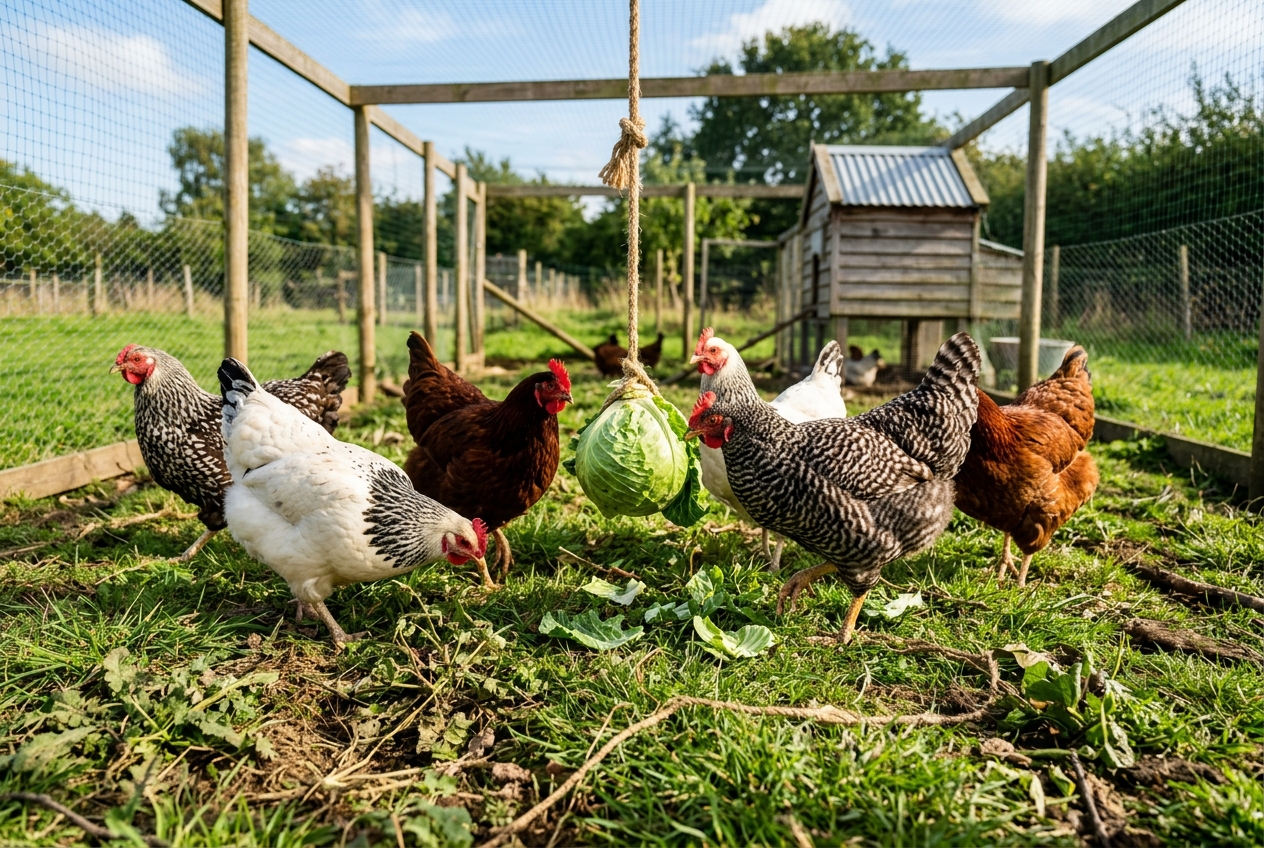
Diagnostic Comparison: Normal Pecking Order vs Destructive Bullying
| Behavioral Parameter | Normal Pecking Order Hierarchy | Pathological Destructive Bullying |
|---|---|---|
| Interaction Duration | Brief 1 to 2 second single peck to crown or neck | Continuous pursuit lasting minutes without cessation |
| Target Selection | Dynamic across flock; reinforces relative ranking | Target fixation on one weak, young, or ill individual |
| Subordinate Response | Hen ducks head, yields space, walks away calmly | Hen screams, hides in nest boxes, or cowers in corners |
| Physical Trauma | Zero blood drawn; zero skin tears or missing flesh | Lacerated comb, bloody scalp, torn vent, plucked quills |
| Feed & Water Access | Subordinate waits her turn or uses second feeder | Victim is starved and dehydrated through perimeter guarding |
| Resolution Timeline | Settles within 3 to 5 days of flock re-ranking | Escalates progressively until victim dies of trauma or shock |
The Ethology of Dominance: Why Chickens Peck
Chickens possess excellent facial recognition and maintain social memories of up to 80 individual flockmates. In a stable flock, every bird knows who ranks above her and who ranks below her. A top-ranking alpha hen maintains order with simple body language:
- The Tall Stance: Raising the neck vertically and making direct forward eye contact signals authority without physical contact.
- The Priority Peck: A firm tap on the beak or crown when a lower-ranking hen reaches for a treat confirms feeding priority. Once the lower hen yields, the interaction concludes immediately.
- Energy Efficiency: Without a clear pecking order, chickens would engage in continuous chaotic combat over resources. The hierarchy provides social predictability.
Check the Flockline Clinical Symptom Checker to assess whether a bullied hen’s lethargy stems from social intimidation or an underlying medical illness.
Key Environmental Triggers That Transform Hierarchy into Bullying
Healthy chickens rarely turn into destructive bullies without external environmental stressors. When bullying erupts, investigate these 4 root causes:
- Severe Coop Overcrowding: When birds lack sufficient physical territory, personal flight distance collapses. High density increases collision rates, spiking flock cortisol and provoking aggressive strikes. Maintain a strict minimum of 4 square feet per bird indoors and 10 square feet in the run.
- Resource Bottlenecks: Forcing 12 hens to eat from a single 12-inch feeder tray creates artificial scarcity. Alpha hens become defensive guards, attacking subordinates attempting to feed.
- Dietary Protein Deficiencies: If commercial rations provide less than 16% crude protein, or lack sulfur-bearing amino acids like methionine, hens crave protein and begin plucking and eating blood-rich pin feathers from flockmates.
- Boredom in Closed Confinement: Confinement on barren packed dirt without foraging substrates leads to redirection of natural ground-scratching behavior toward neighboring plumage.
The 72-Hour Bully Reset Method (The Poultry Jail Protocol)
A common mistake made by backyard keepers is removing the victim. Removing the victim isolates a traumatized bird, while the bully remains free to target the next subordinate hen. Worse, when the healed victim returns, she must re-enter at the absolute bottom of the pecking order.
Instead, apply the 72-Hour Bully Reset Protocol:
- Identify and Remove the Perpetrator: Observe the flock closely for 10 minutes to verify which specific hen is initiating the aggressive chases. Remove the aggressive bully immediately.
- Place in Solitary Confinement: House the bully in a dark, quiet dog crate or separate recovery coop located completely away from the flock for 48 to 72 hours. Provide standard feed and water, but zero treats or luxury roosts.
- Hierarchy Shift During Absence: In the bully’s absence, the remaining flock members quickly rearrange their social hierarchy and fill the vacant dominance slot.
- Reintroduction at Lower Rank: Reintroduce the bully back into the coop at dusk on the third night. Having been absent for 72 hours, she is treated as an unfamiliar outsider. Stripped of her dominance status, she enters at the bottom of the pecking order and must behave modestly.
Pinless Peepers: Non-Invasive Equipment for Chronic Bullies
If an aggressive hen resumes destructive pecking after a reset, fit her with plastic pinless peepers. These lightweight, C-shaped plastic blinders snap gently into the bird’s nostrils (nasal nares) without piercing the septum:
- How They Work: Pinless peepers block the hen’s forward stereoscopic vision while preserving full peripheral vision. The hen can easily see downward to eat crumbles, drink water, and roost, but cannot visually line up a forward strike at a flockmate’s feathers or comb.
- Wear Duration: Keep peepers on the bully for 14 to 21 days. This breaks the habitual pecking feedback loop, allowing victimized hens to regrow feathers and restore flock equilibrium.
- Safe Removal: Using snap-ring pliers or warm water softening, expand the plastic prongs gently and slide the peepers out of the nostrils.
Immediate First Aid for Bullied Hens
If a subordinate hen has suffered pecking trauma, execute these 3 steps immediately:
- Cleanse with Hypochlorous Acid: Flush torn comb tissue and scalp wounds with Vetericyn Plus poultry wound spray. Avoid harsh hydrogen peroxide, which damages regenerating epithelial cells.
- Camouflage All Red Blood: Chickens have tetrachromatic vision with extreme sensitivity to red wavelengths. Visible red blood triggers innate flock cannibalism. Apply an approved dark blue wound lotion (Rooster Booster Pick-No-More or Blu-Kote) to mask redness.
- Temporary Supportive Nursing: If the hen is shivering or pale, place her in a warm hospital crate with high-protein electrolyte mash for 24 hours until active bleeding ceases and skin dries completely.
Verified Clinical References & Extension Sources
- University of California Davis Poultry Health: Managing Aggression and Cannibalism in Backyard Poultry.
- Ohio State University Extension: Understanding the Pecking Order in Small Laying Flocks.
- Merck Veterinary Manual: Behavioral Abnormalities and Cannibalism in Commercial and Backyard Poultry.