
Flockline Flockline Learn · chicken care guides

Chicken health and symptoms

Start with what you can observe

Check urgency, record changes, and choose the next useful observation without guessing at a diagnosis.

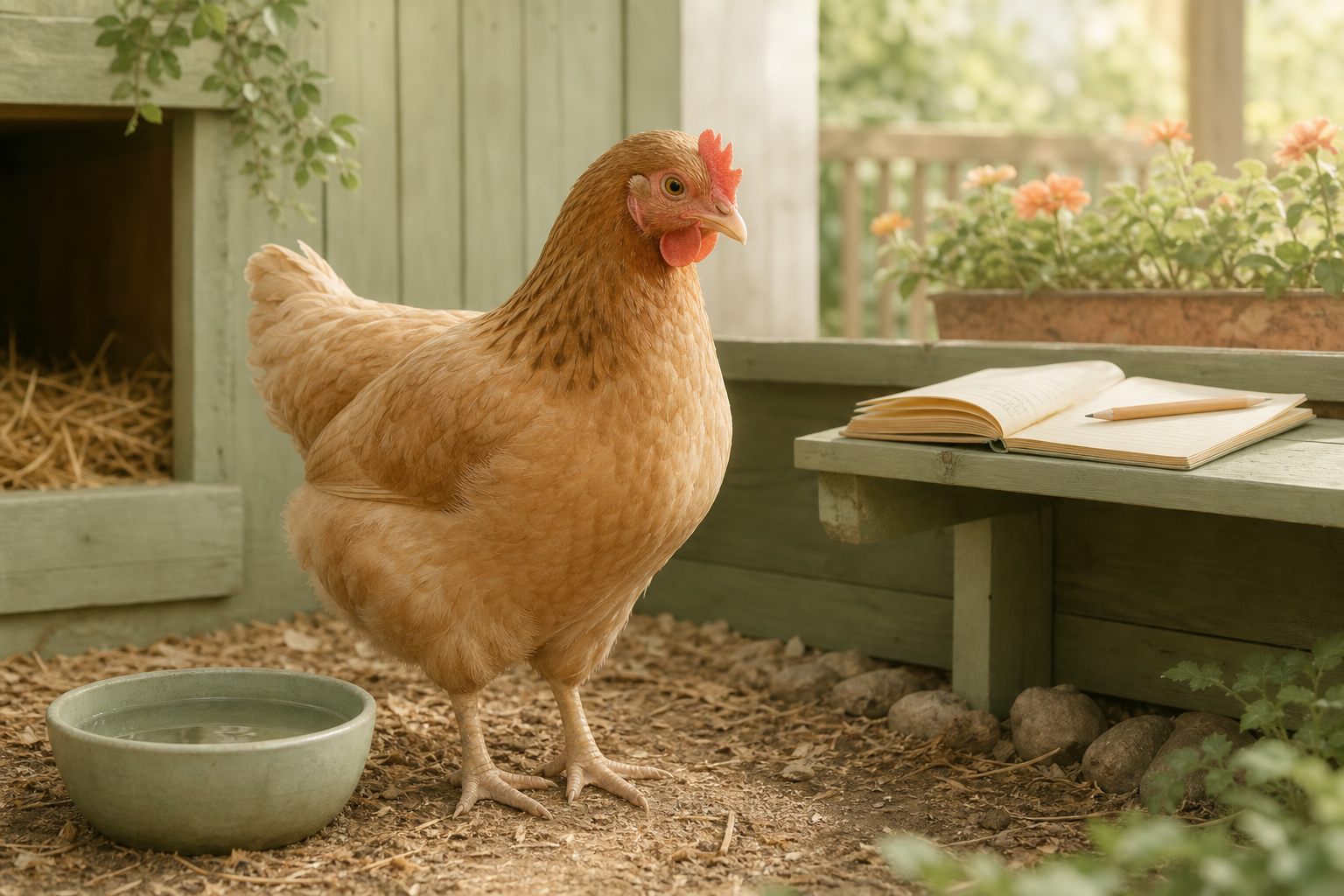
Hen beside water and an open observation notebook

What owners usually notice next

Start with the clearest change. A symptom can have many causes, so follow observations rather than trying to name a disease.

  1. Standing still, sitting, or tail downCompare posture, balance, alertness, and willingness to move.
  2. Comb looks pale or has changed colourCheck the change against normal variation for this bird.
  3. Eye closed, swollen, or has dischargeCompare both sides and note breathing or facial swelling.
  4. Droppings look differentRecord colour, consistency, frequency, appetite, and water intake.
  5. Crop feels unusualUse timing and observable changes. Do not diagnose from touch alone.

Visual observation library

Use these comparison frames to describe what changed. Breed, age, temperature, laying status, lighting, and camera colour can all alter appearance.

Posture and movement

Compare
Usual stance, balance, tail carriage, head position, and willingness to walk.
Record
Whether the bird can stand, walks evenly, responds to the flock, and is worsening.
Urgent
Collapse, inability to stand, repeated falling, seizure, or severe head tilt.
Check this observation

Comb colour

Compare
This bird today versus its own normal colour, not a different breed or internet photo.
Record
Paleness, blue or purple tone, dark tips, temperature, appetite, and laying status.
Limit
Colour alone cannot identify the cause. Lighting and normal hormonal changes matter.
Check this observation

Eyes and face

Compare
Left and right eye, eyelid position, facial symmetry, discharge, and swelling.
Record
One side or both, injury risk, sneezing, noisy breathing, and how quickly it changed.
Urgent
Rapid facial swelling, breathing difficulty, serious injury, or rapid deterioration.
Check this observation

Droppings

Compare
Several fresh droppings rather than one sample. Include normal cecal variation.
Record
Colour, consistency, blood, frequency, appetite, drinking, heat, and duration.
Urgent
Repeated blood, black tar-like droppings, collapse, severe weakness, or dehydration signs.
Check this observation

Crop timing and feel

Compare
Before eating in the morning and after normal feeding. Timing is essential.
Record
Empty, full, firm, fluid-feeling, odour, appetite, drinking, and droppings.
Limit
Do not force vomiting, massage aggressively, or diagnose from one check.
Continue through the checker

Clinically reviewed comparison illustrations will be added in the next visual release. The observation framework is available now so owners can record useful, comparable details.

Turn observations into a useful record

A short timeline is more useful than a guessed diagnosis. Note what changed, when it began, food and water intake, droppings, breathing, mobility, eggs, weather, and flock events.

Prepare for a veterinary call

TimelineWhen normal behaviour changed and whether it is worsening.
Core observationsBreathing, standing, eating, drinking, droppings, and egg laying.
Recent contextWeather, feed changes, new birds, injury risk, predators, and treatments already given.
Safe evidenceClear photos or short video only when taking them does not delay urgent care.