Most Docile Chicken Breeds: Calm Temperaments, Family Flocks & Lap Chickens
Quick answer
Immediate Behavioral Answer: The most docile, friendly chicken breeds for families and children are characterized by a low flight-response threshold, calm handling tolerance, non-aggressive pecking behaviors, and a genetic disposition toward human bonding. The four standout docile breeds are: 1. The Buff Orpington (known as the golden retriever of the chicken world, weighing 7 to 8 pounds with a placid lap-chicken disposition and 200 large brown eggs per year); 2. The Silkie (a true bantam weighing 2 to 3 pounds with fur-like barbless plumage, black skin, 5 toes, and inability to fly, making them safe for toddlers); 3. The Salmon Faverolles (a gentle French breed featuring a fluffy beard, muffs, feathered feet, and an exceptionally sweet, non-bullying demeanor); and 4. The Light Brahma (the gentle giant of poultry, weighing 8 to 9.5 pounds with a calm, deliberate ground gait and feathered shanks). Selecting these breeds ensures children can hold, pet, and feed chickens without sudden flight panics or peck injuries.
Quick facts
| Top Lap Chicken Breed | Buff Orpington (placid, cuddly, 7 to 8 lbs, 200 brown eggs/year) |
|---|---|
| Best Breed for Toddlers | Silkie (fur-like plumage, 2 to 3 lbs, unable to fly, non-aggressive) |
| Gentlest Dual-Purpose | Salmon Faverolles (bearded French heritage, docile, curious, 180 cream eggs) |
| Gentle Giant Breed | Light Brahma (8.0 to 9.5 lbs, calm deliberate gait, heavily feathered legs) |
| Flight Response Latency | High tolerance; docile breeds allow humans to approach within 1 foot calmly |
| Pecking Order Note | Docile breeds sit at the bottom of pecking orders; do not house with aggressive breeds |
Backyard chicken keeping with children offers an engaging way to teach animal husbandry, biology, and food origins. However, introducing flighty, nervous, or aggressive chicken breeds into a family setting can lead to scratched hands, frightened children, and stressed birds. Choosing breeds with verified docile behavioral profiles ensures a safe, rewarding experience where chickens become genuine family pets.
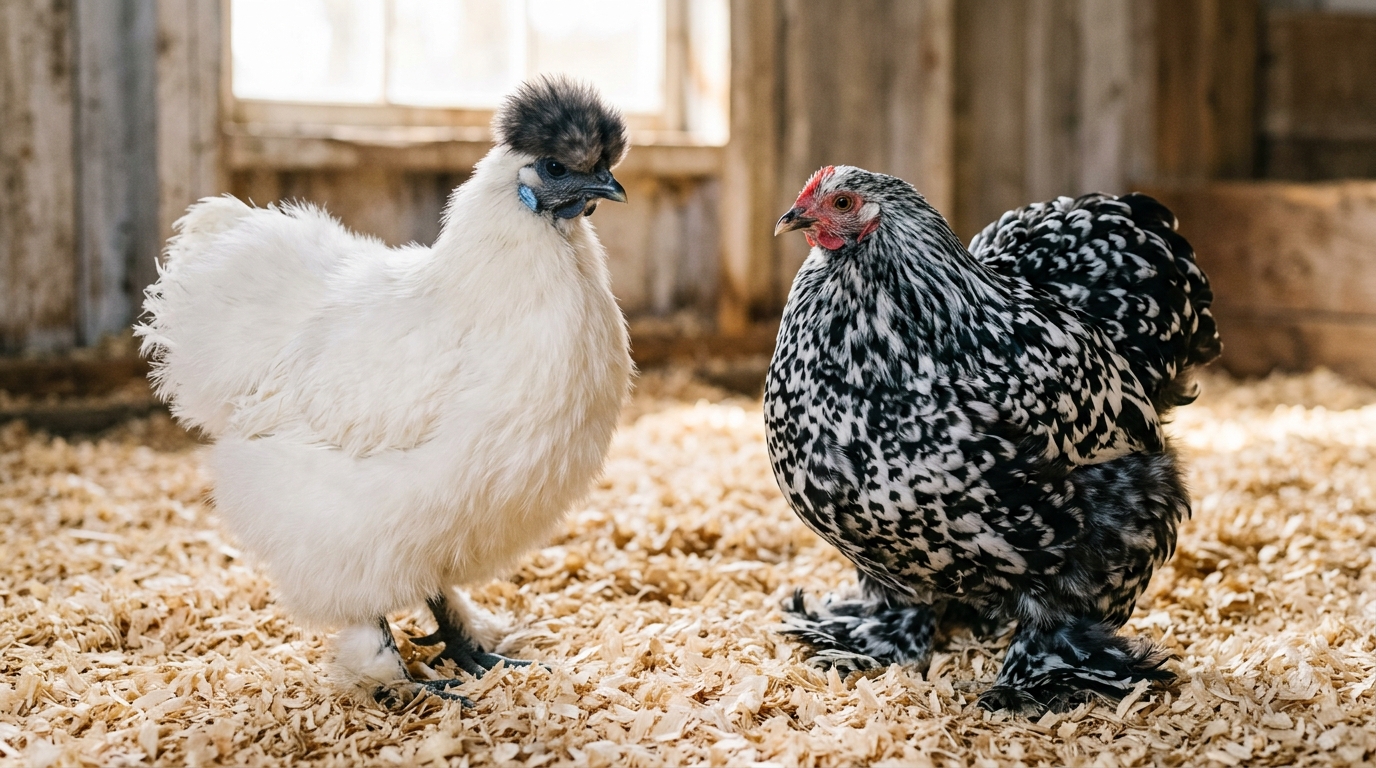
Behavioral Assessment: Docility and Family Suitability Matrix
| Breed Name | Average Hen Weight | Handling Tolerance | Flightiness Rating | Annual Egg Count | Child Safety Score |
|---|---|---|---|---|---|
| Buff Orpington | 7.0 to 8.5 lbs | Exceptional (loves sitting on laps) | Very Low (rarely flies over 2 feet) | 200 to 220 Large brown | 10 / 10 (Gold standard) |
| Silkie (Bantam) | 2.0 to 2.5 lbs | Exceptional (soft fur-like touch) | Zero (cannot fly off the ground) | 100 to 120 Small cream | 10 / 10 (Ideal for toddlers) |
| Salmon Faverolles | 6.5 to 7.0 lbs | High (curious, chatty, sweet) | Low (stays on ground level) | 180 to 200 Medium cream | 9.5 / 10 (Gentle demeanor) |
| Light Brahma | 8.0 to 9.5 lbs | High (calm, stoic, slow-moving) | Very Low (too heavy for flight) | 150 to 180 Large brown | 9.5 / 10 (Gentle giant) |
| Australorp | 6.5 to 7.5 lbs | Moderate to High (quiet, gentle) | Low (calm ground bird) | 250 to 280 Large brown | 9.0 / 10 (Top producer) |
In-Depth Profiles: The 4 Best Family Breeds
Each of these breeds offers distinct temperamental traits that make them exceptional backyard companions:
- The Buff Orpington: Bred in England by William Cook in the 1890s, the Buff Orpington is widely regarded as the ultimate family chicken. With voluminous, loose golden plumage and an easygoing personality, Orpingtons will waddle across the lawn to greet keepers, readily allowing children to scoop them up for lap cuddles. Their heavy 7 to 8-pound weight keeps them securely inside low 4-foot fencing.
- The Silkie Bantam: Originating in ancient China, Silkies are unlike any other chicken breed. Their feathers lack the hook-like barbules that lock plumage together, creating a soft, fur-like coat. Silkies possess black skin, turquoise earlobes, and 5 toes per foot. Because their barbless feathers cannot generate aerodynamic lift, Silkies cannot fly, eliminating fears of birds fluttering into small children’s faces. They are sweet, gentle broodies that tolerate endless cuddling.
- The Salmon Faverolles: Developed in the northern French village of Faverolles, this breed combines Houdan, Dorking, and Brahma bloodlines. Faverolles feature a thick beard, prominent cheek muffs, 5 toes, and feathered shanks. They are famously chatty, curious, and gentle, approaching children with quiet curiosity rather than alarm. Their non-aggressive nature means they never initiate pecking disputes.
- The Light Brahma: Known as the King of Poultry, Brahmas were developed in New England from Asian stock. Despite their massive 8 to 9.5-pound frame and imposing height (reaching up to 30 inches tall), Brahmas are exceptionally docile, slow-moving, and placid. Their calm, deliberate movements make them predictable and reassuring for children who might feel intimidated by quick, jittery birds.
Handling Guidelines for Children and Gentle Chickens
To foster positive relationships between children and the backyard flock, establish these 4 ground rules:
- The Two-Hand Airplane Hold: Teach children to support a chicken with two hands: place one palm securely underneath the bird’s breastbone (keel) with fingers gently grasping the legs, while the other hand rests lightly across the top of both wings. Securing the wings prevents sudden flapping that could frighten the child or injure the chicken’s flight joints.
- Low Seated Handling: Have children sit flat on the lawn or on a low garden bench before holding a chicken. If a bird startles and hops down, she will drop only 6 to 12 inches rather than falling 4 feet from standing arms.
- Strict Rooster Eye-Level Rules: Never allow toddlers or small children to enter an enclosure with an intact rooster unsupervised. Small children are at direct eye level with rooster spur jump height. Flocks kept strictly for family pets should ideally consist exclusively of docile hens.
- Immediate Hand Washing: Backyard poultry naturally harbor intestinal bacteria like Salmonella on feathers and feet. Children must wash hands with warm water and soap for 20 seconds immediately after petting or feeding birds, and avoid kissing chickens or touching them to their faces.
Verified Clinical References & Extension Sources
- American Poultry Association: Standard of Perfection: Temperament and Conformation Profiles of Heritage Classes.
- Penn State Extension: Selecting and Safely Managing Backyard Poultry Flocks for 4-H and Families.
- University of Wisconsin-Madison Extension: Biosecurity and Safe Animal Handling for Children in Backyard Poultry Flocks.