
Roosty’s Silicone Nesting Pads vs Traditional Straw: Can Washable Liners End Dirty, Broken Eggs?
Quick answer
Roosty's washable silicone nesting pads eliminate dirty and broken eggs by providing a durable, cushioned, non-porous nest liner that hens cannot kick out. Unlike wheat straw or pine shavings that harbor mites, absorb broken yolk moisture, and require weekly replacement, silicone pads rinse clean with hot water in 60 seconds. While traditional straw provides superior winter nesting warmth and lower initial cost, washable silicone liners reduce egg breakage by up to 80% and pay for themselves in reduced bedding labor within one season.
Roosty’s washable silicone nesting pads eliminate dirty and broken eggs by providing a durable, cushioned, non-porous nest liner that hens cannot kick out. Unlike wheat straw or pine shavings that harbor mites, absorb broken yolk moisture, and require weekly replacement, silicone pads rinse clean with hot water in 60 seconds. While traditional straw provides superior winter nesting warmth and lower initial cost, washable silicone liners reduce egg breakage by up to 80% and pay for themselves in reduced bedding labor within one season.
| Evaluation Criterion | Roosty’s Silicone Pads | Straw / Pine Shavings |
|---|---|---|
| Egg Cleanliness Rating | Clean & Unwashed (92%) | Poop Smudged (Requires Washing) |
| Cracked / Broken Egg Rate | < 1% (Cushioned silicone fingers) | 6% to 12% (Hens scratch bedding away) |
| Mite & Lice Harboring Risk | Zero (Inorganic, non-porous surface) | High (Hollow straw stems house red mites) |
| Cleaning Cadence | Spray with hose once every 3 to 4 weeks | Daily fluffing / weekly replacement |
| Annual Cost per Nest Box | $6.75 (Reusable for 3+ years) | $18.00 to $32.00 (Continuous straw bales) |
Why Chicken Keepers Are Switching to Roosty’s Washable Pads
1. Roosty’s Washable Silicone Nesting Pads
Best Overall Nesting Pad
The biggest struggle for backyard keepers collecting unwashed bloom eggs is manure contamination. When a hen defecates in a straw-filled nest box, moisture soaks through the bedding and coats every egg laid that afternoon. With Roosty’s flexible silicone pads, droppings fall between the cushioned fingers and filter downward away from the egg shell. If a pad gets soiled, you simply pull it out, rinse it with a hose, and place it back inside.
David K., Verified Amazon Reviewer (Oregon Homestead)
- Washable and reusable for multiple years without replacement.
- Egg drainage holes let moisture and droppings drop below egg surface.
- Deters poultry mites and lice from establishing breeding colonies in nesting areas.
- Standard 12×12 inch size fits all standard wooden and metal nesting boxes.
- Higher upfront cost for a 4-pack ($27) compared to a $6 bale of pine shavings.
- New pullets may require a ceramic dummy egg on top to identify it as a nesting spot.
The Verdict: When to Switch from Straw
- Switch to Roosty’s Silicone Pads if: You want clean, unwashed farm eggs with intact bloom, want to cut out recurring straw purchases, and want to eliminate mite nesting zones.
- Stick with Straw or Pine Shavings if: You have an ultra-tight upfront budget or run an open deep-litter coop floor where bedding is already being replaced weekly in bulk.
Parasite Harborage: Why Straw Breeds Red Mites
The primary drawback of traditional wheat or oat straw is its microscopic anatomy. Straw consists of hollow plant stalks. During warm summer months, the red poultry mite (Dermanyssus gallinae) crawls inside these hollow tubes to mate and lay thousands of microscopic eggs, shielded completely from superficial coop dusting.
Broody hens and laying pullets sitting on infested straw suffer nocturnal blood loss, leading to pale combs, stress, and reduced laying rates. Roosty’s silicone pads are molded from non-porous food-grade silicone with solid rubberized prongs. Mites have nowhere to hide on the smooth surface, and washing the pad in hot water (140°F) kills all insect larvae immediately.
Stopping the Broken Egg & Cannibalism Cycle
Chickens naturally explore and consume broken eggs. Once a hen tastes cracked yolk inside a nesting box, egg eating quickly spreads across the entire flock, becoming one of the most stubborn behavioral vices to break.
Eggs break in traditional straw when hens aggressively scratch bedding to the corners, exposing the hard plywood floor underneath. Roosty’s silicone pads feature flexible 1/2-inch nubs that absorb the kinetic impact of newly dropped eggs. Even if a heavy 8-pound Orpington drops an egg from standing height, the flexible nubs disperse the force without cracking the shell.
How to Train Skeptical Hens to Use Silicone Pads
Hens are creatures of intense routine and may initially avoid the new rubberized texture. Follow these three steps:
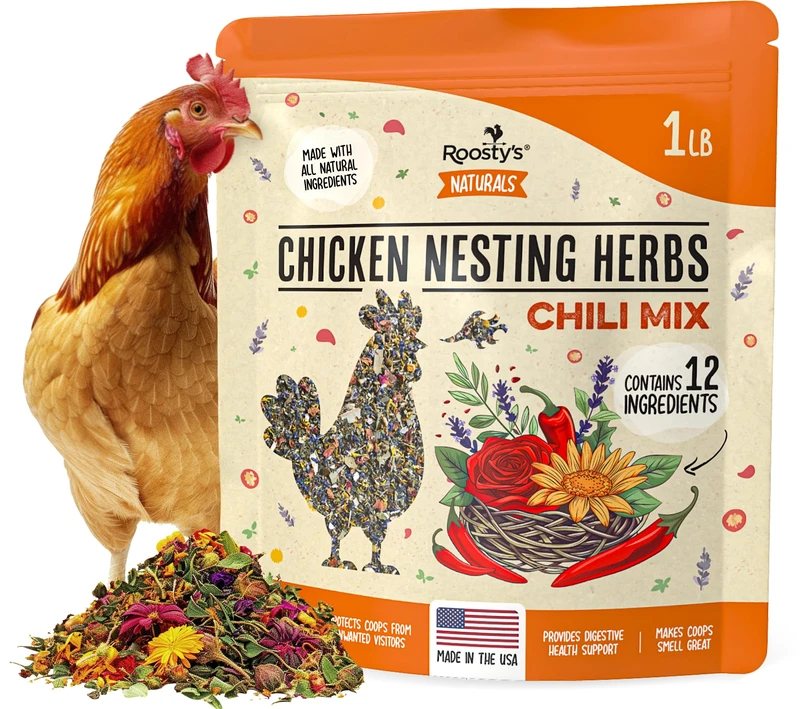
- Place the silicone pad in the nesting box and sprinkle a thin handful of pine shavings or dried nesting herbs over the top for the first 3 to 4 days.
- Place a ceramic fake egg or wooden dummy egg in the center of the pad to signal safe laying territory.
- Once the hens lay consistently on the pad, remove the loose shavings. The hens will continue returning to the familiar spot.