Rubber Eggs Without Shells: Membrane-Only Causes, Sudden Fright Oviposition & Calcium D3 Fix
Quick answer
Immediate Nutritional Answer: A rubber egg (shell-less egg) is an egg expelled with its yolk and albumen held solely by pliable inner and outer protein membranes, lacking the rigid 0.35 mm calcium carbonate shell. This abnormality stems from two primary mechanisms: acute nutritional exhaustion of blood calcium and vitamin D3, or premature oviposition triggered by sudden nighttime fright. A hen requires 4.0 to 4.5 grams of total calcium daily, directing 2.2 grams of pure elemental calcium into each shell over 20 continuous hours in the uterus. If dietary calcium is deficient, or if vitamin D3 falls below 2,500 IU/kg, the shell gland fails to crystallize the mammillary core. Alternatively, sudden predator terror at 1:00 AM triggers an adrenaline surge that forces premature uterine contractions, dumping the soft-shelled egg hours before calcification begins. For recurring rubber eggs in an individual hen, administer 600 mg calcium citrate plus 400 IU Vitamin D3 orally for 3 consecutive days, and ensure free-choice coarse oyster shell is accessible.
Quick facts
| Eggshell Calcium Content | 2.0 to 2.2 grams of pure elemental calcium per standard Large egg |
|---|---|
| Daily Hen Calcium Need | 4.0 to 4.5 grams of dietary calcium (layer ration calibrated to 3.8% to 4.2%) |
| Primary Trigger 1 | Acute calcium or Vitamin D3 absorption failure in high-producing layers |
| Primary Trigger 2 | Nocturnal fright (predators, fireworks, rodents) forcing premature uterine dumping |
| First-Aid Dose | 600 mg calcium citrate tablet + 400 IU Vitamin D3 crushed once daily for 3 days |
| Egg Safety | Discard membrane-only eggs; permeable membranes permit rapid bacterial penetration |
Rubber eggs without calcified shells represent an immediate signal that a hen’s reproductive physiology has experienced a calcium supply interruption or an acute nervous system shock. Finding a squishy, fluid-filled balloon resting on the drop board or in a nesting box is alarming, but understanding the metabolic timeline of shell deposition provides a straightforward pathway to resolution.
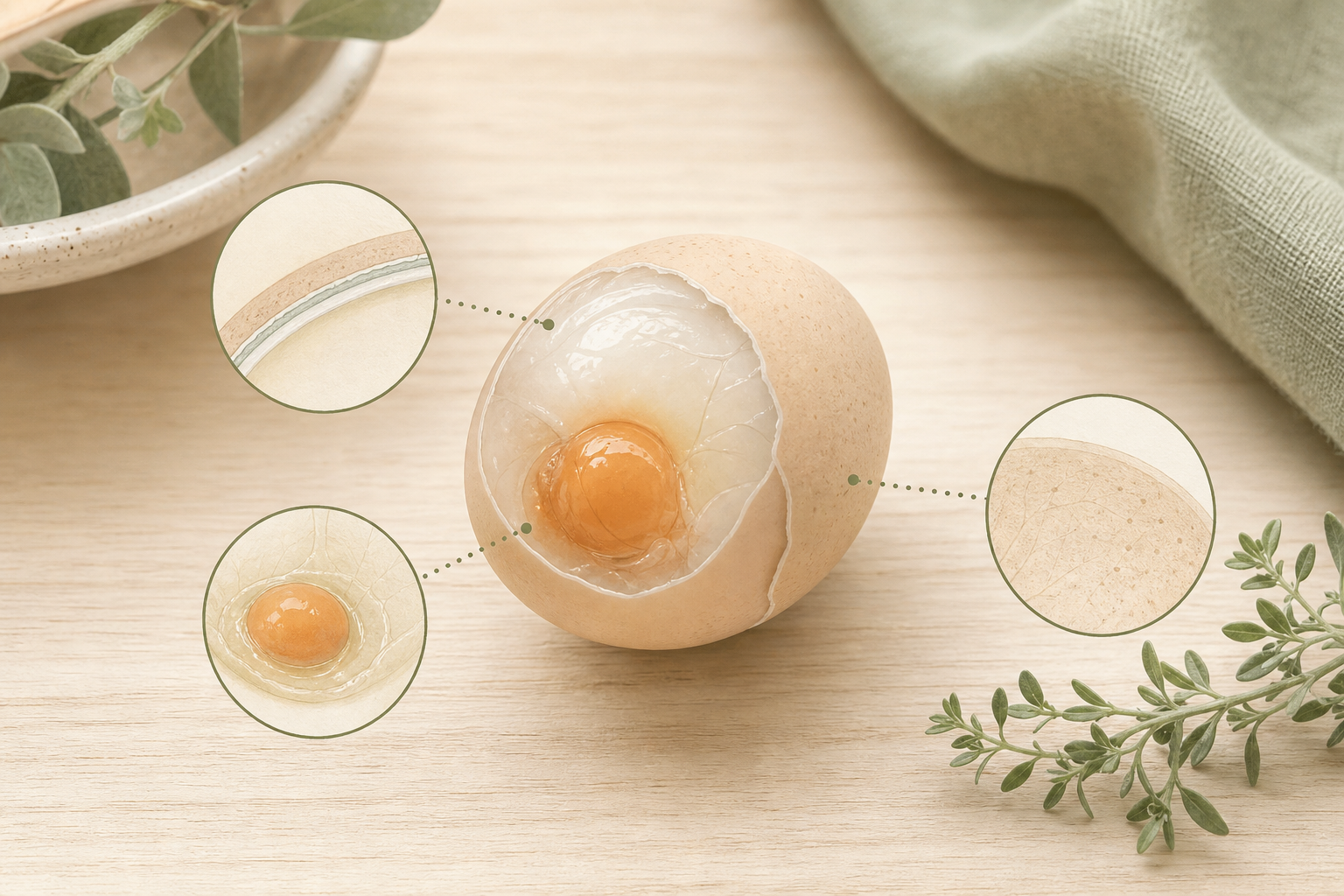
The Two Primary Pathways: Nutritional Depletion vs Nocturnal Panic
Differentiating between a nutritional deficiency and behavioral panic dictates your corrective strategy:
- Pathway A: Acute Nutritional Depletion: High-production hybrid layers (Golden Comets, Leghorns, ISA Browns) produce an egg every 24 to 26 hours. Each egg extracts 10% of the hen’s entire circulating and medullary bone calcium reserves. If daily feed contains under 3.5% calcium, or if a high-phosphorus diet blocks calcium uptake, the shell gland runs out of mineral substrates around 3:00 AM. The egg is laid on schedule in the morning, but lacks a mineral shell.
- Pathway B: Sudden Nocturnal Fright (Adrenaline-Induced Oviposition): A hen’s shell gland deposits calcium at a steady pace of 100 to 120 mg per hour. If a raccoon attempts to breach the coop window at midnight, or a rat scurries across the roost, the hen experiences an acute fight-or-flight sympathetic nervous response. Epinephrine surges through her bloodstream, stimulating intense uterine smooth muscle contractions that expel the incomplete egg 8 to 12 hours prematurely onto the coop floor.
- Pathway C: Immature Pullet Hormone Surges: Young pullets beginning their first laying cycle often possess an asynchronous hypothalamic-pituitary-ovarian axis. The oviduct muscles fire erratically, pushing an egg through the uterus before calcification can start. This resolves spontaneously within 14 to 21 days as hormones stabilize.
Avian Calcium Metabolism: Blood, Bone & Feed Parameters
| Metabolic Parameter | Optimal Physiological Range | Deficiency Consequence | Corrective Source |
|---|---|---|---|
| Dietary Layer Calcium % | 3.8% to 4.2% total ration | Rubber eggs, osteoporosis, cage layer fatigue | Complete 16% to 18% layer feed |
| Serum Ionized Calcium | 5.5 to 6.5 mg/dL | Muscle tetany, egg binding, weak contractions | Coarse oyster shell (slow-release) |
| Dietary Vitamin D3 | 2,500 to 3,500 IU / kg feed | Impaired calbindin synthesis; zero absorption | Direct sunlight or vitamin D3 drops |
| Available Phosphorus | 0.40% to 0.45% available | Soft bones (if high, blocks calcium release) | Balanced mono-dicalcium phosphate |
| Cal:Phos Dietary Ratio | 10:1 to 12:1 in laying hens | Renal strain and calcification failure | Strict elimination of excess scratch grains |
The 3-Day Emergency Calcium D3 Rescue Protocol
If an individual adult hen lays two or more rubber eggs in a week, execute this targeted veterinary repletion routine:
- Administer Oral Calcium Citrate: Administer one 600 mg calcium citrate tablet with 400 IU Vitamin D3 directly to the affected hen. Calcium citrate does not require hydrochloric stomach acid for dissolution, absorbing significantly faster than limestone. Coat the tablet in coconut oil or hide it in a small grape or blueberry and place it gently past the tongue. Repeat once daily for 3 consecutive days.
- Provide Free-Choice Coarse Oyster Shell: Place coarse oyster shell in a separate wall-mounted feeder at chicken eye level. Do not mix oyster shell directly into commercial layer crumbles, as birds with adequate calcium will consume excess minerals, risking visceral gout.
- Ban Kitchen Scraps and Scratch Grains for 7 Days: Scratch grains and vegetable scraps contain under 0.1% calcium and high levels of phosphorus and oxalates that bind calcium in the gut. Restrict flock diet strictly to complete layer feed and clean water.
- Perform a Nocturnal Predator Audit: Enter the coop at 11:00 PM with a red-lens flashlight. Check for mice scurrying through bedding, drafty air gaps, or shadows from moving tree branches that could terrify roosting birds.
Verified Clinical References & Extension Sources
- Poultry Science: Calcium and Phosphorus Metabolism in the Laying Hen: Shell Deposition Dynamics.
- University of Florida Animal Sciences: Causes of Soft-Shelled and Shell-Less Eggs in Backyard Flocks.
- Merck Veterinary Manual: Nutritional and Behavioral Disorders of the Avian Reproductive System.