High-Protein Treats for Molting Hens: Best Feeds, Amino Acid Ratios & Treat Limits
Quick answer
Immediate Nutritional Answer: Feathers consist of 85% to 90% crude protein composed almost entirely of keratins rich in sulfur-containing amino acids (methionine, cysteine, and lysine). Standard 16% layer feed lacks the amino acid concentration needed for rapid plumage regrowth and contains 3.5% to 4.5% calcium intended for eggshells, which overburdens non-laying kidneys. The foundational nutritional strategy during molt is switching base feed to an 18% to 22% crude protein grower or feather-builder crumble with at least 0.45% methionine. Supplement this diet with targeted high-protein treats: dried black soldier fly larvae (Grubblies) are superior due to their 38% protein, balanced 1.5:1 calcium-to-phosphorus ratio, and high lauric acid. Keep all supplemental treats strictly under 10% of total daily feed intake to avoid nutritional imbalance.
Quick facts
| Feather Composition | 85% to 90% crude protein held by dense keratin disulfide bonds |
|---|---|
| Primary Limiting Amino Acid | DL-Methionine (minimum 0.45% dietary requirement) |
| Top Treat Choice | Black soldier fly larvae (38% protein, 1.5:1 Ca:P ratio) |
| Layer Feed Hazard | 4% calcium causes visceral gout and kidney strain in non-laying hens |
| Treat Boundary Rule | Supplemental treats must never exceed 10% of total daily feed intake |
| Digestive Requirement | Provide free-choice granite grit to grind whole insects and seeds |
High-protein treats for molting hens accelerate plumage regeneration and restore depleted muscular reserves during the demanding autumn molt. However, simply tossing large handfuls of mealworms into the coop can unbalance the flock’s calcium-to-phosphorus ratio and trigger fatty liver syndrome. Successful molting nutrition requires balancing high-protein supplements with a scientifically formulated base ration.

Nutritional Profiles of Top High-Protein Molt Supplements
| High-Protein Supplement | Crude Protein % | Crude Fat % | Calcium to Phosphorus | Key Amino Acid Strength | Daily Feeding Limit per Hen |
|---|---|---|---|---|---|
| Black Soldier Fly Larvae | 38% to 42% | 28% to 32% | 1.5:1 (Optimally Balanced) | High lysine and lauric antimicrobial lipid | 1 to 2 tablespoons (10 to 15 grams) |
| Dried Mealworms | 50% to 53% | 26% to 29% | 1:7 (Phosphorus Inverted) | High leucine, moderate methionine | 1 tablespoon maximum (fat caution) |
| Cooked Scrambled Eggs | 13% to 15% (Wet Basis) | 10% to 11% | 1:2 (Favorable) | 100% biological value; sulfur amino acids | 1 egg shared among 3 to 4 hens |
| Black Oil Sunflower Seeds | 16% to 18% | 25% to 28% | 1:3 (Moderate) | Rich in vitamin E, linoleic acid, cysteine | 1 teaspoon per hen (high calorie) |
| Sprouted Green Lentils | 24% to 26% (Dry Basis) | 1% to 2% | 1:3 (Lean Energy) | High lysine and bioavailable plant enzymes | 1 tablespoon per hen |
| Canned Sardines (in Water) | 22% to 24% | 10% to 12% | 1.5:1 (Bone Content) | Superior methionine, EPA/DHA omega-3s | 1 small forkful per hen; zero added salt |
The Biochemistry of Feather Keratin Synthesis
Backyard flock keepers often wonder why high-producing hens look so depleted during seasonal molts. Developing a complete coat of new plumage requires an enormous protein investment. Feathers are composed of insoluble fibrous proteins known as beta-keratins, which are held together by dense disulfide chemical bonds.
The synthesis of these disulfide bridges depends on three specific amino acids:
- DL-Methionine: Methionine is the primary limiting amino acid in all poultry diets. Chickens cannot synthesize methionine internally; every gram must be provided through feed. Methionine supplies the sulfur atom needed to initiate protein translation in the feather papilla.
- L-Cysteine: Formed directly from dietary methionine via the transsulfuration pathway, cysteine makes up over 7% of total feather amino acid content. Its sulfur-hydrogen side chains form the durable cross-linked disulfide bonds that give feathers their waterproof elasticity and structural stiffness.
- L-Lysine: Lysine is required for structural collagen matrix formation and rapid cell division in the expanding dermal pulp cavity.
Explore the Flockline Chicken Health Platform to evaluate feed ratios and detect symptoms of nutritional deficiencies before feather loss becomes pathological.
The 16% Layer Feed Calcium Dilemma During Molt
Feeding standard 16% layer feed to a non-laying, molting flock presents two major physiological hazards:
- Protein Deficit: A 16% crude protein ration provides enough amino acids for daily bodily maintenance, but leaves zero surplus for synthesizing 8,000 new feathers. Under-fueled hens pull protein from their pectoral muscle tissue, losing up to 15% of their body weight and prolonging the molt from 8 weeks to 16 weeks.
- Kidney Toxicity from Excess Calcium: Layer feed is formulated with 3.8% to 4.5% elemental calcium to form hard eggshells. When egg production ceases, the hen’s reproductive tract stops transferring calcium from blood to shell. The excess calcium must be filtered through the kidneys, elevating blood uric acid and triggering visceral gout and renal damage.
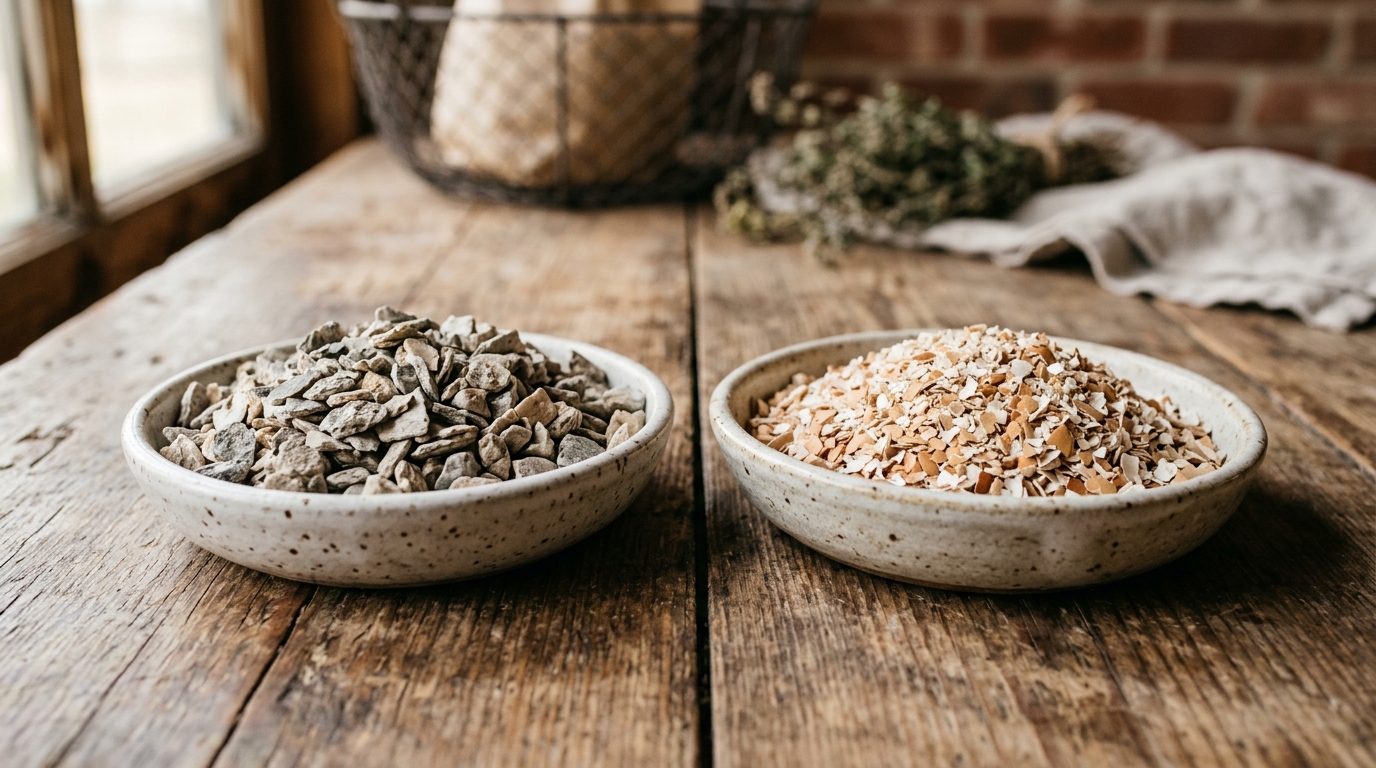
The Veterinary Solution: Transition the flock’s primary base feed to an unmedicated 20% to 22% grower, broiler, or flock-raiser crumble containing 1.0% to 1.2% calcium. Provide coarse crushed oyster shell in a separate wall-mounted feeder. Laying birds will instinctively self-regulate and consume oyster shell, while non-laying molting birds will ignore it.
Evaluating Top High-Protein Treats: Pros and Cons
| Treat Option | Nutritional Pros | Nutritional Cons & Pitfalls | Best Practice Usage |
|---|---|---|---|
| Black Soldier Fly Larvae | Naturally high in calcium; superior fat profile rich in lauric acid | More costly than mealworms; store in dry, cool conditions | Offer as primary evening reward during active pin feather emergence |
| Dried Mealworms | High protein concentration (50%); readily consumed by all breeds | Poor calcium to phosphorus ratio (1:7); leaches bone calcium if overfed | Limit to small handfuls; never use as primary daily feed source |
| Scrambled Eggs | Highest biological value; soft texture gentle on sensitive birds | Rapid spoilage in warm coops; must be cooked without oil or salt | Prepare fresh weekly as a warm morning booster mash |
| Black Oil Sunflower Seeds | Rich in methionine, vitamin E, and essential linoleic fatty acids | Thick fibrous hulls; dense fat content can induce fatty liver syndrome | Feed unhulled sparingly in cold weather to provide metabolic warmth |
The 10% Treat Boundary Rule
Even healthy high-protein treats can harm your flock if fed in excessive amounts. A commercial 20% grower crumble is carefully formulated to provide complete macro-minerals, trace elements (zinc, selenium, manganese), and vitamins (A, D3, E, B12). Feeding excessive treats dilutes this balance:
- Enforce the 90/10 Ratio: High-protein supplements must represent no more than 10% of the flock’s total daily feed weight. An average hen consumes approximately 110 to 120 grams of feed per day. Therefore, treat allowance should never exceed 10 to 12 grams (about 1 to 2 tablespoons) per bird daily.
- Provide Insoluble Poultry Grit: Whole insects, seeds, and grains require mechanical grinding in the gizzard. Always provide granite poultry grit free-choice in a separate container to prevent crop impaction.
- Avoid Salty or Processed Foods: Never feed seasoned table scraps, cured meats, or salted nuts. Poultry have low salt tolerance, and excess sodium leads to severe electrolyte imbalance and watery droppings.
Verified Clinical References & Extension Sources
- University of Kentucky Poultry Extension: Nutritional Management of Molting Backyard Laying Hens.
- University of Florida Extension (IFAS): Amino Acid Requirements and Feather Keratin Synthesis in Poultry.
- Merck Veterinary Manual: Nutritional Requirements and Metabolic Disorders in Non-Laying Poultry.