Annual Fall Molt vs Stress Molt in Chickens: Triggers, Feather Loss Patterns & Recovery
Quick answer
Immediate Clinical Answer: Annual fall molting is a normal physiological process triggered by decreasing daylight photoperiod (under 12 to 14 hours of sunlight). The pineal and thyroid glands signal the release of thyroxine, prompting chickens to systematically shed old plumage and synthesize new keratin feathers over 8 to 16 weeks while pausing egg production. In contrast, a stress molt (shock molt) occurs abruptly at any season, shedding feathers erratically across the flock within 24 to 72 hours. Stress molts stem from environmental shock, such as 24 hours of water deprivation, acute predator terror, severe heat stress exceeding 95 degrees Fahrenheit (35 degrees Celsius), or sudden feed withdrawal. Annual molts require high-protein nutrition, whereas stress molts require immediate removal of the environmental stressor to stop rapid flock decline.
Quick facts
| Primary Trigger | Decreasing photoperiod below 12 hours of natural daylight |
|---|---|
| Average Duration | 8 to 16 weeks depending on individual molt speed |
| Egg Production | Oviduct regresses; laying ceases while nutrients rebuild plumage |
| Key Nutrient Need | 20% to 22% crude protein with minimum 0.45% DL-methionine |
| Common Error | Feeding high-calcium layer feed during non-laying resting phase |
| Record Tracking | Track flock symptoms with the chicken health record template |
Annual fall molt vs stress molt in chickens represents the fundamental clinical distinction between normal seasonal biology and acute environmental distress. While natural molting is an evolved physiological reset driven by photoperiod signaling, a stress molt is an emergency reaction to sudden trauma, dehydration, or heat shock.
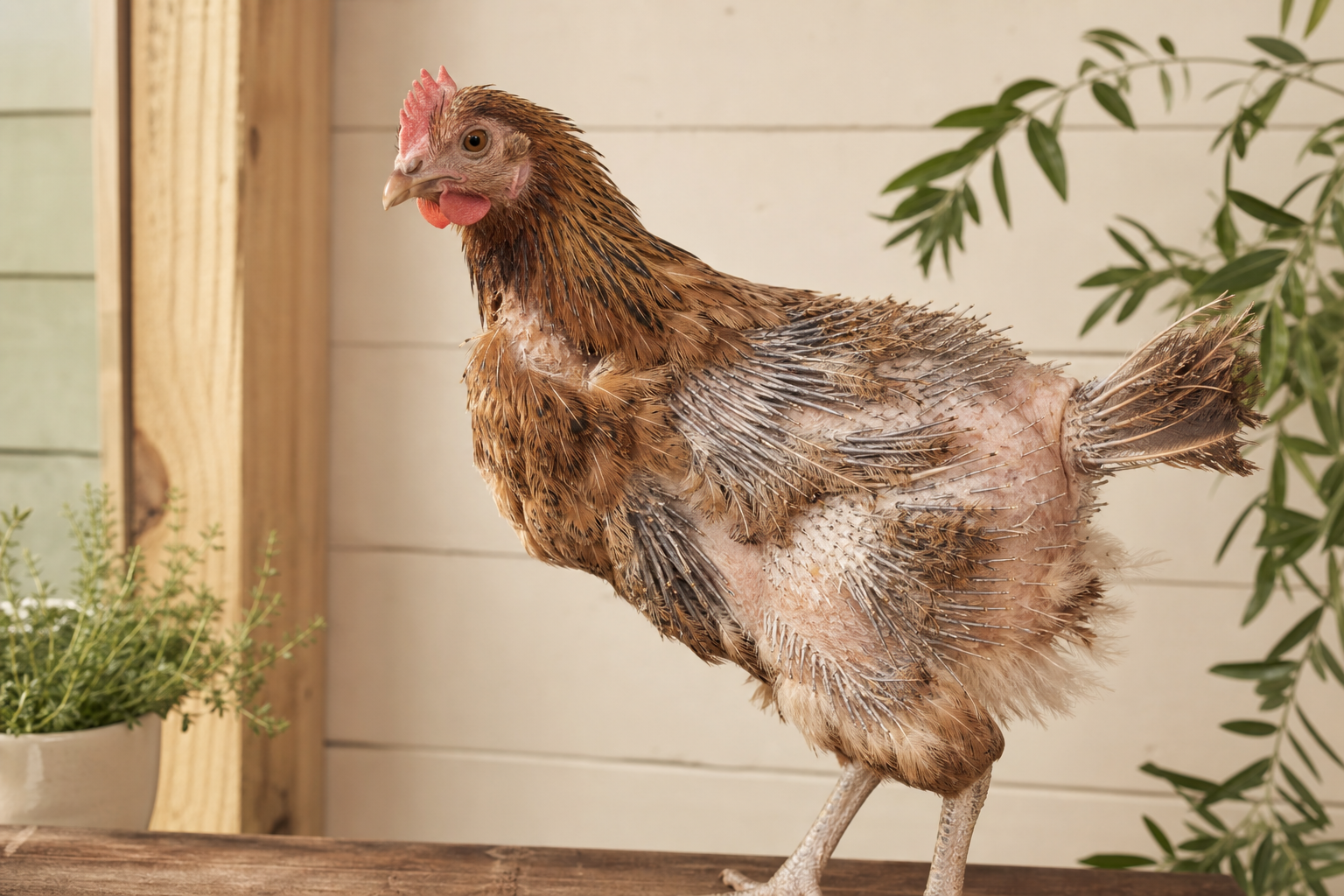
Natural Fall Molt vs Acute Stress Molt: Side-by-Side Comparison
| Clinical Parameter | Annual Fall Molt (Natural Cycle) | Acute Stress Molt (Environmental Shock) |
|---|---|---|
| Primary Trigger | Decreasing day length below 12 hours (photoperiod signaling) | Acute stress: dehydration (24+ hrs), heat (>95 deg F), predator attack |
| Onset & Timing | Predictable late summer or autumn (August to November) | Abrupt onset within 24 to 72 hours; any month of the year |
| Feather Drop Pattern | Orderly cephalocaudal sequence: head, neck, breast, wings, tail | Random, patchy, or sudden bilateral loss without sequence |
| Duration of Cycle | 8 to 16 weeks (slow molters) or 6 to 8 weeks (fast molters) | Incomplete; halts when stress resolves or lasts 4 to 8 weeks |
| Egg Production Impact | Oviduct regresses completely; egg laying ceases for 8 to 12 weeks | Egg laying drops to zero overnight; eggs may show soft shells |
| Physical Bird Demeanor | Calm, quiet, slightly reserved, sensitive to rough handling | Lethargic, panting, hypervigilant, or trembling from physical trauma |
| Flock Prevalence | Individual hens molt on staggered schedules across 60 days | Affects 50% to 100% of birds simultaneously after flock-wide shock |
Biological Mechanism: How Decreasing Photoperiod Triggers Natural Molt
Backyard poultry keepers frequently become alarmed when coop floors fill with thousands of feathers in September or October. Natural molting is an evolved biological necessity. Feathers undergo mechanical wear, ultraviolet degradation, and bacterial breakdown over 12 months of daily foraging. Molting replaces worn plumage before sub-zero winter temperatures arrive.
The physiological cascade begins in the avian retinal and pineal photoreceptors:
- Photoperiod Decline: As autumn days drop from 15 hours of daylight toward 10 hours, light stimulation through the skull to the hypothalamus decreases significantly.
- Hormonal Shift: The anterior pituitary gland downregulates luteinizing hormone and follicle-stimulating hormone. The ovaries cease ovulation, causing blood estrogen levels to plummet. Simultaneously, thyroid activity increases, elevating circulating thyroxine.
- Keratin Follicle Activation: High thyroxine activates dormant dermal papillae inside the feather follicles. The new feather papilla swells, creating a vascular pin feather that physically pushes the old, dead feather shaft out of its follicle cup.
- Reproductive Rest: The hen’s reproductive tract regresses by 75% in total mass. The oviduct shrinks from roughly 70 grams down to 15 grams. This temporary metabolic shutdown diverts sulfur-containing amino acids away from egg white synthesis toward feather keratin formation.
Use the Flockline Chicken Symptom Checker to verify whether feather drop in your coop matches healthy seasonal molting or indicates an underlying reproductive issue.
The 8-Stage Sequential Feather Drop in Annual Molting
Unlike stress molting, seasonal molting follows a strict anatomical roadmap. Poultry researchers at the University of Georgia established that molting birds shed plumage in an orderly cephalocaudal direction:
- Stage 1 (Head & Crown): Fine down feathers and small contour feathers on the comb base, crown, and cheeks loosen first.
- Stage 2 (Neck & Hackles): Neck hackle feathers drop 5 to 7 days later, giving the hen an elongated, unkempt appearance.
- Stage 3 (Breast & Crop Area): The front contour feathers drop, exposing clean, pale pink breast skin.
- Stage 4 (Back & Saddle): Upper back and cushion feathers fall in symmetrical bilateral bands.
- Stage 5 (Abdomen & Flanks): Dense down feathers insulating the lower abdomen shed, leaving soft down stubble.
- Stage 6 (Primary Wing Feathers): Primary flight feathers (the outer 10 wing feathers) drop consecutively from the axial feather outward toward the wing tip. Fast molters drop 2 to 3 primaries simultaneously, shortening their molt to 8 weeks. Slow molters drop one primary feather every 10 to 14 days, prolonging feather regrowth up to 16 weeks.
- Stage 7 (Secondary Wing Feathers): The 14 secondary flight feathers (inner wing closer to the torso) drop once primaries are half regrown.
- Stage 8 (Tail Feathers): The central main tail retrices drop simultaneously, completing the feather replacement cycle.
Root Causes of Acute Stress Molts in Poultry
| Stress Factor | Onset Timeline | Clinical Presentation | Emergency Intervention |
|---|---|---|---|
| Water Deprivation | 24 to 36 hours without water | Comb shrivels, crop hardens, massive feather drop within 48 hours | Provide cool 65 deg F water with poultry electrolytes immediately |
| Severe Heat Stress | 2 to 3 days above 95 deg F | Extreme panting, wing spreading, loose wing feather drop | Mist coop roof, install fans, freeze 1-gallon water ice blocks |
| Predator Attack Shock | 12 to 24 hours post-event | Fright molt: sudden explosive loss of tail and saddle feathers | Place flock on calm confinement, inspect birds for puncture wounds |
| Feed Disruption | 48 hours without feed | Egg laying halts, digestive tracts empty, molt initiates in 5 days | Restore ad-libitum 20% protein crumble feed; add probiotics |
Nutritional Care Protocol for Molting Flocks
Synthesizing new plumage places immense metabolic demands on backyard birds. A chicken’s feather coat represents 4% to 9% of its live body weight, but comprises 85% to 90% crude protein in the form of alpha and beta-keratins. To accelerate feather regeneration and protect body condition, apply this 3-step feeding regimen:
- Switch to 20% to 22% Protein Grower Ration: Replace standard 16% layer crumbles with a 20% or 22% crude protein flock raiser or grower feed. This provides the elevated crude protein and digestible amino acids required for rapid tissue building.
- Provide Supplemental Methionine and Lysine: Keratin synthesis requires elevated levels of sulfur-bearing amino acids, particularly DL-methionine (minimum 0.45% of diet) and L-lysine. Supplement rations with high-protein whole treats such as black soldier fly larvae, cooked scrambled eggs, or sunflower seeds.
- Offer Free-Choice Oyster Shell in a Separate Hopper: Because hens pause egg production during molt, their dietary calcium requirement drops from 4.0% down to 1.2%. High-calcium layer feed can burden non-laying kidneys. Offering low-calcium grower feed with free-choice oyster shell on the side allows any remaining laying birds to consume calcium while resting hens avoid renal stress.
Managing Sensitive Pin Feathers in the Coop
As new feathers emerge, they appear as dark, cylindrical, pointed quills known as pin feathers or blood feathers. Each pin feather contains an active blood supply flowing through an axial artery inside a blue-purple keratin sheath. Keepers must exercise caution during this phase:
- Avoid Unnecessary Handling: Emerging blood feathers are hypersensitive to touch and cause distinct discomfort when compressed. Avoid picking up molting hens unless administering medical care.
- Prevent Roosting Collisions: Ensure roosting bars offer at least 10 to 12 inches of horizontal spacing per bird. Crowded roosts cause hens to bump sensitive wing quills, risking broken blood feathers and flock cannibalism.
- Maintain Draft-Free Housing: Without their insulating plumage, molting chickens lose body heat rapidly. Ensure coop ventilation stays above bird head height to remove moisture without creating chilling drafts at floor level.
Verified Clinical References & Extension Sources
- University of Georgia Extension: Management of Molting in Backyard Poultry Flocks (Circular 1084).
- Mississippi State University Extension: The Molting Process in Laying Hens and Broiler Breeders.
- Merck Veterinary Manual: Physiology of Molting and Feather Replacement in Domestic Avian Species.