Chicken Feather Loss Patterns: How to Distinguish Molt, Mites, Lice & Rooster Mating Damage
Quick answer
Immediate Clinical Differential Diagnosis: Feather loss in backyard chickens follows anatomical patterns that pinpoint the exact root cause. Seasonal molting produces clean, bilateral, symmetrical feather loss starting on the head and neck before progressing down the breast, wings, and tail, leaving healthy, smooth pink skin studded with clean growing pin feather quills. Rooster mating damage (treading) is strictly localized to the dorsal saddle, upper back, and shoulder tops, displaying broken, abraded quill stumps while the vent, breast, and wings remain fully feathered. Ectoparasite infestations (Northern fowl mites and chicken body lice) concentrate around the moist, warm vent, cloaca, and lower abdomen, producing blackened debris, crusty white egg nits at feather shaft bases, and red, scabbed, pruritic skin. Feather pecking and cannibalism cause erratic, jagged bare patches on the rump, preen gland, and back, marked by active peck wounds and blood smears.
Quick facts
| Diagnostic Key | Look at body location and symmetry: molt is systemic; mating is dorsal; mites are vent |
|---|---|
| Normal Molt Skin | Smooth, pale pink dermis with emerging blue-sheathed vascular pin quills |
| Mating Wear Sign | Broken quill stumps across dorsal saddle with clean, parasite-free vent |
| Parasite Evidence | Clusters of chalky white egg nits or crawling dark specks around cloaca |
| Cannibalism Warning | Jagged bare patches with fresh puncture scabs and active bleeding |
| Clinical Tool | Use the Flockline Clinical Symptom Checker for emergency wound triage |
Chicken feather loss patterns provide an immediate visual roadmap to flock health. Because feathers serve as the chicken’s primary barrier against moisture, cold, and physical abrasion, identifying whether plumage loss stems from normal seasonal renewal, rooster mating friction, external parasite infestations, or behavioral bullying is essential for timely flock triage.
Diagnostic Matrix: 4 Major Causes of Feather Loss
| Diagnostic Factor | Seasonal Molt | Rooster Overmating (Treading) | Ectoparasites (Mites & Lice) | Feather Pecking / Bullying |
|---|---|---|---|---|
| Primary Body Zone | Head, neck, breast, back, wings, tail (Systemic) | Dorsal saddle, upper wings, back of head | Vent, cloaca, under wings, lower abdomen | Rump, preen gland, vent area, wing tips |
| Bilateral Symmetry | High symmetry across both sides of the body | Symmetrical saddle coverage across backbone | Asymmetrical or bilateral across moist areas | Erratic, ragged patches on targeted birds |
| Skin Condition | Healthy, pale pink or yellow; clean and smooth | Thickened, scraped, bruised, or scratched | Erythematous, inflamed, scabby, raw skin | Punctured skin, fresh scabs, active blood |
| Feather Stumps & Shafts | Clean, emerging vascular pin feathers with sheaths | Broken, snapped, abraded quill shafts | Feather bases coated in grey/white nit clusters | Snip-cut ragged quills chewed by flockmates |
| Parasite Presence | Zero parasites or nits observed | Zero parasites; physical friction only | Active 8-legged mites or 6-legged lice visible | Zero parasites; behavioral habit |
| Flock Demographics | Adult hens older than 12 months; late summer/fall | Targeted favorite hens in flocks with roosters | Spreads across all birds, ages, and roosts | Subordinate hens, low-ranking birds in flock |
Anatomical Pattern Analysis: Reading the 4 Feather Loss Zones
Backyard poultry keepers can quickly diagnose feather loss by dividing the chicken’s body into four diagnostic inspection zones:
| Clinical Diagnostic Indicator | Seasonal Molting Pattern | Rooster Overmating Friction | Northern Fowl Mite Infestation | Chicken Body Lice Infestation |
|---|---|---|---|---|
| Vector Organism | Zero vector (Hormonal Thyroxine) | Zero vector (Mechanical Talon Wear) | Ornithonyssus sylviarum (8-legged) | Menacanthus stramineus (6-legged) |
| Parasite Size & Velocity | None present | None present | 0.6 mm to 0.8 mm; rapid crawler | 2.0 mm to 3.0 mm; fast flat crawler |
| Egg Cluster Appearance | None present | None present | Fine black/brown powder at vent base | Chalky white 2 mm to 4 mm nit clumps |
| Flock Mortality Threat | 0% mortality under proper feed | Under 1% (Skin tear infection) | 10% to 25% from severe chronic anemia | Under 5% (Stress and secondary chills) |
| Laying Reduction % | 100% pause during active drop | 0% to 15% reduction from stress | 30% to 50% drop across entire flock | 15% to 30% drop across entire flock |
| Eggshell Quality Defect | Egg production fully inactive | Occasional calcium pimples | Pinpoint black mite specking on shells | Thin shells due to calcium depletion |
Zone 1: Head, Hackles & Neck
Feather loss localized solely to the back of the head and upper neck typically points to either early seasonal molt or rooster mounting. Roosters balance themselves during copulation by gripping the hen’s neck hackle feathers with their beak. If the neck skin is uninjured and displays emerging blue-sheathed pin quills, the bird is simply entering stage 2 of annual molt. If the neck plumage is snapped off short with fingernail-like scrape marks, the hen is suffering mechanical mating abrasion.
Zone 2: Dorsal Saddle & Shoulder Mantle
The saddle is the triangular zone on the hen’s lower back immediately anterior to the tail base. When roosters mount, their claws and spurs dig directly into the dorsal plumage. Heavy roosters (such as Orpingtons or Brahmas) can strip a favorite hen’s saddle completely bare within 2 to 3 weeks. The underlying skin remains firm and free of crusty debris, though superficial talon scratches may be visible. Mites do not cause isolated saddle baldness without extensive vent involvement.
Zone 3: Vent, Abdomen & Under-Wing Creases
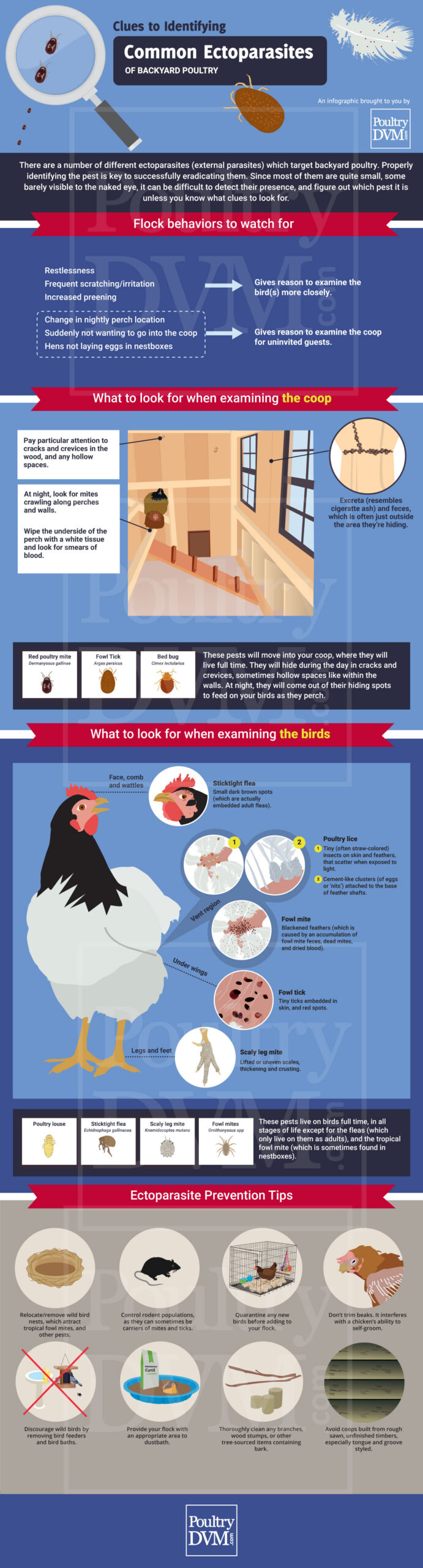
The vent zone is the primary habitat for external parasites. Part the feathers 1 inch below the cloaca under bright direct lighting:
- Northern Fowl Mites (Ornithonyssus sylviarum): Tiny 0.7 mm black, brown, or red specks crawling rapidly across the skin. Severe infestations cause dirty, soot-like discoloration on feather shafts composed of thousands of mites, cast skins, and dried blood feces.
- Chicken Body Lice (Menacanthus stramineus): Rapidly moving, straw-colored, 2 to 3 mm flat insects that run along the skin surface. Look closely at the quill bases: lice cement dense, hard, white, chalky clusters of egg nits resembling miniature sugar pearls around the feather shaft.
Zone 4: Rump, Preen Gland & Tail Base
Feather loss concentrated around the uropygial gland (preen gland) on top of the tail base strongly signals behavioral feather picking. Boredom, severe coop crowding (under 4 square feet per bird in the coop or under 10 square feet in the run), or low-protein diets induce aggressive flockmates to peck and consume feathers. Pecked quills appear chewed and splintered, and the exposed preen gland is frequently bruised or inflamed.
Diagnostic Examination Checklist for Poultry Keepers
Perform this rapid 4-step physical exam at night when birds are roosting and calm:
- Examine Under Direct Illumination: Use a bright LED headlamp or flashlight to inspect the skin surface beneath dense feather layers. External parasites avoid light and will quickly scurry across exposed dermis.
- Assess Shaft Integrity: Determine whether feathers fell out completely from the follicle (indicating natural molt) or snapped off midway along the shaft (indicating external friction from roosters, wire fences, or flock cannibalism).
- Palpate the Skin Surface: Healthy skin in molting chickens feels smooth, cool, and supple, displaying small conical dermal buds where new pin feathers are preparing to sprout. Parasite-damaged skin feels rough, warm, thickened, and crusty with dried inflammatory exudate.
- Check Flockmates: Evaluate how many birds share the condition. If only 2 out of 10 hens have bare backs, investigate rooster favoritism or behavioral bullying. If every hen in the coop has dirty, matted vent feathers, treat the entire flock and coop premises for external parasites immediately.
Targeted Interventions Based on Root Cause
| Identified Cause | Immediate Corrective Action | Long-Term Management Solution |
|---|---|---|
| Seasonal Molt | Switch base feed to 20% protein grower ration; minimize handling | Provide sulfur amino acids (methionine); ensure draft-free roosting |
| Rooster Overmating | Fit affected hens with heavy canvas chicken saddles (aprons) | Maintain proper 1:10 rooster-to-hen ratio; file dull rooster spurs |
| Mites or Lice | Dust vent and under wings with permethrin or food-grade sulfur | Clean coop completely; spray crevices with permethrin; provide dust bath |
| Feather Pecking | Isolate aggressive bullies; apply dark blue wound spray to wounds | Expand coop run space to 10 sq ft/bird; feed high-protein mash |
Verified Clinical References & Extension Sources
- Texas A&M AgriLife Extension: Common Poultry Parasites: Identification and Control.
- University of California Davis School of Veterinary Medicine: Backyard Poultry Health and Parasite Management.
- Merck Veterinary Manual: Ectoparasitic Infestations and Plumage Disorders in Gallinaceous Poultry.