
Chicken Swollen Eye or Eyelid: What to Check Next
Quick answer
If a chicken's eye or eyelid looks swollen, compare both sides of the face and record whether the eye is open, clear, injured, or producing discharge. Then listen for breathing changes and check whether other birds are affected. Do not put medication or household products in the eye without veterinary direction. Promptly seek veterinary help for injury, marked swelling, breathing difficulty, neurologic signs, rapid worsening, or a multi-bird pattern.
Quick facts
| Single Eye Affected | Mechanical trauma (peck wound, dust, debris, or foreign body) |
|---|---|
| Both Eyes + Bubbles | Respiratory infection risk (Mycoplasma gallisepticum or Infectious Coryza) |
| First Aid Flush | Flush single eye with sterile saline solution twice daily |
Chicken Swollen Eye & Facial Edema Triage Guide
Unilateral vs bilateral ocular swelling, foul-odor coryza differentiation, saline flush technique, and isolation rules.
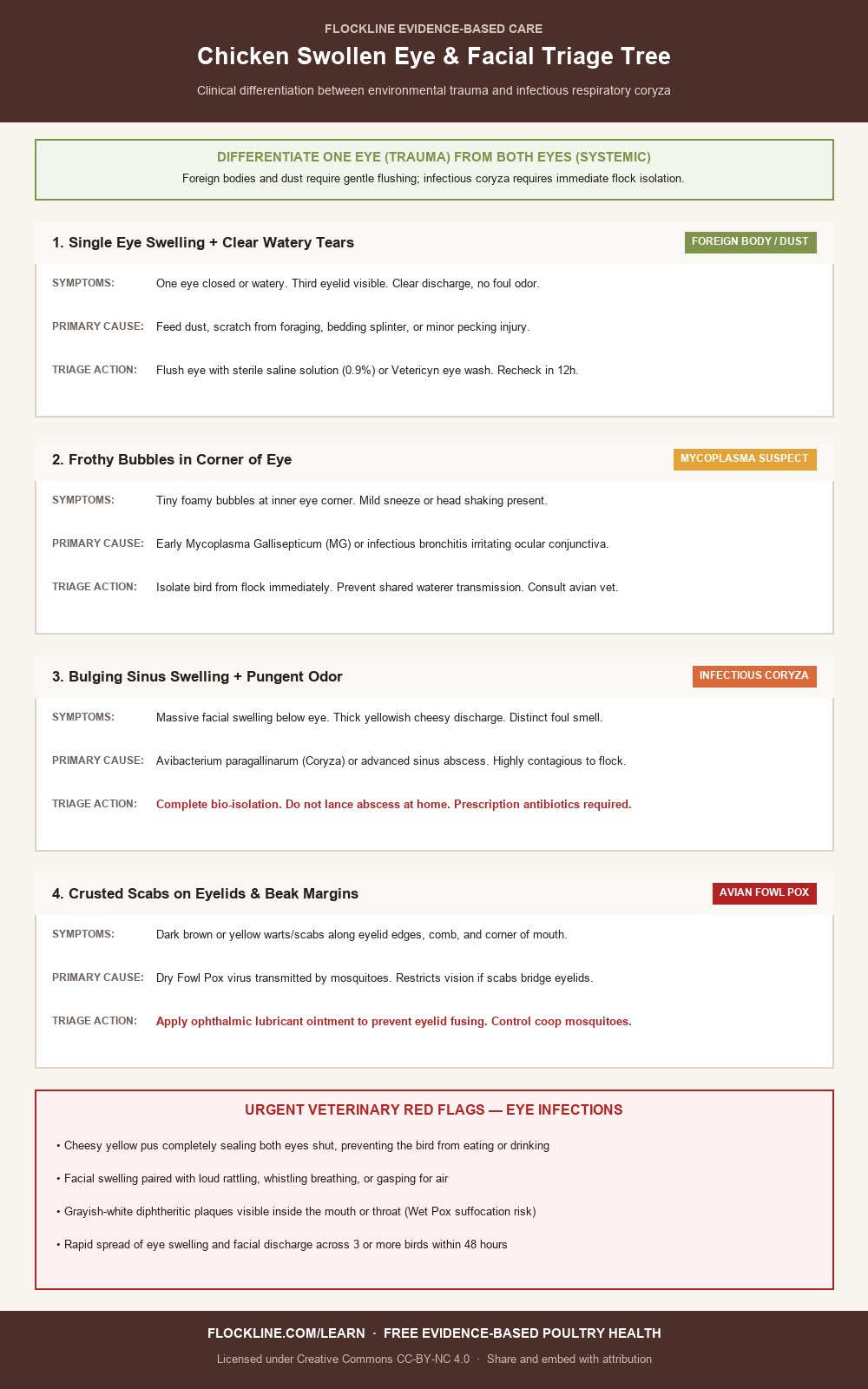
Compare both sides before touching the eye
Look from the front and each side in even light. Record whether one eyelid or both appear changed, whether the eye opens fully, and whether the surrounding face is symmetrical. Note clear, cloudy, foamy, or coloured discharge without trying to name a disease from that detail.
Listen while the bird is calm. Sneezing, noisy breathing, open-mouth breathing, or visible effort changes the urgency. Check the flock for the same eye, face, or respiratory signs because a multi-bird pattern matters.
Flockline eye-and-face comparison frame
One side
- Eye opening
- Fully open, squinting, or closed
- Eyelid
- Usual contour or visibly puffy
- Surface
- Clear, cloudy, injured, or obscured
Both sides
- Symmetry
- One side only or both sides
- Face
- Local eyelid change or broader head swelling
- Discharge
- None, clear, foamy, or coloured
Whole flock
- Breathing
- Quiet, noisy, open-mouth, or effortful
- Behaviour
- Eating, drinking, alert, or withdrawn
- Pattern
- One bird, several birds, sudden, or spreading
Record without delaying care
Take a clear photo of both sides and note the time the change was first seen. Do not repeatedly hold the eye open, remove material, or apply a remedy for the sake of a better image. A veterinarian may need the untouched appearance.
When an eye change is urgent
Seek urgent veterinary help if the bird collapses or cannot stand, has extreme difficulty breathing, uncontrolled bleeding, seizures or other marked neurologic signs, or is worsening quickly. Sudden illness or death in several birds, especially with respiratory, neurologic, swelling, or diarrhea signs, also needs prompt professional and local animal-health guidance.
What owners usually notice next
Choose the observation that most closely matches what you can see now. If urgent signs are present, contact a veterinarian rather than continuing through the guides.
- She is quiet or not eatingAssess the whole bird and the speed of change.
- The comb or face colour also changedCompare colour in even light and record the full pattern.
- Droppings also changedA repeated digestive change can help describe the whole illness pattern.
- More than one bird is affectedUse the checker only while arranging professional or animal-health guidance.
FAQ
Can I diagnose a respiratory infection from a swollen eye?
No. Eye swelling and respiratory signs can have multiple causes and may require examination and testing.
Should I put saline or drops in the eye?
Ask a veterinarian what is appropriate before applying a product, especially if there may be injury or a foreign body.
Does one affected bird mean it is not contagious?
No. One visible case does not establish the cause or whether other birds have been exposed.
Sources and references
- Ohio State University Extension: Poultry Health Factsheet VME-22 (Respiratory Diseases).
- USDA APHIS: Defend the Flock Respiratory Symptom Identification.