Pale Comb on a Chicken: Mites, Molt, or Worse?
Quick answer
Seeing a chicken pale comb and lethargic indicates poor circulation, blood loss, or severe illness. The most common causes are heavy infestations of red mites or northern fowl mites. Check the vent feathers and nighttime roosts for crawling insects. Internal issues like fatty liver disease or internal parasites also cause pale combs. Isolate the sick bird in a warm, quiet crate and provide electrolyte water to encourage drinking. Feed a high-quality protein ration to support recovery. Treat the entire flock and coop if you discover mites. If the bird collapses or shows labored breathing, seek avian veterinary care immediately to prevent fatal shock.
Quick facts
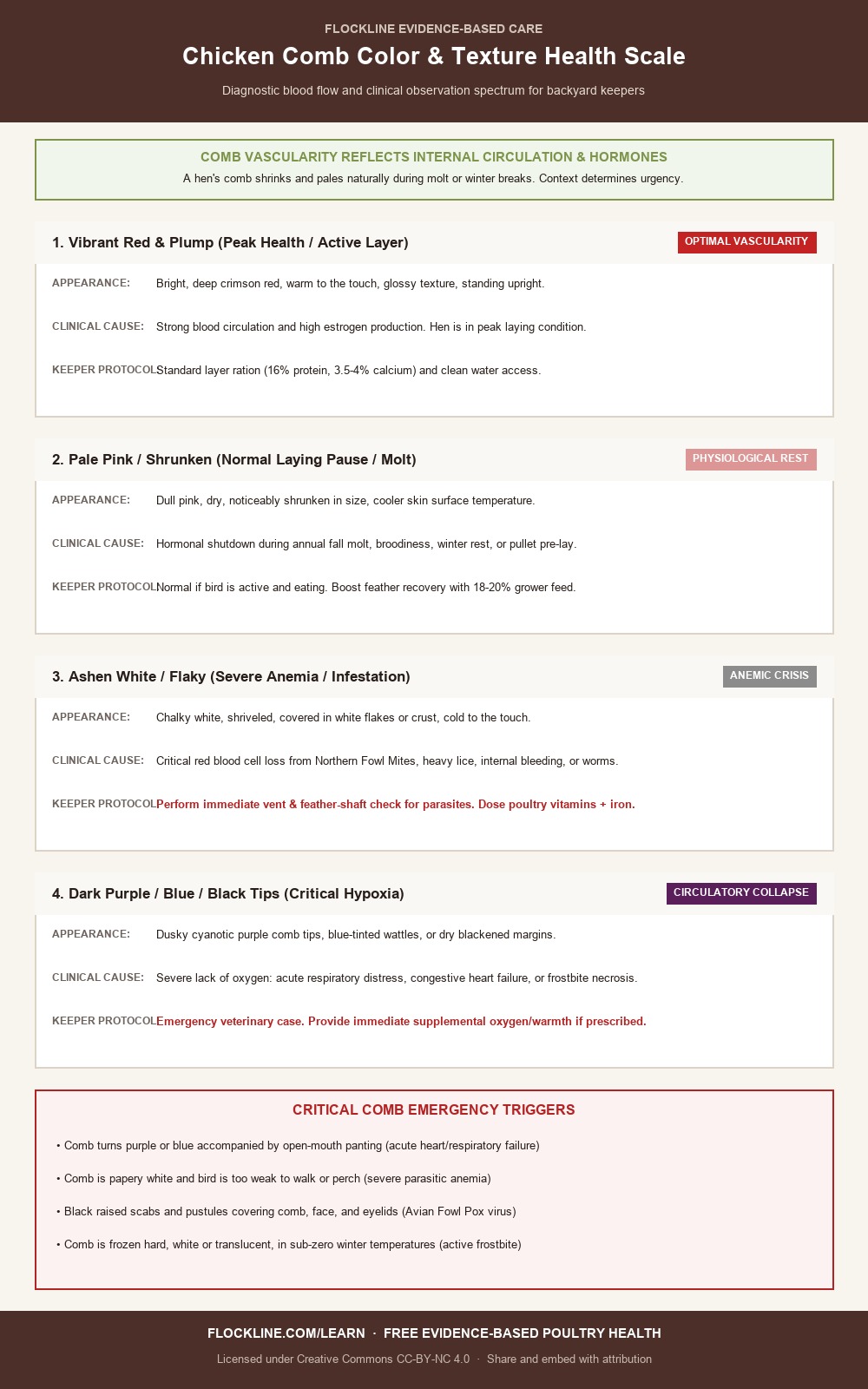
| Vibrant Red Comb | Active egg laying, high estrogen, strong blood circulation |
|---|---|
| Pale Pink Comb | Molting, seasonal laying break, or high summer heat stress |
| Paper-White Comb | Severe anemia, red mites, lice infestation, or internal bleeding |
| Primary Check | Inspect vent and feather shafts under wings for nocturnal mites |
Chicken Pale Comb Diagnostic Flowchart
Differential triage between natural molting dormancy, heat vasodilation, red mite blood loss, and internal laying disorders.
Verify that the colour really changed
Comb colour can look different across shade, warm indoor bulbs, camera settings, and wet or dusty surfaces. Move to even daylight without forcing the bird into bright sun. Compare with a recent image of the same individual rather than another breed or an internet photo.
Record whether the whole comb changed or only one area. Also note swelling, surface damage, bleeding, or dark discoloration. Those are separate observations and can change the urgency.
Flockline same-bird comb comparison
Keep constant
- Light
- Even daylight, away from strong colour casts
- Angle
- The same side and distance
- Bird
- Compare the individual with her own baseline
Describe, do not diagnose
- Colour
- Usual, lighter, darker, blue-purple, or mixed
- Surface
- Intact, dry, damaged, bleeding, or swollen
- Timing
- Sudden, gradual, constant, or intermittent
Add the whole bird
- Behaviour
- Alert, withdrawn, eating, drinking
- Body
- Standing, walking, breathing, eye changes
- Pattern
- One bird or several birds
What to record for a veterinarian
Save one unedited photo with the date and lighting noted. Add a short timeline and any behaviour, breathing, droppings, injury, or flock-level changes. Do not use a colour chart to self-diagnose a disease.
When a comb change is urgent
Seek urgent veterinary help if the bird collapses or cannot stand, has extreme difficulty breathing, uncontrolled bleeding, seizures or other marked neurologic signs, or is worsening quickly. Sudden illness or death in several birds, especially with respiratory, neurologic, swelling, or diarrhea signs, also needs prompt professional and local animal-health guidance.
What owners usually notice next
Choose the observation that most closely matches what you can see now. If urgent signs are present, contact a veterinarian rather than continuing through the guides.
- She is also lethargic or not eatingUse the broad triage sequence to assess the whole bird.
- Her tail or posture changedCompare stance, walking, breathing, and responsiveness.
- Droppings also changedRecord form, colour, frequency, and behaviour together.
- Colour is not the only changeUse the checker to choose the clearest next observation.
FAQ
Does a pale comb prove anaemia?
No. A colour change alone cannot identify anaemia or its cause.
Can I compare my hen with an online colour chart?
Use charts only to describe colour. The safest baseline is a recent photo of the same bird in similar light.
Should I edit the photo so the colour is clearer?
Keep an unedited original. Filters and automatic colour correction can change the appearance.
Pale Comb Differential Observation Matrix
Because comb color shifts naturally with hormones and blood circulation, use this observation matrix to distinguish normal seasonal cycles from urgent health concerns:
| Observation Category | Accompanying Physical Signs | Likely Context | Action Step |
|---|---|---|---|
| Molting or Out of Lay | Feather drop, shrunken comb, normal appetite, active foraging | Hormonal pause (non-laying pullet or molting adult) | Monitor, provide 18% protein feed |
| Heat Stress Fatigue | Open-mouth panting, wings held away from body, pale limp comb | Ambient heat wave over 85°F to 90°F | Provide cool water, electrolytes, shade |
| External Parasite Anemia | Dirty crusts on feathers, crawling specks under vent, lethargy | Heavy Northern fowl mite or red roost mite infestation | Dust with permethrin, deep clean coop |
| Internal Parasite Burden | Weight loss, dirty vent plumage, watery or frothy droppings | Intestinal roundworms or capillary worms | Perform fecal flotation test with vet |
| Severe Internal Bleeding / Shock | Pale white comb, cold feet, closed eyes, complete collapse | Urgent medical emergency (egg binding, trauma) | Immediate emergency veterinary care |
Sources and references
- Merck Veterinary Manual: Behavior & Physiology of Poultry.
- Penn State Extension: Biosecurity & External Parasite Controls.