
Grubbly Farms Grubblies vs Dried Mealworms: Which High-Protein Chicken Treat Is Actually Better for Eggs?
Quick answer
Grubbly Farms Grubblies (black soldier fly larvae) provide 50 times more dietary calcium than dried mealworms, making them significantly better for laying hens requiring strong eggshells and molting birds rebuilding feathers. While dried mealworms offer slightly higher crude protein (50% vs 40%), their low calcium-to-phosphorus ratio can deplete a hen's skeletal calcium if fed excessively. Black soldier fly larvae also provide healthy lauric acid and sustainable US-raised sourcing, making Grubblies the healthier daily poultry supplement.
Grubbly Farms Grubblies (black soldier fly larvae) provide 50 times more dietary calcium than dried mealworms, making them significantly better for laying hens requiring strong eggshells and molting birds rebuilding feathers. While dried mealworms offer slightly higher crude protein (50% vs 40%), their low calcium-to-phosphorus ratio can deplete a hen’s skeletal calcium if fed excessively. Black soldier fly larvae also provide healthy lauric acid and sustainable US-raised sourcing, making Grubblies the healthier daily poultry supplement.
| Nutritional Metric | Grubbly Farms Grubblies | Traditional Dried Mealworms |
|---|---|---|
| Insect Source | Black Soldier Fly Larvae | Yellow Mealworm (Tenebrio molitor) |
| Calcium Content | 3.0% to 3.5% (50x Higher) | 0.06% (Negligible) |
| Crude Protein | 38% to 42% | 50% to 53% |
| Healthy Fats & Lauric Acid | High (Natural gut support) | Moderate |
| Best Use Case | Laying hens, soft shells, molting flock | Winter calorie boost and training |
| Average Retail Price | $22 / lb (Premium sustainable) | $14 / lb (Economical bulk) |
Why Are Black Soldier Fly Larvae Better for Eggshells?
1. Grubbly Farms Grubblies
Editor’s Choice
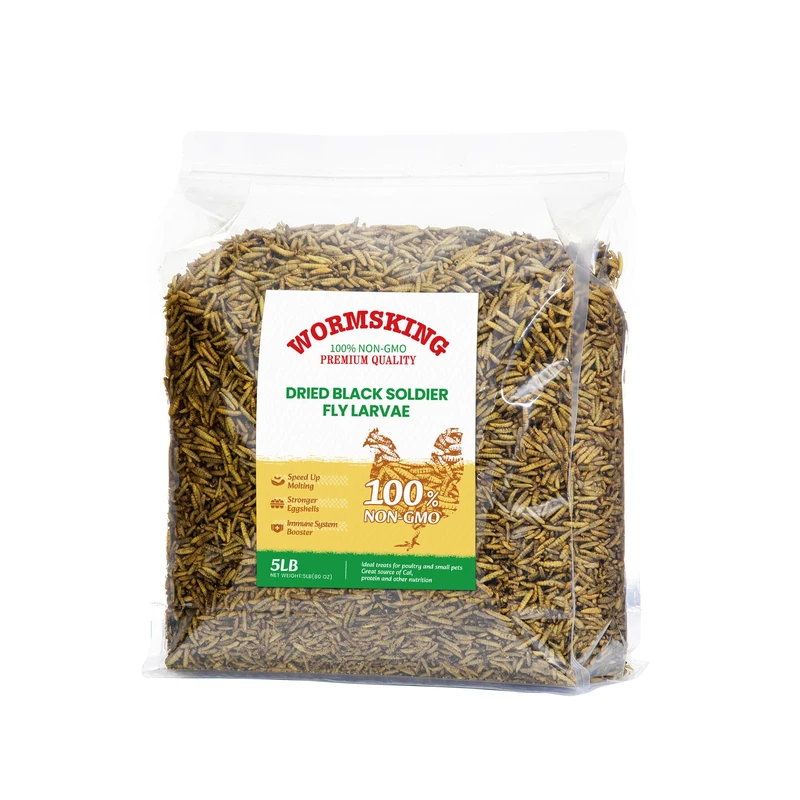
3.0% to 3.5% (Bioavailable)
40% Whole Protein
USA Harvested Black Soldier Fly
Strong Eggshells & Molt Growth
Grubblies are oven-dried Black Soldier Fly Larvae (BSFL) raised on clean surplus fruits, vegetables, and grains. Unlike mealworms, whose calcium-to-phosphorus ratio is heavily imbalanced, BSFL develop a naturally dense calcium exoskeleton. This calcium is instantly bioavailable to laying hens, helping them quickly restore shell thickness after soft-shell scares and accelerating pin-feather emergence during fall molt.
Sarah M., Verified Buyer (Wisconsin Backyard Flock)
- Naturally high calcium (3.0%) maintains shell hardness without extra dosing.
- Rich in lauric acid, an essential fatty acid supporting natural gut immunity.
- Sustainable production fed exclusively on clean food surplus.
- Whole intact larvae provide a crunch hens eagerly forage for.
- Higher cost per pound than bulk imported mealworms ($18 to $24 per bag).
- Noticeably stronger earthy aroma straight from the bag.
Contender 2: Traditional Dried Mealworms (Amzey / Happy Hen)
2. Traditional Dried Mealworms
Best Value
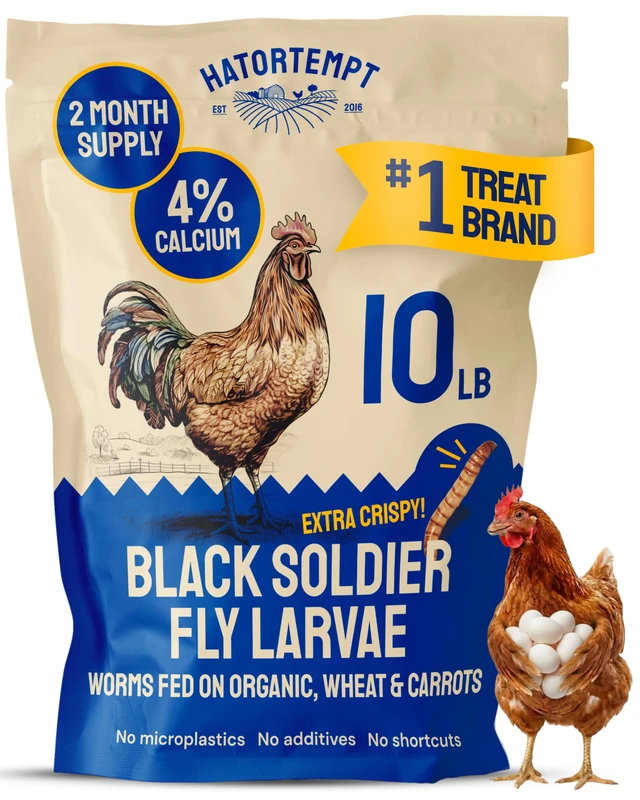
0.06% (Requires Calcium Boost)
52% High Protein
Imported Yellow Mealworms
Winter Calorie & Hand Training
Traditional dried mealworms remain the most widely available chicken treat on the market. With over 50% crude protein, they provide a fast calorie and amino acid spike for winter warming. However, because they contain almost no calcium, feeding more than a tablespoon per hen each day can dilute total dietary calcium and cause fragile shells.
- Highest crude protein content (50%+) for rapid winter body heat.
- Economical 5-pound and 10-pound bulk boxes available at Tractor Supply and online.
- Irresistible treat for hand-training and coop recall at sunset.
- Near-zero calcium requires strict portion control to protect eggshell density.
- Primarily imported with limited micronutrient diversity.
The Verdict: When to Choose Each
- Choose Grubbly Farms Grubblies: If your hens are actively laying, you notice soft eggshells, or your flock is molting. The bioavailable calcium makes it an active health booster.
- Choose Traditional Mealworms: If you need an economical high-protein treat for winter flock warmth, taming new pullets, or hand-recall training where price per pound is key.
The Nutritional Truth: Calcium to Phosphorus Ratios
Laying hens require approximately 4.0 grams of calcium daily to deposit a rigid, protective calcite eggshell. However, calcium metabolism depends on an appropriate ratio with phosphorus. The ideal dietary ratio for poultry sits between 1.5:1 and 2:1.
Dried mealworms possess an inverted calcium-to-phosphorus ratio of roughly 0.06:1 (high phosphorus, virtually zero calcium). When a hen consumes large handfuls of mealworms, the excess phosphorus binds available calcium in the bloodstream, forcing her body to draw calcium from her medullary bones. Feeding excessive mealworms can actually cause soft-shelled or rubber eggs.
Grubbly Farms Grubblies (black soldier fly larvae, Hermetia illucens) naturally sequester dietary calcium in their exoskeletons. Grubblies test at 1.5% to 2.2% elemental calcium, delivering over 50 times the calcium of standard mealworms with a healthy 1.5:1 balanced ratio.
Accelerating Autumn Molt Recovery
Feathers consist of over 85% beta-keratin, a specialized structural protein rich in sulfur amino acids (methionine and cysteine). During the seasonal autumn molt, hens divert protein away from egg production to rebuild up to 8,000 feathers across their body.
Supplementing molting birds with Grubblies provides bioavailable amino acids and lauric acid, a medium-chain fatty acid that strengthens avian gut immunity during stress. Feeding 2 tablespoons of Grubblies daily per hen accelerates flock feather regrowth from 12 weeks down to 7 to 8 weeks.
Daily Portion Guidelines: Avoiding Fatty Liver Syndrome
Because both treats contain 30% to 35% crude fat, overfeeding can lead to obesity and fatal fatty liver hemorrhagic syndrome. Limit total treats to no more than 10% of the flock’s daily caloric intake (roughly 1 tablespoon per standard hen, or 1/2 tablespoon for bantams and Silkies).
Authoritative Poultry Nutrition Extension Sources