
Can Chickens Eat Avocado? Persin Toxin & Fatal Cardiac Risks
Quick answer
No, chickens must never eat avocado. Avocado skin, pits, and leaves contain persin, a potent toxin that causes myocardial necrosis, fluid accumulation around the heart and lungs, and acute respiratory failure in chickens within 12 to 24 hours.
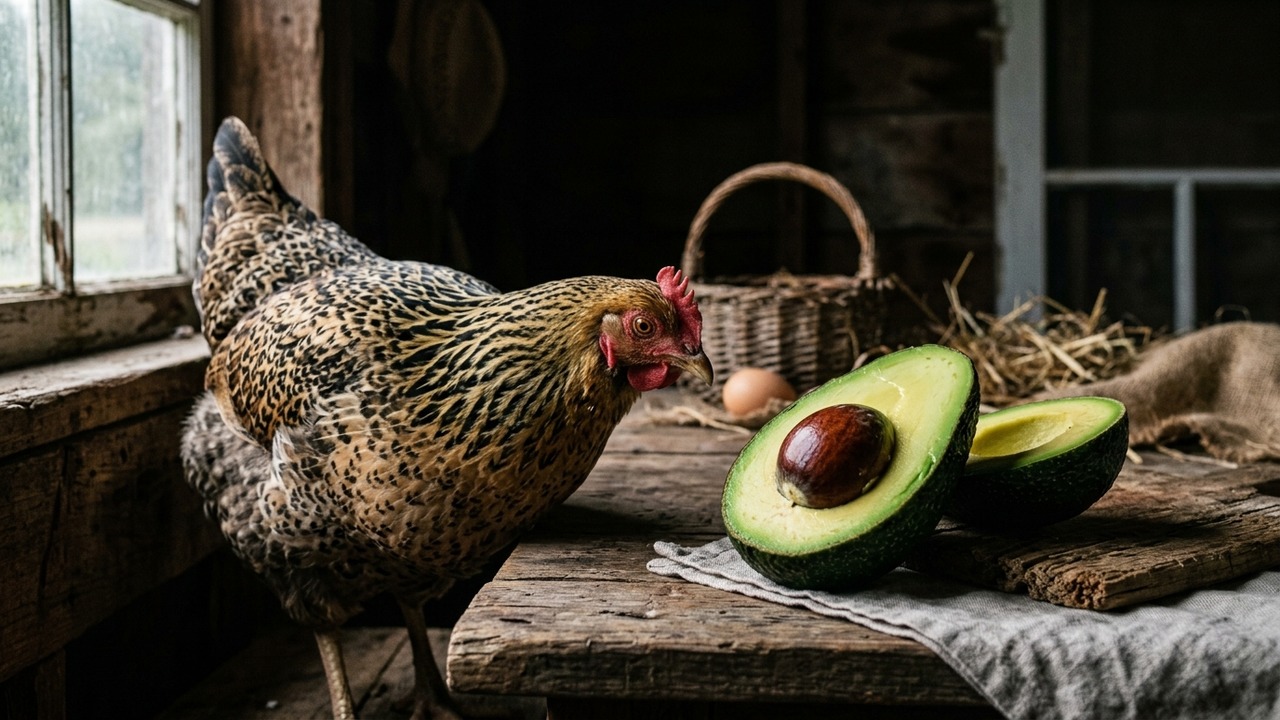
Quick Facts: Avocado Toxicity in Backyard Poultry
| Toxicity Level | Deadly (zero tolerance poultry food) |
|---|---|
| Toxic Chemical | Persin (fungicidal toxin / fatty acid derivative) |
| Highest Concentration | Dark pebbly skin, central pit, and tree leaves |
| Target Organs | Heart muscle (myocardium) and lungs |
| Time to Symptoms | 12 to 24 hours after ingestion |
| Mortality Rate | High in small avian species without immediate vet care |
Avocado Plant Parts: Persin Distribution & Dangers
While dogs and humans can digest avocado flesh safely, birds are uniquely sensitive to persin. Persin is an oil-soluble fatty acid compound produced by the avocado tree to kill fungus. Review this toxicity breakdown across plant parts:
| Plant Part | Toxicity Rating | Clinical Hazard |
|---|---|---|
| Dark Outer Skin (Peel) | Lethal | Highest persin concentration. Nibbling peels causes fatal cardiac arrest. |
| Central Seed (Pit) | Lethal | Packed with persin and tannins. Choking and chemical poisoning hazard. |
| Avocado Tree Leaves & Bark | Lethal | Extremely toxic. Keep chickens away from ornamental avocado trees. |
| Dark Green Flesh Near Skin | Highly Toxic | Persin leaches into outer green flesh layer from adjacent skin. |
| Pale Yellow Inner Flesh | High Risk | Contains lower persin, but trace amounts still trigger heart strain. Avoid! |
| Guacamole & Prepared Dips | Lethal | Combines avocado with toxic onions, garlic, and high refined sodium. |
How Persin Toxin Causes Fatal Heart Failure in Birds
Avian cardiovascular physiology makes chickens extraordinarily vulnerable to persin. Once ingested, persin rapidly enters circulation and targets heart muscle fibers (myocytes).
The toxin disrupts cellular calcium channels, causing severe necrosis of myocardial cells. As the heart weakens, fluid leaks into the pericardial sac surrounding the heart (pericardial effusion) and into the abdominal air sacs (pulmonary edema). The chicken cannot pump blood or expand its lungs, leading to acute respiratory gasping, cyanosis, and death within 24 to 48 hours.
Clinical Signs of Avocado Poisoning in Poultry
Because persin works silently on heart tissue, early symptoms can be subtle before sudden deterioration. In the first 12 hours, affected birds become depressed, stop eating, and sit motionless with fluffed feathers.
As pulmonary fluid accumulates, breathing becomes labored and noisy with open-beak gasping. The comb and wattles turn dark purple or blue (cyanosis) due to profound oxygen starvation. Birds may stand in a huddled posture with wings drooping. Death usually follows shortly after respiratory distress begins. If you suspect ingestion, consult an avian veterinarian immediately.
Preventing Accidental Avocado Exposure in the Run
Most avocado poisoning occurs when well-meaning family members toss kitchen scraps or compost bucket contents into the chicken run. Educate everyone in your household that avocado skins, pits, and guacamole scraps must go directly into sealed garbage bins, never into flock runs or open compost piles.
Provide safe, balanced commercial poultry rations, like proper layer feed vs grower feed, to ensure your hens have all necessary calories. For safe flock enrichment treats, stick to cored apples, watermelon wedges, or mealworms. Check our chicken coop size calculator for run guidelines.
The Bottom Line on Avocado for Chickens
Never give avocado to chickens under any circumstances. Persin in the peel, seed, leaves, and flesh causes fatal heart muscle necrosis, fluid buildup in the lungs, and sudden death. Keep all avocado scraps securely disposed of away from your flock.
Frequently Asked Questions
Is avocado flesh safe if I remove the skin and pit?
No, do not feed avocado flesh to chickens. While the inner yellow flesh has lower persin levels, it still carries risk and can cause cardiovascular strain in sensitive birds.
Can chickens eat guacamole leftovers?
No, guacamole is doubly dangerous because it contains toxic avocado combined with raw onions, garlic, and high salt levels, all of which harm poultry health.
Is there an antidote for persin poisoning in chickens?
There is no specific chemical antidote for persin. Veterinary treatment relies on supportive care, activated charcoal within hours of ingestion, and oxygen therapy.
Can wild birds eat avocado?
No, all birds, including wild songbirds, parrots, turkeys, and ducks, are fatally sensitive to persin. Never place avocados in wild bird feeding stations.
Evidence & Research Citations
- Merck Veterinary Manual: Avocado Toxicosis in Domestic Birds and Poultry
- Journal of the American Veterinary Medical Association (JAVMA): Cardiomyopathy in Birds Ingesting Persea americana (Avocado)
- Mississippi State University Extension: Common Toxic Foods and Plants for Backyard Flocks