
Layer Feed vs Grower Feed: When to Switch (Calcium Rules)
Quick answer
Layer feed vs grower feed is mainly a calcium decision. Keep growing birds on starter then grower. Switch to layer around 18-20 weeks or at the first egg. High-calcium layer rations too early can harm immature birds.
Quick facts
| Starter | Hatch to about 6 weeks; higher protein, low calcium |
|---|---|
| Grower / developer | About 6 weeks until just before lay; moderate protein, still low calcium |
| Layer | About 18-20 weeks or first egg; ~16% protein and ~3-4% calcium |
| Early layer risk | High calcium too early can harm developing birds |
| Scratch | Treat only; do not dilute the complete ration as the main diet |
Layer feed vs grower feed is mostly a calcium decision wearing a marketing costume. Grower rations support adolescent birds without the mineral load that eggshells demand. Layer rations add that calcium on purpose. Flip too early and you stress kidneys and bone development. Flip too late and shells suffer when lay begins.
Oregon State Extension’s PNW 477 and University of Maine’s backyard nutrition bulletin are the anchors here. Soft-shell triage is a sibling page for after odd eggs appear. This page owns the bag switch.
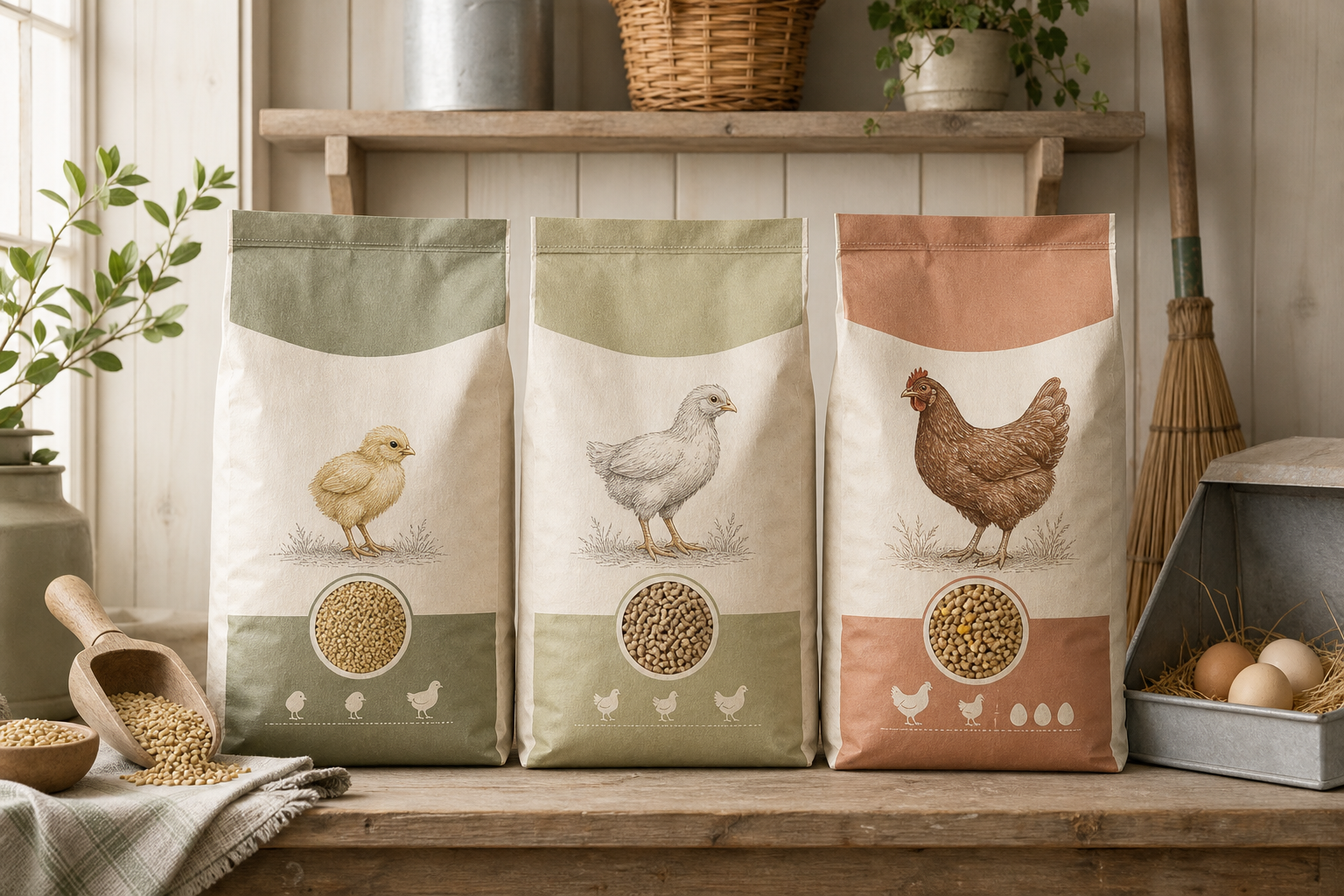
What each bag is for
Starter feeds support fast early growth, often around 18-20% protein depending on the brand. Grower and developer feeds step protein down and keep calcium modest while birds finish growing. Layer feeds usually sit near 16% protein with roughly 3-4% calcium so hens can build shells without draining their own skeletons.
Some stores sell a combined starter-grower. That can work if the label matches your birds’ age range. Read the tag. All-purpose bags still often need free-choice oyster shell once hens are laying, because calcium may not be high enough for shells.
The calcium line you should not cross early
Maine Extension is blunt: immature chickens on a layer diet can face improper bone formation, kidney failure, and in severe cases death, because the calcium level is too high for that life stage. That is why “just put them on layer early so shells are ready” is bad advice for pullets still weeks from lay.
If you keep mixed ages, a common practical pattern is to keep the shared flock on a grower-style complete feed and offer free-choice oyster shell where only layers can access it. Exact setups vary by housing. The principle stays: do not force high calcium into birds that are not laying.
When to switch
OSU’s pattern: start layer feed at about 18-20 weeks of age or when the first egg is laid, whichever comes first. Maine adds a caution not to introduce layer diet more than about two weeks before expected lay for light breeds. Gradual mixing over several days helps birds accept the new texture and reduces digestive fuss. Brand transition articles often suggest mixing for several days; follow your bag’s guidance and keep water constant.
Once hens are laying, shell quality problems still deserve nest and stress checks. See soft shell eggs rather than only shopping another bag.
Scratch myths
Scratch grains are entertainment and energy, not a balanced diet. OSU suggests limiting scratch to roughly what birds clean up in about 20 minutes, or about 10-15% of daily intake. Oklahoma State similarly caps kitchen scraps and grains near 10%. Diluting a carefully formulated feed with endless corn is how you create the deficiencies you later blame on the feed mill.
How to read the feed tag without a nutrition degree
Look for the intended stage on the front and the guaranteed analysis on the side. Protein percentage and calcium percentage are the two numbers that matter most for this decision. Layer tags should show distinctly higher calcium than grower tags. If calcium is not listed clearly, ask the feed desk or pick a brand that prints it.
Medicated starter feeds are a separate choice aimed at coccidiosis risk in chicks. Withdrawal and label rules matter if eggs or meat are in play. Grower and layer bags are typically non-medicated. Do not assume “chicken feed” on a clearance pallet is stage-correct.
Mixed flocks and molt pauses
When some birds are laying and others are not, free-choice calcium for layers plus a shared lower-calcium complete feed is a common compromise. During molt, many hens pause laying. Some keepers reduce calcium pressure when birds are truly out of production and return to layer feed as lay resumes. Maine’s bulletin discusses removing layer feed during unproductive molt periods in some management systems. Match the plan to your flock’s actual egg output rather than the calendar alone. Feather-loss timing context: when chickens molt.
If you raise meat birds and layers on the same property, do not share a single high-protein broiler starter long-term with future layers. Broiler rations push growth you may not want in egg stock. Keep programs separate when you can.
Common mistakes
- Switching to layer feed at 12 weeks because eggs feel imminent.
- Treating scratch as the main diet.
- Mixing oyster shell into feed for chicks instead of free-choice for layers only.
- Ignoring the feed tag on starter-grower combo bags.
- Blaming soft shells only on brand without checking nests, heat, and water.
FAQ
When do I switch from grower to layer?
About 18-20 weeks or at the first egg, whichever comes first (OSU PNW 477 pattern).
Can layer feed hurt young chickens?
High calcium too early can harm developing birds. Keep immature birds off layer rations.
Do I need oyster shell if I feed layer mash?
Many complete layer feeds are enough; free-choice oyster shell helps some high-producing hens. Offer it separately.
What about fermented feed?
This page does not cover fermentation methods. Keep stage-appropriate nutrition as the base.
Where does soft-shell triage fit?
After odd shells appear: use the soft-shell guide for nest and pattern checks.
Sources and further reading
- Oregon State Extension: How to feed your laying hens (PNW 477)
- University of Maine Cooperative Extension: Nutrition for Backyard Chicken Flocks (Bulletin 2222)
- Oklahoma State Extension: Backyard Flock Production
- Related: soft-shell eggs and raising chickens for beginners on Flockline Learn.