
When Do Chickens Molt? Timing, What to Expect, and Care Basics
Quick answer
Adult chickens typically molt about once a year, often in shorter-day seasons, shedding old feathers and growing pin feathers. Laying often slows. Confirm parasites are not the real issue if birds are itchy or declining.
Quick facts
| Typical timing | Often annual in adults; commonly associated with shorter days |
|---|---|
| What you see | Feather shed, pin feathers, scruffy look, often reduced laying |
| Duration | Often weeks, varying by bird and conditions |
| Not identical to mites | Differential lives in molting or mites |
| Care basics | Gentle handling, complete feed, dry housing, low stress |
| Cold note | Mid-molt birds have weaker temporary insulation |
When do chickens molt? Adult backyard hens typically molt about once a year, often as day length shortens, replacing worn feathers with new growth. Expect a scruffy phase, visible pin feathers, and often a laying pause.
This page is timing and care expectations. If itch, restless roosting, or visible pests confuse the picture, switch to molting or mites instead of guessing. Do not paste the same differential diagram onto both pages; use the link.
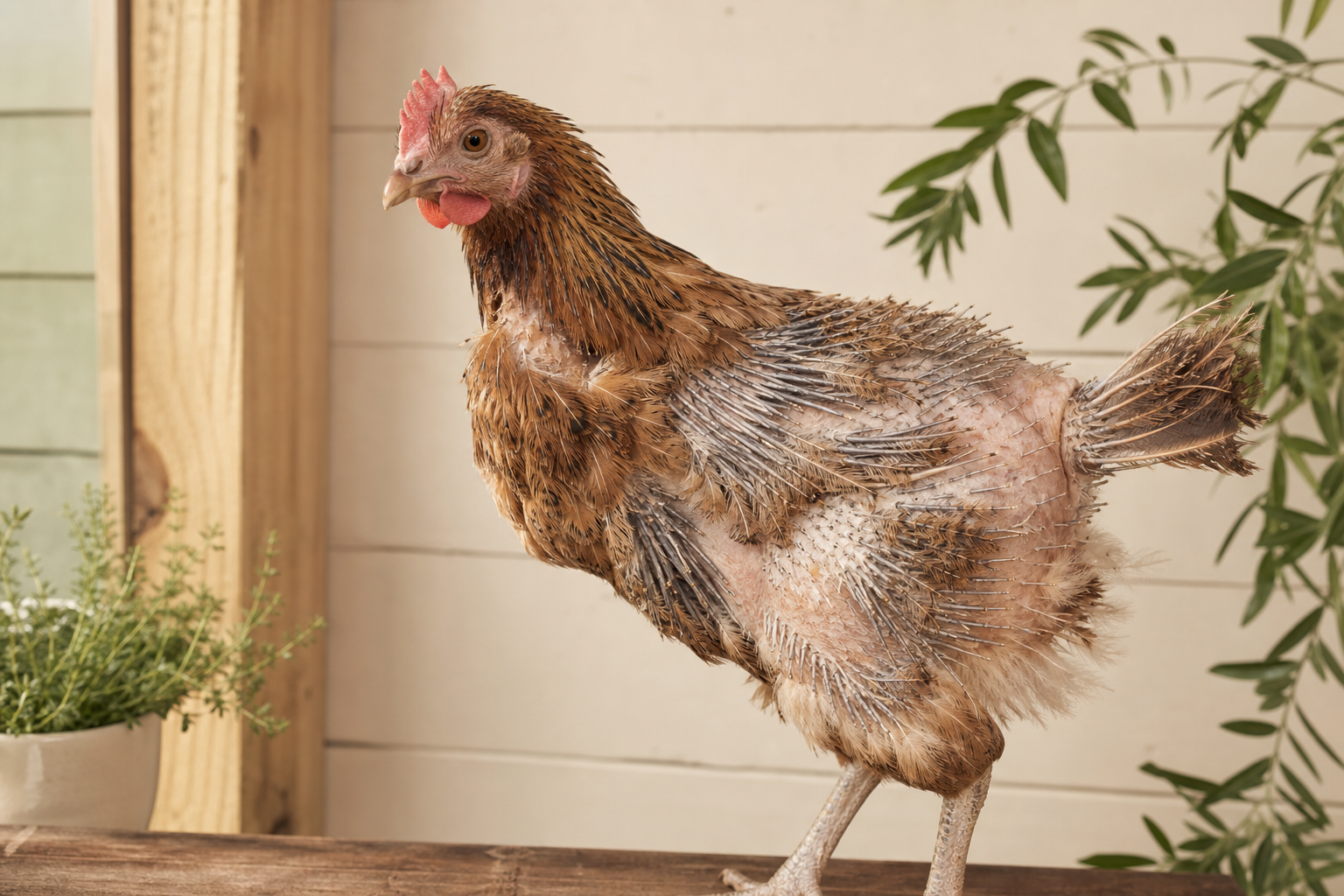
Typical timing
Many adult flocks show a major molt in autumn or around shorter days, though individual birds vary. First-year pullets may follow different patterns than older hens. Lighting programs, breed, and stop-of-lay management influence what keepers see.
UGA and related extension materials (Sources) treat molt as expected biology, not a crisis by default. Your job is to recognize the pattern, support the bird, and notice when something else is going on.
What to expect
Old feathers shed. Pin feathers emerge and are sensitive. Birds can look uneven or half-naked in stages. Egg production often drops while nutrients go to feathers. Mild behaviour changes are common: quieter birds, less interest in ranging, more time fluffing on the roost.
Severe lethargy, refusal to eat or drink, labored breathing, or a bird that looks toxic-sick is not “just molt” by default. Escalate when the bird itself looks wrong, not only when the feathers look dramatic.
When to stop assuming it is molt
Itchy restless birds, scabby skin, or visible pests point toward parasite investigation. Baldness alone is not a diagnosis. Walk through molting or mites before you decide everything is normal renewal.
A dry dust bath supports comfort behaviour during molt. It does not prove mites are absent.
Care basics during molt
Handle gently around pin feathers. Keep stress low: fewer flock moves, calmer catching, no new flock introductions if you can wait. Keep housing dry and ventilation honest. Nutrition should stay on a complete feed rather than a scratch-heavy diet.
Avoid inventing medication protocols from comment threads. Mid-molt birds have weaker temporary insulation; review cold nights and cold tolerance if weather turns while birds are half-dressed.
Track the cycle once
Note start dates, which birds look worst, and laying changes. Patterns across years help you stop panicking each autumn. Use the health record if multiple issues overlap (molt plus soft shells, coughs, or parasites).
Common mistakes
- Assuming every bald patch is molt and skipping a mite check.
- Rough handling of pin feathers.
- Sealing coops because molting birds look cold.
- Random supplements and drugs from social media.
- Treating a lethargic bird as “just molting” without a closer look.
FAQ
When do chickens molt?
Adults typically molt about yearly, often with shorter days, with individual variation.
How long does molt last?
Often weeks, varying by bird and conditions.
Will they stop laying?
Often laying slows or pauses while feathers regrow.
Is molt the same as mites?
No. Use the molt vs mites guide when signs overlap.
Do molting birds need a heater?
Not automatically. Fix drafts and dryness first; see the winter cluster guides if you are deciding on heat.
Sources and further reading