
How Cold Can Chickens Tolerate? Breed, Molt, and Housing Modifiers
Quick answer
Keepers often ask how cold can chickens stay outside in winter. Healthy, fully feathered adult chickens tolerate sub-freezing temperatures easily if they have a dry, draft-free coop. The real danger is moisture. Cold and damp air causes frostbite on combs and wattles. Ensure your coop has high ventilation to let humid air escape while keeping roosting birds out of direct wind. Check the birds at night to ensure they are sleeping close together. Avoid artificial heat lamps, which create fire hazards and prevent natural winter acclimation. If a bird appears shivering, hunched, or completely inactive, move them to a warmer indoor space.
Quick facts
| No single cutoff | Breed, feathering, dryness, and wind change tolerance |
|---|---|
| Bigger threats | Wet birds, roost drafts, sealed ammonia-heavy coops |
| This page is | Modifiers that make cold harder or easier for a given flock |
| Not this page | Heater shopping (winter heat) or the overnight roost walk-through (cold nights) |
| Chicks | Separate rules: heat lamp duration |
| Molt note | Half-feathered birds have weaker temporary insulation |
How cold can chickens tolerate? The honest answer is: it depends on the bird in front of you and the air moving across the roost.
This page explains the modifiers: feather condition, breed and comb type, molt stage, wetness, and wind. It does not decide whether to buy a coop heater, and it is not the after-dark audit. Use coop heat in winter for buy-or-skip, and cold nights when you are walking the roost with a flashlight.
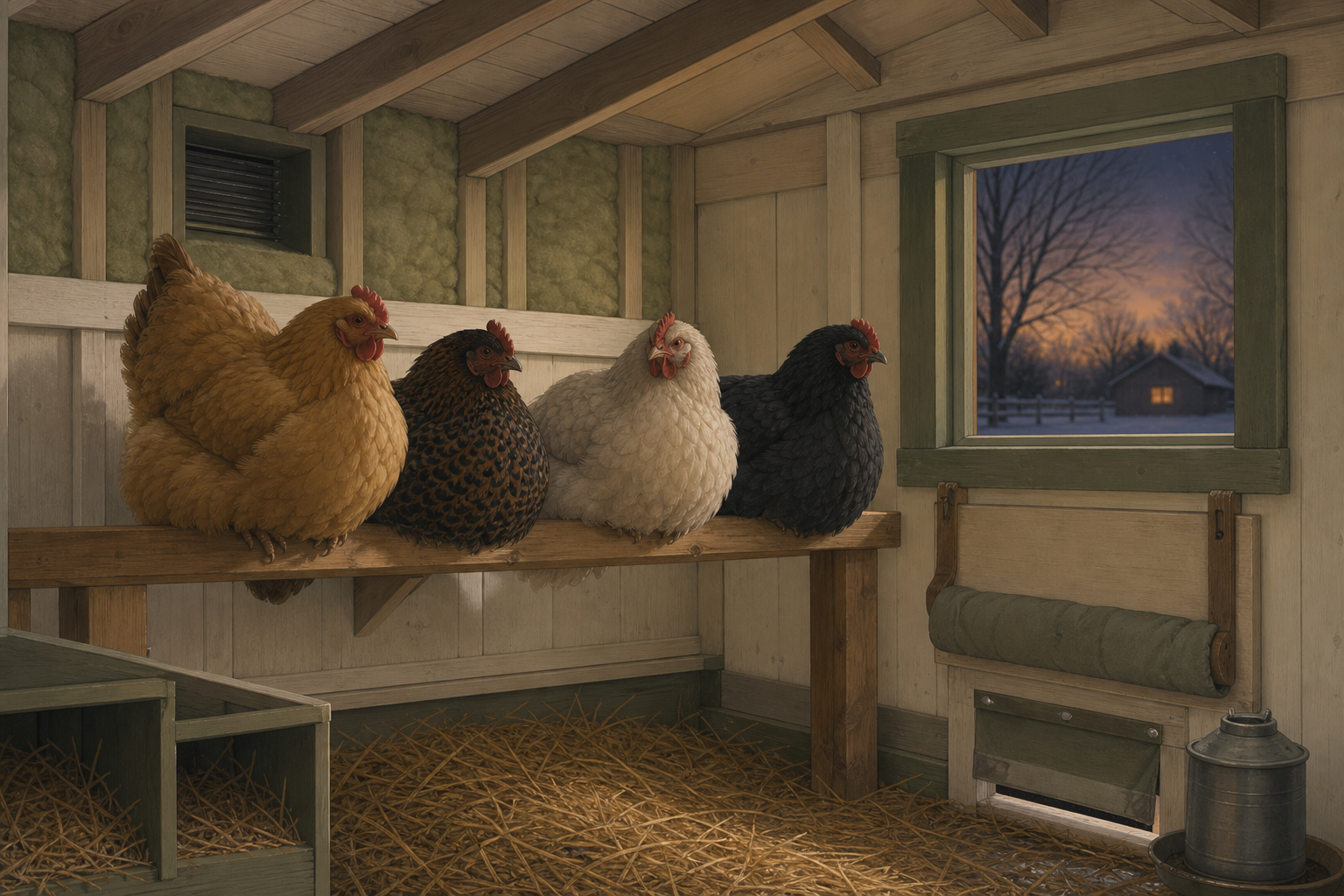
Tolerance is conditional
Feathers insulate when dry and fluffed. Wind and moisture destroy that advantage. A hardy dual-purpose hen in dry housing is not the same animal as a large-combed bird standing wet in a wind tunnel.
Body condition and molt status rewrite the risk even when the weather app shows the same number. Two flocks at 15°F can have completely different stories if one sleeps in still, dry air and the other roosts in a draft with damp litter.
Breed, comb, and body type
Heavy, well-feathered dual-purpose birds often shrug cold air when housing is sound. Mediterranean breeds with large single combs can handle cold air too, but comb frostbite risk rises when roosts are drafty or birds get wet. Small combs and rose combs are not magic armor; dryness and still roost air still win.
Do not treat breed charts as a reason to ignore wet litter. Breed is a modifier, not a substitute for housing.
Molt and body condition
Mid-molt birds have weaker temporary insulation while pin feathers replace the old coat. Timing and care basics live in when chickens molt. Thin, sick, or poorly feathered birds deserve a lower bar for concern than a robust hen in full plumage.
If feather loss looks wrong for the season, compare molting or mites before you decide it is “just winter.”
Adults vs chicks
Do not apply adult cold tolerance to downy chicks. Chicks need controlled supplemental heat and a measured wean. See how long chicks need a heat lamp and when chicks can go outside.
Housing still rewrites the thermometer
Prioritize dry litter, still air at roost height, high ventilation, and unfrozen water. Review ventilation and bedding. Keep winter openings screened with hardware cloth.
Extension small-flock winter guidance (Sources) returns to dryness and draft control more often than to a universal °F rule. That is the point of this page: your flock’s modifiers matter more than a viral cutoff number.
Signals louder than the forecast
Frostbite risk on combs, birds refusing roosts, wet feathers, lethargy, and ammonia sting matter more than a headline low. If the flock looks miserable in a wet draft, fix the housing story before shopping for heat.
Where heat fits (and where it does not)
Supplemental heat can be the wrong first fix for healthy adults and adds fire risk. The decision frame lives on does a chicken coop need heat in winter. This page only asks whether your flock’s condition and housing make cold harder than the neighbor’s flock with different birds.
Related winter intents (not duplicates)
- This page: What makes cold harder or easier for this flock?
- Need heat in winter? Buy-or-skip heater decision and fire risk.
- Too cold at night? Night roost draft and frostbite audit.
Common mistakes
- One universal °F rule for every breed and every coop.
- Sealing coops airtight to “keep heat in.”
- Treating chicks like adults (or the reverse).
- Default heat lamps before fixing wet litter and roost drafts.
- Ignoring molt or poor condition while trusting a breed chart.
FAQ
How cold can chickens tolerate?
It depends on dryness, drafts, breed, and condition. Healthy dry adults often handle cold air in good housing.
Is there a cutoff temperature?
No single number fits every flock.
Do they need heat lamps?
Often not for hardy adults in dry, draft-free housing. See the winter heat guide for the buy-or-skip frame.
Does breed matter?
Yes. Comb type, body type, and molt status change risk.
Why is my flock colder than my neighbor’s at the same temperature?
Housing dryness, roost drafts, feather condition, and bird vulnerability usually explain the gap.
Sources and further reading