
Chicken Coop Bedding: Materials, Depth, and Cleaning Tips
Quick answer
Chicken coop bedding should stay dry, cushion feet, and be manageable to clean. Popular options include pine shavings and similar dry litters. Pair bedding choice with good ventilation and separate cleaner nest material.
Quick facts
| Job of bedding | Absorb moisture, cushion birds, make cleaning practical |
|---|---|
| Popular options | Pine shavings and other dry, manageable litters where available |
| Fail signal | Ammonia sting in your eyes, wet packs under roosts, moldy stored bales |
| Nests vs floor | Nest material should stay cleaner than floor litter |
| Pairs with | Ventilation; bedding cannot rescue a sealed wet box |
| Depth | Enough to absorb droppings without becoming a wet anaerobic pack |
People argue about bedding brands the way people argue about coffee. Meanwhile the coop fails for a simpler reason: it is wet, crowded, and poorly aired.
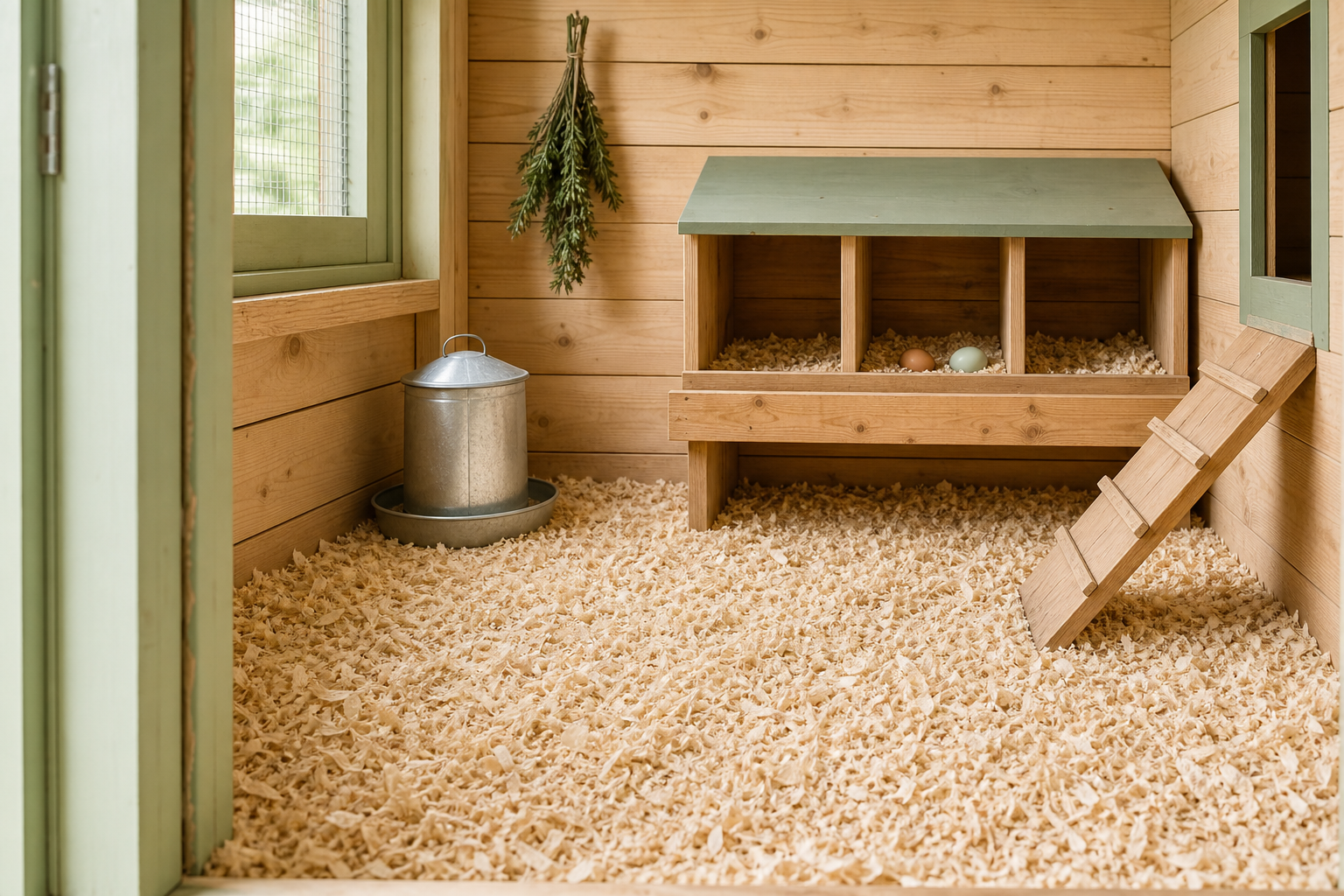
Chicken coop bedding is floor litter that keeps birds above manure packs and makes cleaning possible. The best bedding is the one you can keep dry in your climate with your flock size. Pair it with ventilation, keep nest material cleaner than the floor (nesting boxes), and stop asking litter to compensate for overcrowding (coop size calculator).
What bedding should actually do
Absorb moisture. Cushion feet. Survive a cleaning schedule you will keep. If litter is always sodden, fix leaks, drinker spills, and airflow before you chase a different bag at the feed store.
Bedding is not insulation magic that lets you seal the coop for winter. Dry litter plus high screened vents is the winter pattern; see the seasonal cluster if you are deciding on heat.
Common materials, without mysticism
Many backyard keepers use pine shavings or similar dry wood-based litters. Chopped straw shows up in some systems and mats when wet. Sand works for some dry-climate keepers with a different cleaning rhythm. Avoid moldy stored bales and mystery dust that irritates birds and people.
Local availability and disposal options matter as much as theory. NC State and UGA small-flock materials (Sources) keep returning to dryness and management over brand loyalty. Cedar and heavily aromatic products show up in debates; if birds or people cough around a litter choice, switch.
Depth and method
Use enough depth to absorb daily droppings under roosts without creating a wet anaerobic pack. Some keepers prefer frequent full cleanouts. Others maintain a deeper litter with stirring and topping if it stays dry and does not smell sharply of ammonia.
Ammonia sting in your eyes is a fail signal: remove wet packs and improve ventilation. Do not “fix” ammonia with a sealed building and a scented additive. That is how respiratory problems start.
Nests are a cleaner micro-zone
Nest bedding cushions eggs and should stay fresher than floor litter. Soft-shell messes need faster cleanup; see soft shell eggs. Keep nests lower than roosts so birds sleep on roosts, not in boxes.
A dust bath belongs in the run, not mixed into nest or floor litter: chicken dust bath.
A rhythm you will keep
Match cleaning to flock density, drinker design, and weather. Droppings boards under roosts reduce floor load. Spot-clean wet rings around waterers daily. Schedule deeper refreshes before wet seasons.
On cleaning day, confirm latches and mesh still meet hardware cloth standards. Litter refresh is a good time to notice chewed staples and soft wood.
Common mistakes
- Sealing the coop then blaming the bedding brand for ammonia.
- Ignoring wet rings around waterers while topping dry corners.
- Using moldy stored bales because they were on sale.
- Overcrowding until no litter can keep up.
- Treating nest boxes like floor litter and wondering why eggs get filthy.
FAQ
What is the best chicken coop bedding?
The best is dry, available, and manageable in your climate. Many keepers use pine shavings or similar dry litters.
How deep should bedding be?
Deep enough to absorb droppings without becoming a wet pack. Adjust to flock size and weather.
Why does my coop smell like ammonia?
Wet litter and poor airflow. Clean wet packs and improve ventilation.
Should nests use the same bedding?
Use clean dry nest material and refresh it more often than floor litter.
Does deep litter replace ventilation?
No. Deep litter only works while it stays dry and does not sting your eyes.
Sources and further reading