
Chicken Dust Bath: Materials, Placement, and Setup Tips
Quick answer
A chicken dust bath is a dry, loose digging spot where hens toss fine material through their feathers. Provide a sunny, drained, secure bath with simple dry soil or sand, and refresh it when wet or filthy.
Quick facts
| What it is | A dry, loose station where chickens dig and toss material through feathers |
|---|---|
| Why provide one | Keeps comfort behaviour inside the secure run; fewer garden craters |
| What it is not | A guaranteed mite cure or a place for pesticide recipes |
| Placement | Sunny, drained spot away from feed and water, behind secure mesh |
| Materials | Dry soil, play sand, or simple dry mixes; skip oils, mothballs, treated ash |
| Maintenance | Refresh when wet, compacted, or manure-heavy |
Chickens will invent a dust bath whether you approve or not. The only real question is whether that bath is a dry tub inside a secure run or a crater under your rosemary.
A dedicated chicken dust bath is simply a dry, loose station for normal feather-tossing behaviour. Keep it boring, keep it dry, and keep it behind hardware cloth. If feather loss looks wrong for the season, that is a different conversation: molting or mites.
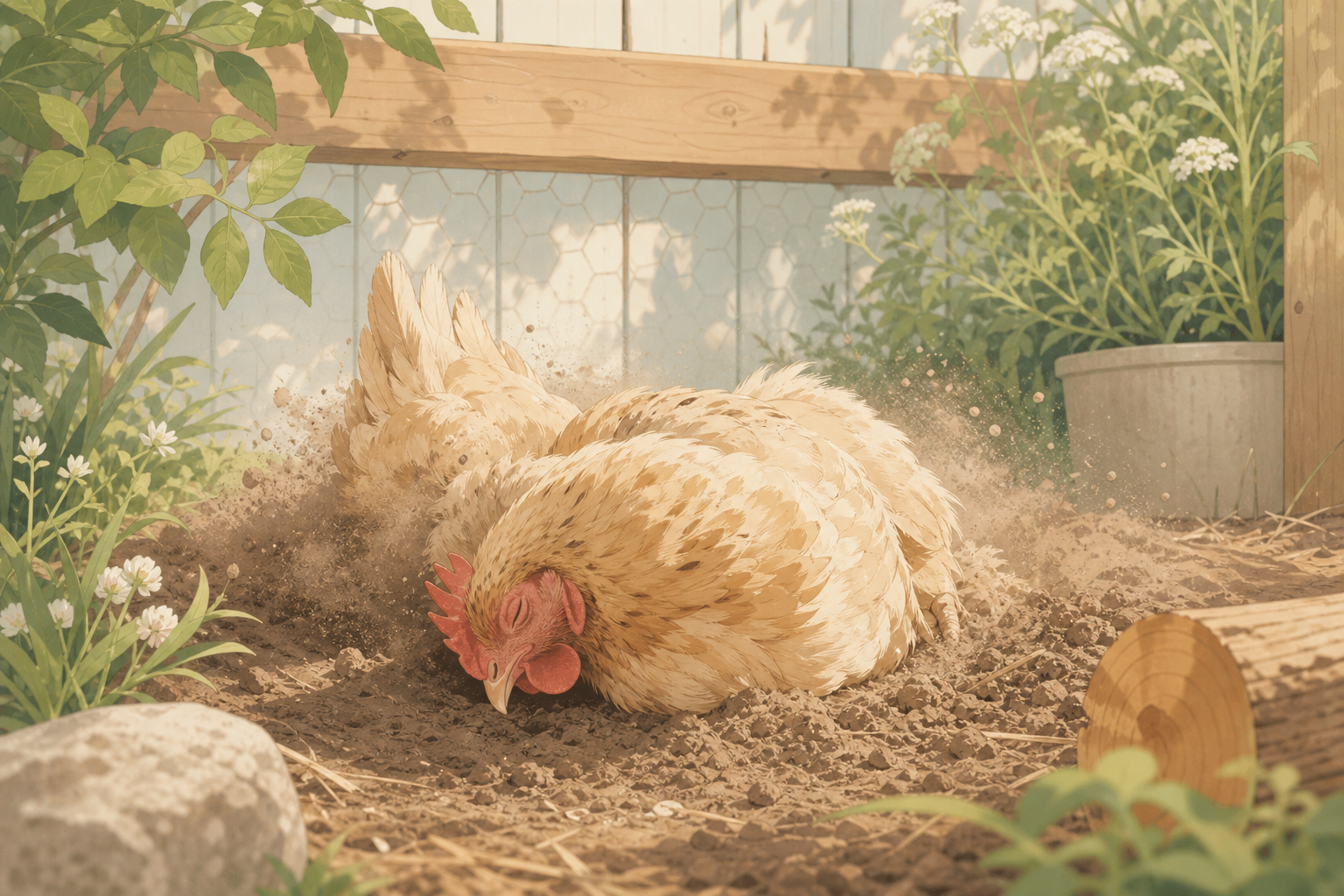
Why they dig like that
Dust bathing is comfort and social behaviour, not a personality quirk. Birds dig, fling, wriggle, and stand up shaking. Without a bath, hens dig wherever the soil is soft: flower beds, compost, the driest corner of a muddy run.
Providing a bath does not replace parasite inspection. Itchy birds, restless night roosting, scabby skin, or visible pests still deserve a closer look. The bath is husbandry infrastructure. Diagnosis lives elsewhere.
Put it where they already want to dig
Sunny and drained beats a mud pit under the eaves. Keep it away from feed and water so the bath does not become a compost bowl of spilled scratch and droppings. In rainy climates, a simple cover or a spot under a run roof helps the material stay dust instead of paste.
Free-range flocks still need a home bath for lockup days and foul weather. Range time is optional enrichment on top of housing; see chicken free range. Never leave an unsupervised open bath outside secure housing overnight in predator country.
Materials that stay boring on purpose
Dry soil, play sand, or blends that stay loose work for many keepers. Some mix a little dry soil into sand so it clumps less like beach sand and more like a diggable pit. Depth of several inches matters more than exotic additives.
Skip oils, mothballs, and unverified powders sold as “natural mite killers.” Treated ash and BBQ ash are a hard no. If a recipe sounds like a chemistry set, it does not belong in a dust bath. Extension small-flock materials (Sources) emphasize husbandry and dryness over improvised pesticide stations.
Size without overbuilding
A plastic tub, framed pit, or dug area large enough for a few hens at once is enough. Birds often bathe socially; one tiny dish creates a queue and a fight. Drill drainage holes in solid tubs so a storm does not turn the bath into a bird bath.
Confirm the run still has room to move after you add the station. Use the coop size calculator if the flock has outgrown the footprint. A bath that steals the only dry corner is a trade you will regret in wet weeks.
Refresh when it stops being dust
Wet, compacted, or manure-heavy material is just dirt. Scoop or replace it. Spot-check after storms. Pair bath checks with the rest of your dryness habit: ventilation and coop bedding. A dry bath in a wet ammonia coop does not fix the bigger problem.
During molt, keep the bath available and handle birds gently around pin feathers. Timing and care expectations live in when chickens molt.
Common mistakes
- Assuming the bath cures mites so you skip looking at the birds.
- Toxic additives and treated ashes sold as “natural.”
- Permanent mud pits under a roof drip line.
- Leaving an unsupervised bath outside secure housing overnight.
- Placing the bath next to feed and water until it becomes a compost bowl.
FAQ
What is a chicken dust bath?
A dry, loose area for normal feather-tossing comfort behaviour.
What materials work?
Dry soil, sand, or simple dry mixes. Avoid toxic additives and treated ash.
Do baths prevent mites?
Not as a guarantee. Inspect birds when symptoms appear.
How big should it be?
Large enough for multiple hens with several inches of loose material.
Do free-range flocks still need one?
Yes for lockup days, rain, and nights when birds are inside the secure run.
Sources and further reading