
Chicken Coop Ventilation: Fresh Air Without Drafts on the Roost
Quick answer
Healthy chicken coop ventilation moves moist, ammonia-heavy air out while keeping cold drafts off roosting birds. Use high, screened vents, not a sealed winter box and not a wind tunnel at roost height.
Quick facts
| Goal of ventilation | Move moist, ammonia-heavy air out while keeping cold drafts off roosting birds |
|---|---|
| Best vent location | High openings near the roof peak / gables, above roost height |
| Draft rule | Air should exchange overhead; roosts should not sit in a wind tunnel |
| Winter mistake | Sealing the coop airtight “for warmth”, moisture and ammonia then build overnight |
| Predator note | Every vent must be covered with hardware cloth, securely fastened |
| Quick morning check | Smell at bird head height; strong ammonia means more airflow or wet-spot cleanup |
| Pairs with | coop size, nesting capacity, and cold-weather checks |
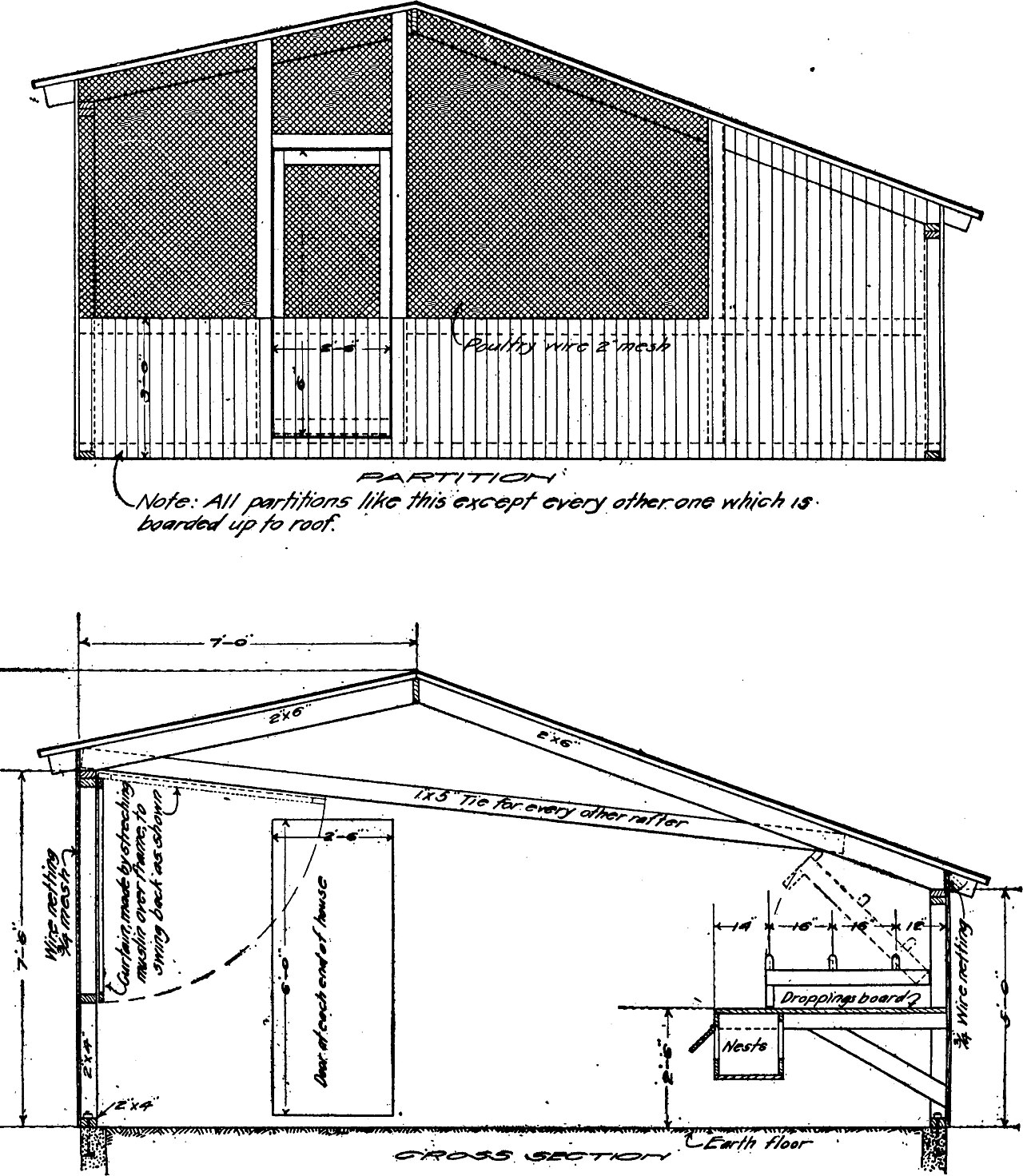
If you searched for chicken coop ventilation, you are usually solving moisture, ammonia, or frost, not “how do I make the coop hotter.” Healthy airflow exchanges air above the birds while keeping cold wind off the roost. Pair predator-proof mesh with planned openings so fresh air does not become a raccoon door.
See it in context
Poultry educator Jacquie Jacob’s small-flock housing talk is useful for seeing how ventilation and predator screening sit in the same design. Local climate still decides opening size.
Why chicken coop ventilation matters
Chickens release a lot of moisture overnight through breathing. Droppings add more moisture and ammonia. In a sealed coop, that wet air condenses on cold walls and ceilings, dampens bedding, and irritates eyes and airways.
- Moisture: wet litter and frost on walls are early warnings.
- Ammonia: a sharp smell at head height means air exchange or cleaning is behind.
- Respiratory comfort: birds handle cold, dry air better than cold, wet, ammonia-heavy air.
- Predator safety: openings must exist and be mesh-covered, see hardware cloth for chicken coops.
Where to put vents (without drafting the roost)
Think of the coop as a chimney: stale air rises; you want exits near the peak and intakes that do not blast the roost.
- Place openings near the roof peak or high on opposite walls for gentle cross-flow.
- Keep roost bars out of the direct wind path, birds should feel still air at roost height.
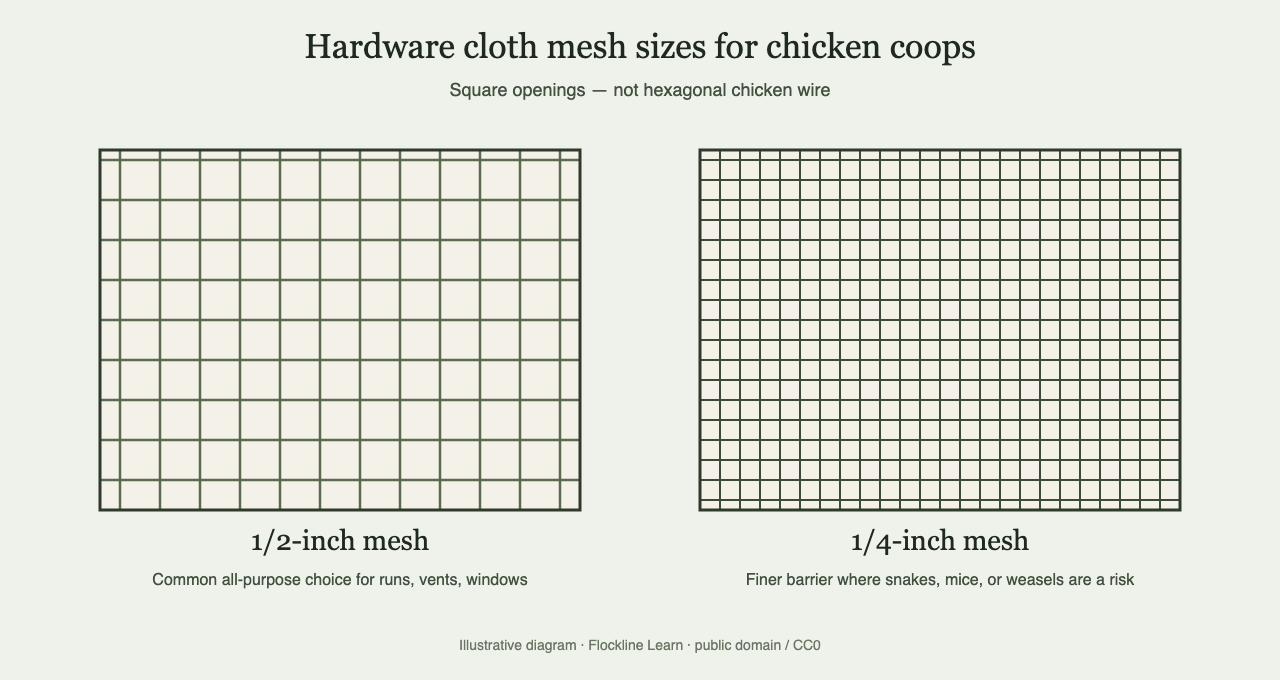
- Cover every vent with hardware cloth fastened to solid framing (washers/screws beat zip ties).
- Use adjustable panels or covers so you can reduce opening size in storms without sealing shut.
- Watch eaves, fan ports, and automatic-door gaps, they need the same mesh standard as windows.
Crowding makes air quality worse. Confirm space with the chicken coop size calculator before you blame the vents alone.
Winter vs summer ventilation
Winter: keep continuous high exchange so moisture leaves. Reduce opening size in driving wind/snow, but leave a planned high path. Extra heat lamps or sealed walls do not fix wet bedding, see also what temperature is too cold for chickens at night.
Summer: increase free area, add shade, and ensure run airflow. Heat stress shows as panting and wing-spreading; cold drafts are less the issue than stagnant hot air.
Weekly checks that catch problems early
Progress saves in this browser. Print this page or download the PDF for a paper copy.
Common mistakes
- Sealing the coop to “keep heat in.”
- Vents at roost height that blow on sleeping birds.
- Unscreened openings that invite predators.
- Ignoring ammonia sting while chasing a thermometer.
- Blocking all winter vents with solid covers.
- Assuming one fan fixes a wet sealed box.
Expert tips (practical, not veterinary)
- Do a night walk with a flashlight after a cold snap, frost patterns show where moist air hits cold surfaces.
- Keep a spare mesh patch and washer pack so a damaged vent edge gets fixed the same day.
- If you add a heat source for chicks or emergencies, re-check airflow, heat can hide a moisture problem until morning.
- Plan nest capacity and space before resizing vents so you are not cutting openings twice.
Decision guidance
- Sharp morning ammonia: increase high exchange and clean wet litter first.
- Frost on walls, dry birds: improve overhead exchange; do not seal tighter.
- Birds huddled off a windy roost: block the draft path at roost height; keep peak vents open.
- Predator pressure: screen every opening before enlarging vents.
- Crowded flock: fix space with the coop size calculator, then revisit airflow.
FAQ: chicken coop ventilation
How much ventilation does a chicken coop need?
Enough continuous high exchange that morning air is not sharp with ammonia and walls are not sweating. Exact square inches vary by coop volume, flock size, and climate, start with high openings you can adjust, then tune by smell and moisture.
Should I close chicken coop vents in winter?
Reduce opening size in storms if needed, but keep a planned high path open. Closing everything for warmth is a common path to wet bedding.
What is the difference between ventilation and a draft?
Ventilation exchanges air above birds. A draft is moving cold air across the roost. Birds need the first; they dislike the second.
Do vents need hardware cloth?
Yes for overnight openings. Use sturdy hardware cloth on solid framing, details in the hardware cloth guide.
My coop smells, is that normal?
A mild litter smell can happen; sharp ammonia at head height is a fix-it signal (airflow + wet spots), not a personality trait of coops.
Sources and further reading
- NC State Extension: Keeping Garden Chickens in North Carolina
- University of Georgia Extension publication C1091
- eXtension poultry resource hub (poultry.extension.org)
- Flockline Learn related guides linked in this article.
- Community patterns synthesized from public backyard-poultry discussions; individual forum URLs are not cited because they rot and anecdotes vary.
Next steps
- Walk the coop at bird head height tomorrow morning, note smell, frost, and damp litter.
- Confirm every vent is screened with hardware cloth.
- Move or shield roosts out of any direct wind path.
- Recheck flock space and nest capacity so airflow is not fighting overcrowding.