
How Many Nesting Boxes Per Chicken? Simple Flock Math
Quick answer
Plan about one nesting box per 4-5 hens, then adjust for floor eggs and favourite-box traffic. Keep nests lower than roosts, dry, and dim. Sharing is normal.
Quick facts
| Common rule of thumb | About 1 nest box per 4-5 hens (some keepers use 1 per 3 for heavy layers) |
|---|---|
| Why not 1:1 | Hens share; empty boxes still need cleaning; overcrowded boxes cause breakage and floor eggs |
| Box size (typical) | Roughly 12×12×12 inches for standard hens (adjust for bantams or large breeds) |
| Placement | Lower than roosts; dark, quiet, draft-protected; easy exterior collection when possible |
| Bedding | Clean, dry nesting material; refresh when soiled or wet |
| Predator note | Openings near nests need the same hardware cloth standard as other gaps |
| Peak laying hours | Many hens queue mid-morning; spare capacity matters more than empty boxes overnight |
| Floor-egg triage | Fix brightness, height, dirt, and access before doubling box count |
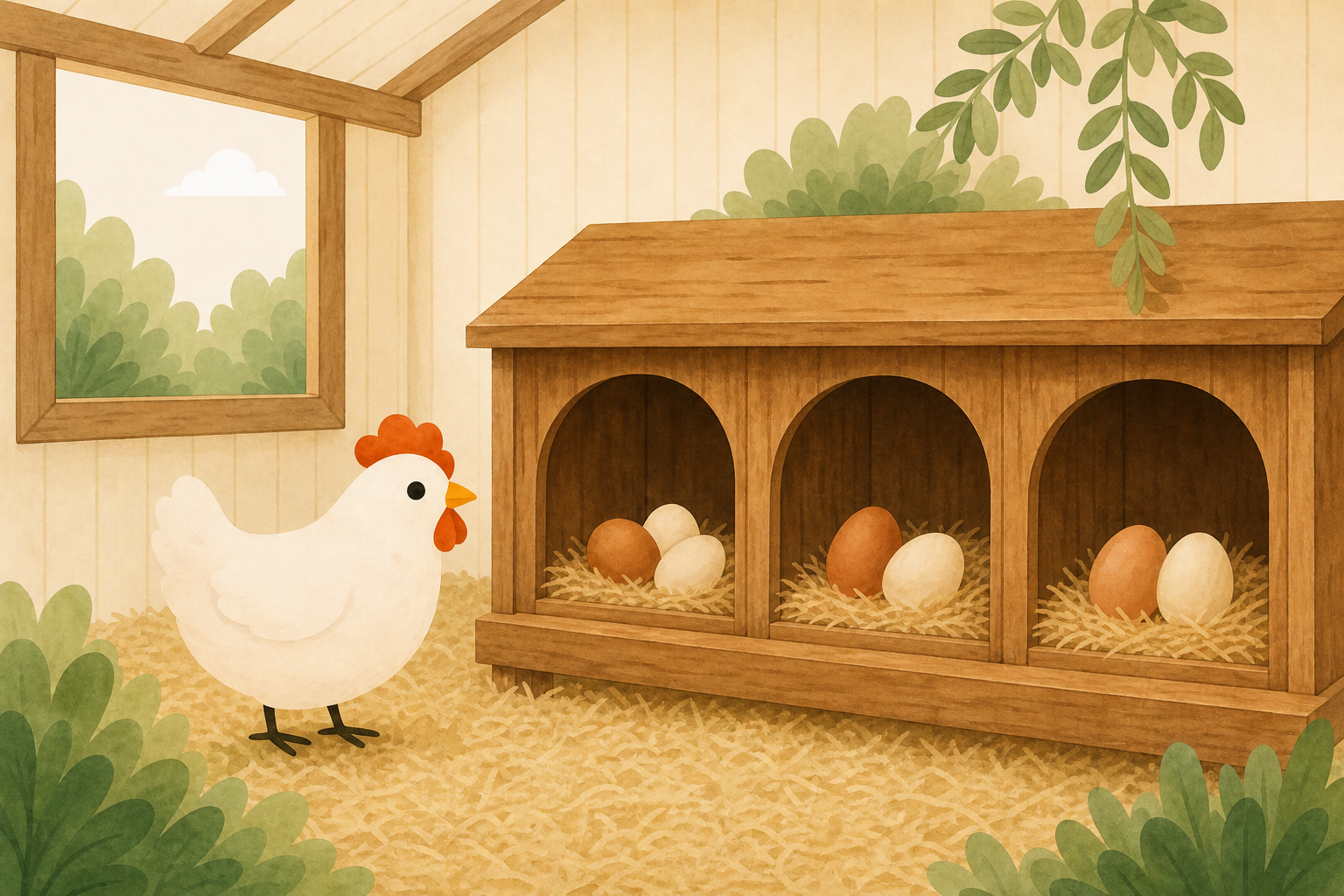
How many nesting boxes per chicken? You rarely need one box per hen. A practical backyard starting point is about one nest box for every four to five hens, then adjust if you see floor eggs, fighting at the nest, or chronic breakage. Sharing is normal. Empty boxes do not automatically mean happier hens.
This guide covers flock math, box dimensions, placement relative to roosts, bedding choices, favourite-box politics, and how nest planning fits your overall coop footprint and ventilation.
The simple flock math
Start with hens that are currently laying or about to lay, not total birds including roosters and non-layers. Then:
- 10 hens → often 2-3 boxes
- 20 hens → often 4-5 boxes
- Add a spare if several hens prefer one favourite box or if peak morning traffic is heavy
Confirm overall space with the chicken coop size calculator so nests are not crammed into an undersized coop. Crowded aisles push hens onto the floor even when box count looks fine on paper.
Why hens share (and why 1:1 wastes space)
Hens are social layers. Many prefer a nest that already smells like flock success. That means one popular box can take most traffic while a pristine empty box sits unused. Building one box per hen often adds cleaning load without fixing floor eggs.
What actually converts hens to boxes: privacy, dryness, stable footing, a low lip that keeps bedding in, and a location lower than roosts so birds sleep on roosts instead of in nests.
Design details that matter more than count
- Height: nests lower than roosts so birds sleep on roosts, not in boxes.
- Privacy: dim, quiet corners beat brightly lit aisles and open doorways.
- Access: exterior collection doors save time and reduce flock stress.
- Lip / threshold: keeps bedding in without trapping chicks if mixed ages share the coop.
- Cleanability: poop-filled boxes drive floor laying faster than mild under-counting.
- Curtains: optional fabric flaps can increase privacy; keep them washable and dry.
- Roll-away trays: helpful for breakage and egg eating habits, but still need correct count and placement.
Box size by bird type
Standard backyard hens usually do well near a 12-inch cube interior. Bantams can use smaller. Large dual-purpose or heavy breeds may need a bit more width so they can turn without crushing shells. If eggs routinely break inside the box, check space, bedding depth, and how many hens pile in at once before blaming the hen.
Bedding that keeps nests usable
Use clean, dry nesting material that cushions eggs and stays put: chopped straw, wood shavings suited to nests, or commercial nest pads you can wash. Avoid wet clumps and manure piles. Refresh when soiled. Nest bedding is not the same job as deep litter on the coop floor; treat nests as a clean micro-zone.
Floor eggs and favourite-box problems
Floor eggs often mean boxes are too bright, too high, too few at peak hours, or too dirty. Some hens insist on one box; add capacity nearby rather than forcing a fight. Collect frequently to reduce breakage and egg-eating habits.
Training tips keepers commonly use: block obvious floor corners temporarily, place a fake or golf-ball cue in the preferred nest, and move first-time layers into the nest area in the morning when they are searching. Training works best alongside an inviting box, not instead of one.
Predators, gaps, and nest-wall openings
Nest banks with exterior doors are convenient, and they are also a common weak point. Any gap around a collection door or nest opening needs the same predator-resistant standard as vents and windows: solid framing plus hardware cloth, not soft poultry netting.
Decision guidance: how many boxes should you build?
Common mistakes
- One box per hen wasting space and creating more cleaning.
- Nests higher than roosts so birds sleep in boxes.
- Bright, drafty nest walls that push laying to dark floor corners.
- Wet or manure-filled bedding.
- Ignoring exterior nest doors as predator weak points.
- Doubling box count before fixing dirty or bright nests.
FAQ
Is one nesting box per chicken better?
Usually no. Sharing is normal. Start near one box per four to five hens and adjust for traffic and floor eggs.
Why do hens ignore empty boxes?
They often prefer a nest that already smells used, or the empty box is brighter, draftier, dirtier, or harder to access.
How big should a nesting box be?
About 12×12×12 inches suits many standard hens. Adjust for bantams or large breeds.
Should nesting boxes be higher than roosts?
No. Keep nests lower so birds sleep on roosts and reserve boxes for laying.
How do I stop floor eggs?
Improve privacy, dryness, height, and cleanliness; add capacity if morning queues form; collect often.
Do I need nesting boxes for chicks?
Not until pullets approach lay. Focus early housing on brooder heat, space, and safe transitions outdoors.
Sources and further reading
- NC State Extension: Keeping Garden Chickens in North Carolina
- University of Georgia Extension publication B1317
- eXtension poultry articles index
- Flockline Learn related guides linked in this article.
- Community patterns synthesized from public backyard-poultry discussions; individual forum URLs are not cited because they rot and anecdotes vary.