
Molting or Mites? How to Tell Feather Loss Apart
Quick answer
Molting is seasonal feather renewal with pin feathers and often reduced laying. Mites/lice more often bring itch, restless roosting, and visible pests. Confirm with inspection. Baldness alone is not a diagnosis. Escalate if birds are weak or declining.
Quick facts
| Molting | Seasonal feather renewal, often fall; birds look patchy but usually stay active eaters |
|---|---|
| Mites / lice | External parasites, irritation, restless roosting, visible pests or eggs on skin/feathers |
| Key difference | Molting follows a pattern and timing; parasites often cause itching, nighttime restlessness, and visible bugs |
| Egg laying | Often drops during a hard molt; parasite load can also suppress laying |
| When to escalate | Open wounds, extreme lethargy, labored breathing, bloody droppings, or rapid flock-wide decline, call a vet |
| Do not | Guess with random chemicals; follow label directions and species guidance if treating |
| Records help | Track symptoms and dates with the health record template |
If you are comparing molting or mites on a chicken, start with calm observation: where feathers are missing, whether the bird is itchy at night, and whether you can see pests. Molting is a normal renewal process. Mites and lice are parasites that need a different response. This guide helps you sort common patterns, it does not diagnose disease.
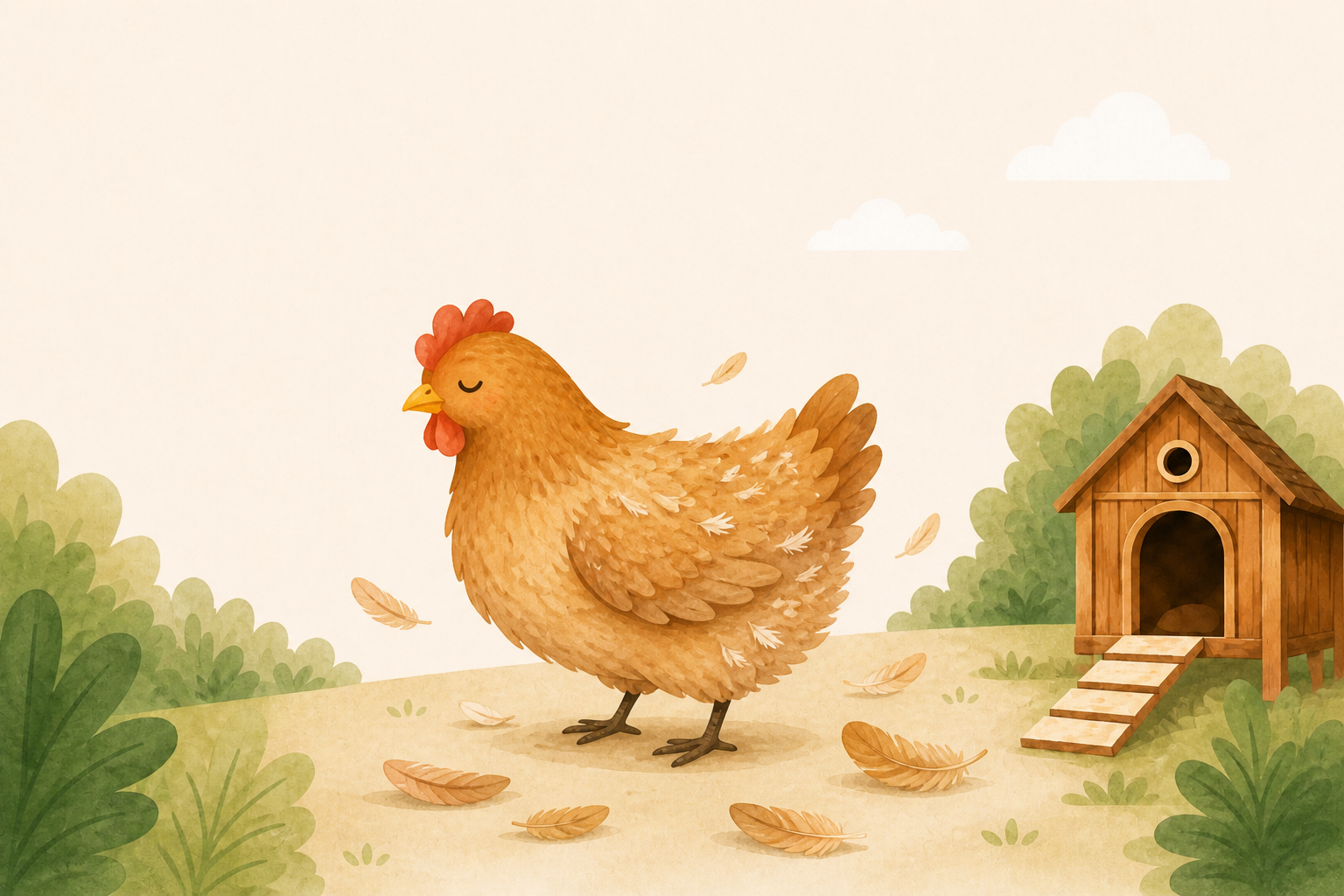
What a normal molt often looks like
Molting replaces worn feathers. Many backyard flocks molt heavily in fall as day length shortens, though individual timing varies by breed, age, and lighting.
- Pin feathers (blood feathers) appear as new growth.
- Birds may look patchy or “half-dressed” for weeks.
- Appetite often stays decent; birds may be quieter or more sensitive to handling.
- Egg laying commonly pauses or slows during a hard molt.
Supportive care is usually about protein-adequate feed, low stress, and not yanking pin feathers. Pair notes with the chicken health record template.
What mite and lice pressure often looks like
External parasites irritate skin and feathers. Signs keepers commonly watch for:
- Restless roosting, frequent preening, or rubbing.
- Pale comb in some heavy infestations (non-specific, many causes exist).
- Visible mites/lice or egg cases on feathers/skin when checked carefully in good light.
- Dirty, broken feathers plus irritation rather than orderly pin-feather regrowth alone.
- Problems that worsen at night for some mite species that are more active then.
Safety: if birds are weak, wounded, or declining fast, contact a licensed veterinarian or poultry-experienced clinician. Do not improvise with dog/cat products not labelled for poultry.
Molting vs mites: side-by-side checks
| Check | Often points to molting | Often raises parasite concern |
|---|---|---|
| Timing | Seasonal / after peak lay | Any season; may spread in flock |
| Skin / feathers | Pin feathers; orderly regrowth | Irritation, scabs, visible pests |
| Behaviour | Quieter, sensitive to handling | Itchy, restless especially at roost |
| Flock pattern | Many birds in similar seasonal molt | May cluster on roosts / housing |
| Response | Nutrition + time + low stress | Identify pest; treat per guidance; clean housing |
How to inspect safely
- Wash hands; handle calmly; support the bird’s body.
- Check under wings, around the vent, and along the keel in good light.
- Look for moving pests, pepper-like debris, or egg clusters on feather shafts.
- Inspect the roost and coop cracks at night with a flashlight if roost mites are suspected.
- Write down what you saw, which birds, and dates.
Common mistakes
- Assuming every bald patch is mites (or every bald patch is molt).
- Skipping night checks when birds are restless on the roost.
- Treating without confirming what you are seeing.
- Ignoring a weak or toxic-looking bird as “just feathers.”
- Copying pesticide recipes from comment threads.
Expert tips (practical, not veterinary)
- Photograph the same bird weekly during a molt so you can see regrowth vs worsening irritation.
- Quarantine new birds when possible, parasites hitchhike.
- Keep coop ventilation sound; wet ammonia-heavy air stresses birds, see chicken coop ventilation.
- If you treat, follow label species and withdrawal guidance; ask a vet when unsure.
Decision guidance
- Seasonal patchy feathers + pin feathers + eating well: supportive molt care; monitor.
- Itch + visible pests or night restlessness: parasite workup path; clean housing; consider vet/product guidance.
- Open wounds, labored breathing, collapse, bloody droppings: veterinary care now.
- Unsure after inspection: record findings and consult a poultry-experienced veterinarian rather than stacking random treatments.
FAQ: molting or mites?
Can a chicken molt and have mites at the same time?
Yes. A molt does not make parasites impossible. Use itch, pests, and behaviour, not baldness alone.
How long does a chicken molt last?
Often several weeks to a few months for a hard molt, varying by bird. Pin feathers and gradual coverage are expected.
Will my hens stop laying during a molt?
Many do pause or slow. That alone does not prove mites.
Should I treat for mites “just in case” during every molt?
Not as a default. Confirm need; unnecessary chemicals add risk and cost.
When should I call a vet?
When birds are lethargic, not eating, breathing hard, bleeding, or declining quickly, or when you cannot identify what you are seeing.
Sources and further reading
- Ohio State University Extension (Ohioline) poultry fact sheet VME-33
- University of Georgia Extension publication C1181
- eXtension poultry resource hub (poultry.extension.org)
- Flockline Learn related guides linked in this article.
- Community patterns synthesized from public backyard-poultry discussions; individual forum URLs are not cited because they rot and anecdotes vary.
Next steps
- Inspect one symptomatic bird in good light and write notes.
- Check roosts at night if restlessness is reported.
- Support molt nutrition/stress reduction if parasites are not found.
- Call a veterinarian if the bird is systemically unwell.