Safe Chicken Coop Heaters vs Heat Lamps: Fire Risk & Winter Warmth
Quick answer
When comparing safe chicken coop heaters vs heat lamps, flat-panel radiant heaters are significantly safer than traditional 250-watt glass bulb heat lamps. Glass heat lamps are the leading cause of winter coop fires because dry wood shavings, dust, and flapping wings easily ignite upon contact with the 400-degree bulb surface. Heat lamps also overheat ambient air, preventing chickens from acclimatizing to cold winter temperatures. Flat-panel radiant heaters operate at much lower surface temperatures, providing localized contact warmth without fire hazards or power surge risks.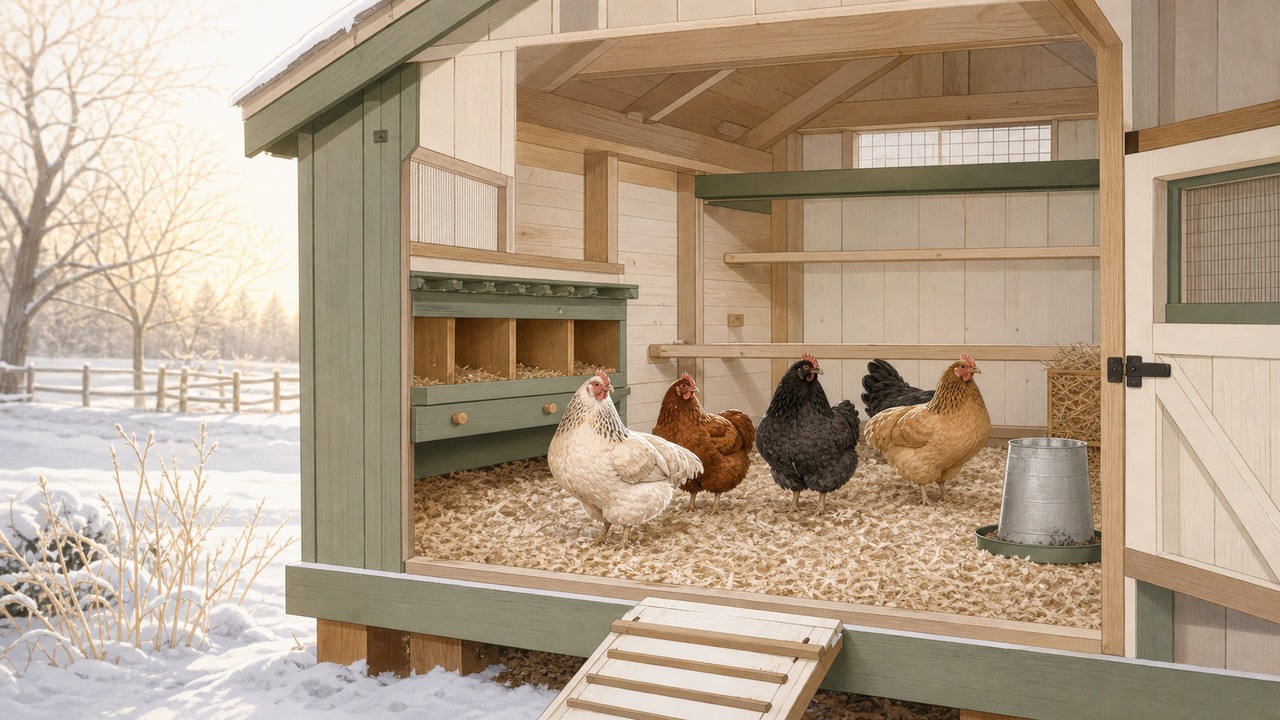
Quick facts
| Traditional Heat Lamp Risk | Glass surface reaches 450 to 500°F, easily igniting dust, straw, or feather dander |
|---|---|
| Radiant Panel Surface Temp | Regulated at 130 to 150°F (safe to human and avian touch with zero fire hazard) |
| Electrical Draw Comparison | Heat lamps pull 250 watts; flat radiant panels draw only 100 to 200 watts |
| Thermal Shock Vulnerability | Chickens adapted to 70°F coops die of hypothermic shock if power fails during a blizzard |
1. Why glass heat lamps cause devastating coop fires
Every winter, fire departments across North America respond to coop blazes caused by red heat lamps. Glass infrared bulbs hang from cheap spring clamps that degrade under vibration. When a flapping chicken bumps the fixture or an accumulation of cobwebs settles on the hot glass, the 500-degree surface ignites dry pine shavings within seconds.
According to poultry safety research from the University of Maine Extension, adult chickens tolerate ambient cold far better than sudden thermal fluctuations. Adult hens wear an insulating down coat equivalent to a sub-zero winter parka. Heating the air inside the coop disrupts their natural circulatory adaptation, leaving them helpless if an ice storm knocks out local power lines overnight.
| Heating Device | Surface Temp | Fire Ignition Risk | Power Draw | Thermoregulation Impact |
|---|---|---|---|---|
| Glass Heat Lamp (250W) | 450°F to 500°F | Extreme (dust, straw, contact) | 250 Watts | Prevents natural winter cold-hardiness |
| Flat Radiant Panel (Cozy Coop) | 130°F to 150°F | Zero (enclosed resistor) | 150 Watts | Allows birds to choose proximity warmth |
| Ceramic Heat Emitter (CHE) | 350°F to 400°F | Moderate (shatters without guard) | 100 Watts | No light output; still carries surface heat risk |
| Infrared Brooder Plate | 110°F to 125°F | Zero (contact heat only) | 40 to 60 Watts | Mimics mother hen brooding feathers |
2. How flat-panel radiant heaters work
Unlike forced-air space heaters or incandescent bulbs that warm the air volume, radiant panels emit gentle far-infrared waves. Infrared energy travels through the air without heating the ambient atmosphere, warming only physical objects in its direct path.
- Targeted proximity zone: Chickens stand or roost within six inches of the panel to absorb gentle warmth into their plumage, then step away when satisfied.
- Built-in thermal fuses: Certified radiant panels include internal thermal limiters that shut down power if the unit is knocked over or covered by bedding.
- Dual display stands: Quality units come with both floor-standing feet and wall-mount keyhole brackets for versatile placement.
3. 4 steps to winterize without supplemental heat
In most climate zones down to zero degrees Fahrenheit, chickens thrive without artificial heating if their shelter is prepared correctly:
- Eliminate direct wind drafts at perch level: Ensure all solid walls around sleeping roosts are completely airtight so winter gales cannot ruffle feathers.
- Maximize high ridge ventilation: Leave high soffit and gable vents open year-round so rising respiratory humidity escapes before condensing into frostbite moisture.
- Deepen the coop bedding: Implement the deep litter method, maintaining six to eight inches of dry pine shavings to generate passive ground insulation.
- Feed whole corn at roosting time: Offer scratch grains or cracked corn thirty minutes before dusk. Digesting complex carbohydrates in the gizzard generates substantial internal metabolic body heat throughout the night.
Frequently Asked Questions
At what temperature do chickens actually need a heater?
Most cold-hardy breeds (such as Orpingtons, Plymouth Rocks, and Australorps) tolerate temperatures well below 0 degrees Fahrenheit without supplemental heat. Consider gentle radiant warmth only during prolonged deep freezes below minus 15 degrees Fahrenheit or for large-combed roosters vulnerable to severe frostbite.
Can radiant panels burn a chicken’s feathers?
No. Standard poultry radiant panels maintain surface temperatures around 130 to 150 degrees Fahrenheit, which is warm to the touch but well below the combustion threshold of feathers or dry wood.
Do chickens need heat lamps in winter?
No. Adult chickens with complete plumage should never have heat lamps in their coop. Heat lamps create extreme fire risks, disrupt sleep cycles with red glare, and prevent flock members from developing natural cold tolerance.
Sources and further reading
- University of Maine Extension: Winter Care and Cold Hardiness in Small Poultry Flocks.
- Penn State Extension: Preventing Barn and Coop Fires During Freezing Weather.
- Flockline Learn: Does a Chicken Coop Need Heat in Winter? Complete Physics Guide.