
Does a Chicken Coop Need Heat in Winter? Buy-or-Skip Decision
Quick answer
Most hardy adult chickens in dry, draft-free, well-ventilated housing do not need supplemental coop heat. This page is the buy-or-skip heater decision. Fix moisture and roost drafts first. Heat lamps add fire risk. Chicks and vulnerable birds are different cases.
Quick facts
| Default for hardy adults | Often no supplemental heat if dry and draft-free |
|---|---|
| First fixes | Dry litter, roost draft control, high vents, unfrozen water |
| Fire risk | Heat lamps over bedding are a recurring hazard story |
| Chicks | Need brooder heat: heat lamp duration |
| Cold tolerance | See how cold chickens can tolerate |
| Nights | See too cold at night |
| Ventilation | Do not seal shut: ventilation |
| Mesh | Winter mods need hardware cloth |
Does a chicken coop need heat in winter? This page answers the buy-or-skip heater decision for adult coops. It is not a cold-tolerance physiology guide and not a night-by-night audit. For many hardy adult flocks the answer is usually no when housing is dry, roosts are still, vents stay high, and water stays available.
Use this page when: you are deciding whether to install a heat lamp or heater. Then read how cold chickens can tolerate for breed and condition context, and cold nights for the after-dark roost audit. Chick heat stays on the heat lamp duration and brooder pages.
When the answer is usually no
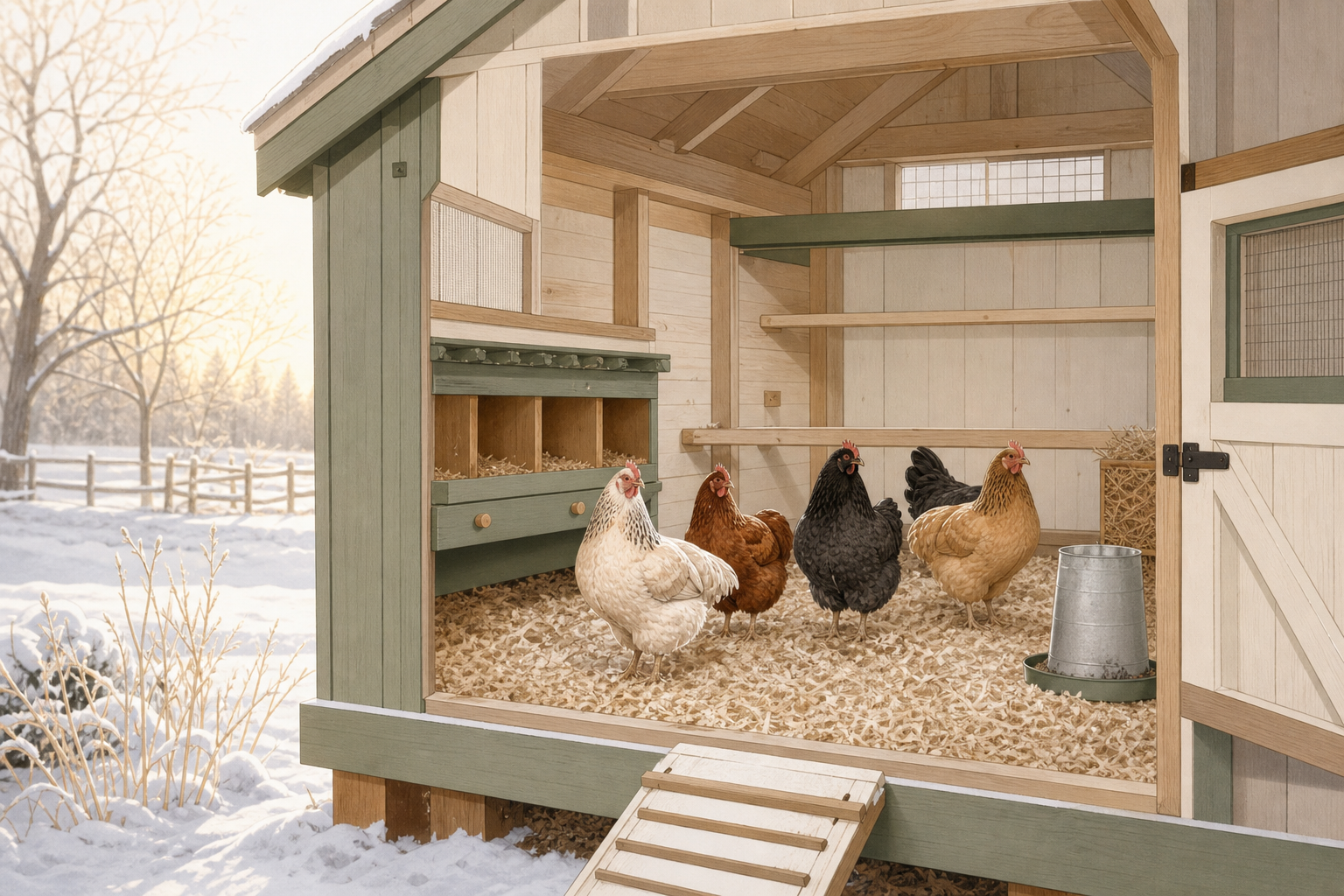
Fully feathered healthy adults, dry litter, still roost air, high screened vents, and a water plan: this is the classic no-heat success pattern reported across cold regions. Birds fluff, huddle on roosts, and wait out nights without a bulb.
If that pattern describes your flock, shopping for a heater is usually solving the wrong problem. Fix moisture and drafts first, then reassess.
When to reconsider
Vulnerable birds (sick, soaked, poorly feathered, extreme comb frostbite risk), failed housing you cannot fix before a storm, or veterinary guidance may change the plan. Temporary warming for a triage case is not the same as permanently heating a healthy flock over dry shavings.
Use cold tolerance modifiers to judge whether this flock is the hardy adult case or the vulnerable exception.
Fire risk reality
Heat lamps tip, litter contacts bulbs, and cords fail. Coop fire stories are not rare folklore. If you ever use supplemental heat, treat manufacturer instructions, clearance, listed fixtures, and cord routing as non-negotiable.
Many keepers choose dryness and draft control instead, then sleep better. That is a rational trade, not toughness theater.
Housing checklist before heat
Progress saves in this browser. Print this page or download the PDF for a paper copy.
Chicks are not adults
Brooders need planned supplemental heat and weaning. Do not skip heat lamp duration because adult coops run cold successfully.
Where this sits vs sibling winter guides
- This page: Should I add heat to an adult coop?
- How cold can chickens tolerate? Breed, feathering, molt, and condition modifiers.
- Too cold at night? After-dark roost draft, frostbite, and overnight water audit.
Work the housing checklist above before shopping for heat. If a bird is in distress, contact a licensed veterinarian.
Common mistakes
- Heat lamps as the first winter purchase before drafts and dryness are fixed.
- Sealing the coop for warmth until ammonia spikes.
- Ignoring fire clearance on any supplemental heat.
- Using adult rules on chicks (or the reverse).
- No unfrozen water plan.
- Leaving mesh gaps in winter covers.
FAQ
Does a chicken coop need heat in winter?
Often no for hardy adults in dry draft-free ventilated housing.
Are heat lamps safe?
They are a known fire risk if misused. Housing fixes are usually safer first steps.
What about very cold climates?
Dry draft-free design still comes first; vulnerability and housing quality decide exceptions.
Do chicks need heat?
Yes, planned brooder heat. Different topic.
Should I close all vents?
No. Keep high exchange.
What should I buy first?
Dry litter capacity, draft fixes, water plan, and mesh, not necessarily a lamp.
Sources and further reading
- NC State Extension: Keeping Garden Chickens in North Carolina
- University of Georgia Extension publication C1091
- eXtension poultry resource hub (poultry.extension.org)
- Flockline Learn related guides linked in this article.
- Community patterns synthesized from public backyard-poultry discussions; individual forum URLs are not cited because they rot and anecdotes vary.