
Frozen Chicken Water: 6 Sub-Zero Hacks to Keep Drinkers Flowing
Quick answer
Chicken water freezes solid within two hours once outdoor temperatures drop below freezing. Keep water flowing using horizontal heated poultry nipples, black rubber feed pans that flex, or insulated drinker bases to protect flock hydration all winter.
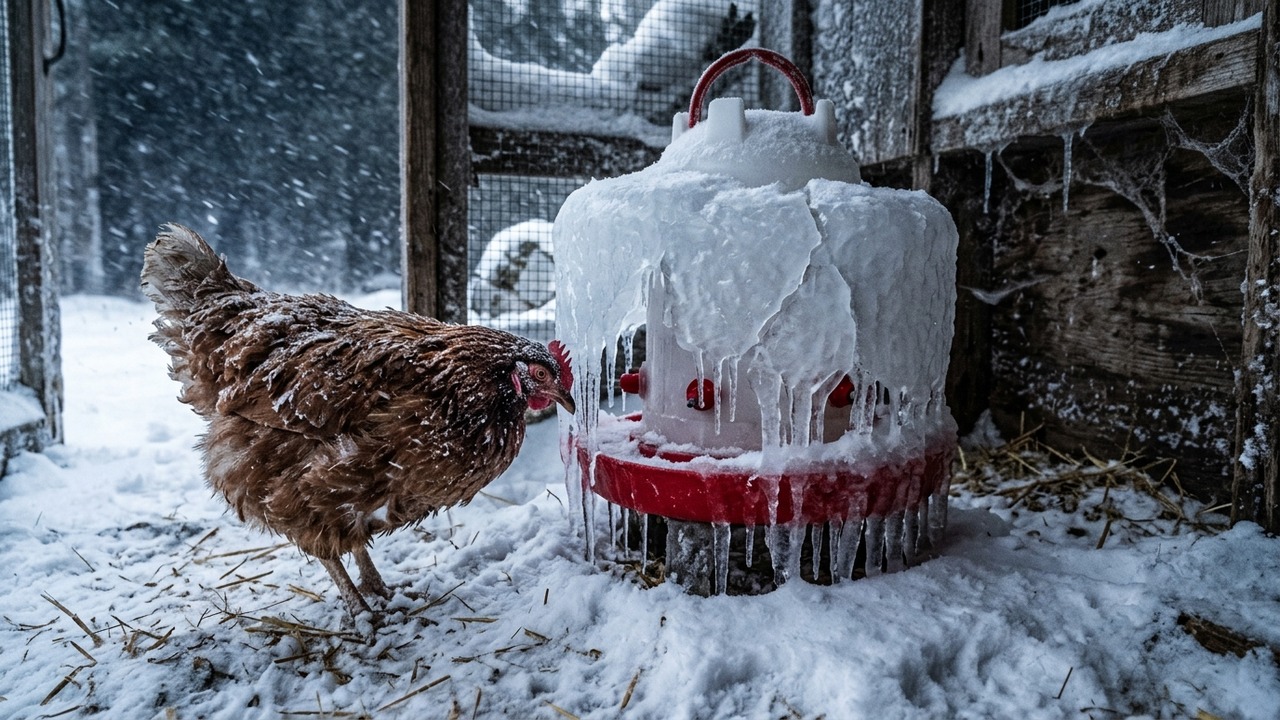
Quick Facts: Winter Water Freezing & Poultry Hydration
| Freezing Point | 32°F (0°C); unheated drinkers freeze solid in 2 hours |
|---|---|
| Daily Water Need | 1 cup to 1 pint per adult hen during winter |
| Feed Intake Risk | Chickens stop eating feed within 6 hours without water |
| Best Non-Electric Hack | Black rubber feed pan (flexes easily to pop ice blocks out) |
| Best Electric Solution | 5-gallon bucket with submersible de-icer and horizontal nipples |
| Coop Placement Rule | Never keep open waterers inside coop; spills cause frostbite humidity |
Winter Drinker Methods: Comparing Electric vs Non-Electric
Keeping water open in winter is essential because thirsty hens cannot digest dry layer mash or maintain body heat. Different setups work best depending on whether your coop has electricity. Review this comparison matrix:
| Waterer Method | Power Needed | Sub-Zero Limit | Keeper Guidance |
|---|---|---|---|
| Flexible Rubber Pans | No Power | Works to -20°F | Sturdy rubber flexes without cracking. Step on pan to pop out solid ice pucks. |
| Floating Salt Bottle Hack | No Power | Works down to 25°F | Bottle of heavy saltwater floats and moves with wind, delaying ice surface crust. |
| Ping Pong Ball Hack | No Power | Works down to 28°F | Floating balls bob on water surface when hens peck, breaking thin ice skin. |
| Heated Metal Drinker Base | 120V Electric | Works down to 10°F | Warms bottom of galvanized metal founts. Requires protected covered area. |
| Horizontal Nipple Heated Bucket | 120V Electric | Works down to -20°F | Internal 50W aquarium or birdbath de-icer keeps nipples flowing cleanly. |
| Rigid Plastic Founts (Unheated) | No Power | Fails at 31°F | Plastic freezes brittle and cracks when ice expands. Avoid in winter coops. |
Why Winter Dehydration Halts Egg Laying Fast
Eggs consist of nearly 75 percent water. When winter temperatures freeze waterers, hens stop drinking completely. A chicken cannot eat dry pellets or whole grain crumble without swallowing water to moisten feed inside her crop.
If water remains frozen for just 24 hours, egg production stops immediately. In cold weather, prolonged dehydration causes hens to draw water from their own tissues to stay alive, triggering premature winter feather molting, weight loss, and extreme vulnerability to frostbite. Providing reliable water is far more critical than adding coop heat.
Top Non-Electric Hacks for Off-Grid Chicken Runs
If your chicken run has no electrical outlet, do not despair. The most dependable off-grid strategy is rotating two heavy-duty black rubber livestock pans (such as Fortex 2-gallon rubber bowls). Black rubber absorbs solar heat during sunny winter mornings.
When the water freezes into an ice block overnight, simply flip the rubber pan upside down and step on the bottom. The flexible rubber pops the solid ice puck out cleanly without cracking the bowl. Bring out a kettle of warm water twice a day to refresh the pans. Pair this with our frostbite prevention guide.
Building a Sub-Zero Heated Nipple Bucket Safely
For keepers with coop electricity, a heated bucket with horizontal poultry nipples is the gold standard for clean winter water. Unlike vertical nipples that drip and freeze outside, horizontal nipples have an internal spring valve located inside the heated water chamber.
Drill three 11/32-inch holes around the lower edge of a food-grade 5-gallon bucket and screw in horizontal nipples. Drop a 50-watt thermostatically controlled cast-aluminum birdbath de-icer inside. Route the cord through rigid metal conduit out of pecking reach. Pair this with our safe coop heater comparison and check coop spacing with our chicken coop size calculator.
The Bottom Line on Winter Chicken Water
Never let winter cold freeze your flock out of drinking water. Use flexible black rubber pans for off-grid runs or build an automated heated horizontal nipple bucket to keep fresh water flowing through the coldest winter freezes.
Frequently Asked Questions
Can I add salt or alcohol to chicken water to stop freezing?
No, never put salt, alcohol, or glycerin in drinking water. Chickens have delicate kidneys that cannot process high sodium levels, leading to fatal salt toxicosis.
Should I keep chicken water inside the sleeping coop at night?
No, keep waterers out in the sheltered run. Open water inside the sleeping coop evaporates into the air, raising humidity that freezes on combs and causes frostbite.
Why do vertical chicken nipples freeze while horizontal ones work?
Vertical nipples leave water exposed on an external metal pin that freezes instantly in cold wind. Horizontal nipples keep the valve mechanism bathed in warm internal water.
How often should I check chicken water in sub-zero weather?
If using unheated pans, check and refresh water at least twice daily (morning and midday). If using heated electric buckets, check daily to confirm the power indicator light is on.
Evidence & Research Citations
- University of Minnesota Extension: Caring for Chickens in Cold Weather: Winter Water Management
- University of New Hampshire Extension: Winterizing Your Backyard Flock Housing and Watering Systems
- Cornell Cooperative Extension: Water Quality and Frostbite Prevention in Cold-Climate Poultry