
Chicken Frostbite Comb: Moisture Control and Slow Warming
Quick answer
Chicken frostbite on combs and wattles is most likely in cold, damp, poorly ventilated coops. Prevent with dry litter and real airflow. If tissue freezes, warm slowly, do not rub, and monitor for infection.
Quick facts
| Main risk combo | Cold plus damp, poorly ventilated housing overnight |
|---|---|
| Vulnerable tissue | Combs, wattles, and sometimes toes |
| Who is at higher risk | Birds with large combs; roosters often, some hen breeds too |
| Prevention focus | Dry litter and real ventilation, not jelly alone |
| If it happens | Warm slowly; do not rub; do not trim black tissue unless infected |
Chicken frostbite comb problems are often blamed on the thermometer alone. Extension frostbite guidance points somewhere less dramatic: moisture. A cold, damp, sealed coop lets combs and wattles freeze while everyone argues about heaters.
This page owns tissue risk and moisture. The overnight roost audit, cold-tolerance modifiers, and heater buy-or-skip decision stay on their own winter URLs.
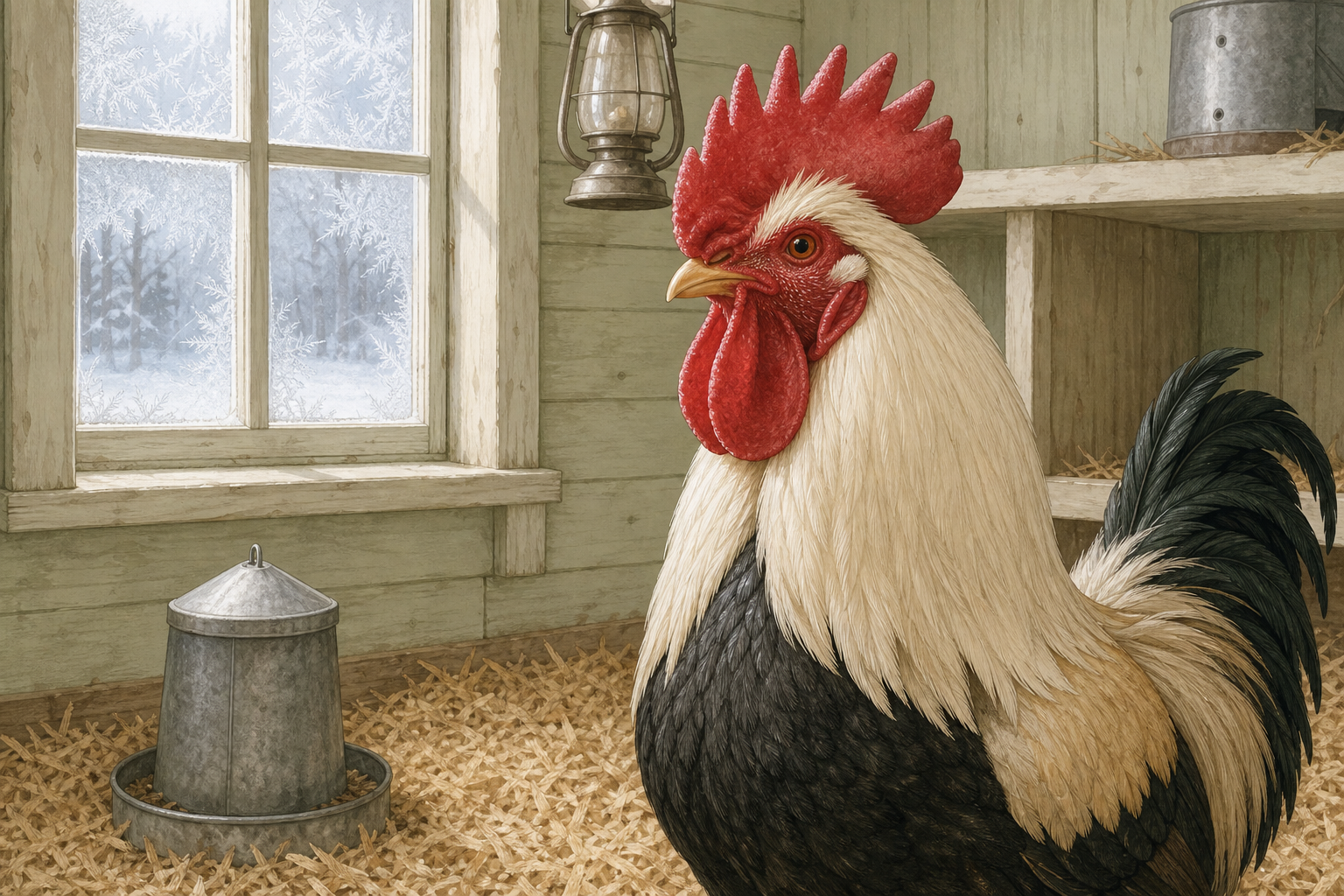
Frostbite is a moisture story
poultry.extension.org’s frostbite article (Dr. Jacquie Jacob, University of Kentucky) notes frostbite is more likely overnight in cold, poorly ventilated coops with damp bedding. Birds generate moisture from breath, droppings, and spilled water. If windows or walls show morning condensation, increase ventilation while keeping roosts out of direct wind. That is the same philosophy as coop ventilation, applied to freezing tissue.
What early and late signs look like
Affected tissue can look pale, gray, or white at first, then darken to black as cells die. Large single combs are more exposed than pea or strawberry combs. Feet can be involved in severe cases. Healing may take four to six weeks. Blackened tips often dry and fall away; they can protect tissue underneath while that happens.
Prevention that actually works
Keep litter dry. Top-dress rather than letting wet cakes sit under roosts. Screen high vents so you can move moist air without inviting predators. Manage drinkers so wattles are not constantly soaked. Petroleum jelly is described as a mild aid at best; coop management is the real prevention. Wide wooden roosts help birds cover toes with feathers while sleeping.
For night checks and heater decisions, use the winter siblings: too cold at night, how cold chickens can tolerate, and does a coop need heat.
If frostbite already happened
Warm affected areas slowly. Extension guidance: no hair dryer blasting, no rubbing, no trimming black tissue unless a veterinarian directs you because of infection. Soak frostbitten feet in slightly warm water. Watch for swelling, discharge, or foul odor. Keep flockmates from pecking damaged tissue. Pain medications meant for humans can be dangerous for birds; do not improvise drugs.
Roosters, comb type, and flockmates
Large upright combs shed heat in summer and freeze first in winter. Pea and walnut combs hide closer to the head. If you keep a rooster with a tall blade comb in a cold damp climate, moisture control is not optional. Separate a pecked frostbitten bird so flockmates do not enlarge the wound.
Fertility and lay can dip in extreme cold whether or not you see black tissue. Birds usually rebound as weather and comfort improve. Do not read every winter pause as permanent damage.
Drinkers, spills, and wet wattles
Open water pans splash. Birds dip wattles and then roost damp. Nipple systems or carefully managed founts reduce that path. Heated bases that prevent ice are useful when they do not create a steam bath in a sealed room. If you see a sheet of ice from spills by the door, you also have a moisture source feeding frostbite risk.
How this page fits the winter trio
Use the cold-nights guide when you are auditing roost drafts after dark. Use cold tolerance when you are asking breed and molt questions. Use winter heat when you are deciding whether to buy a heater. Use this comb frostbite page when tissue color changed or you are preventing that tissue injury through moisture control. Keep the intents separate so each URL stays useful.
Bedding depth in freeze season
Deep, dry bedding under roosts insulates and absorbs moisture when you top-dress instead of letting wet cakes sit. Scoop damp spots even when you postpone a full clean-out until spring, as frostbite extension guidance often suggests. Pair bedding habits with the coop bedding guide without treating bedding choice as a heater substitute.
If ammonia bites your eyes on a cold morning, you have a ventilation and manure problem that also raises frostbite risk through damp air. Fix air and dryness before you argue about degrees on a phone weather app.
Common mistakes
- Sealing every crack and trapping moisture all night.
- Leaving wet litter under roosts for weeks.
- Rubbing frozen combs or blasting them with hot air.
- Trimming black tissue that is still protecting what is underneath.
- Using this page as a heater shopping list instead of the winter heat guide.
FAQ
What causes chicken comb frostbite?
Freezing of tissue fluid, much more likely when coops are cold and damp with poor ventilation.
Does petroleum jelly prevent frostbite?
It may help mildly. Dry housing and ventilation matter more.
Should I heat the coop to stop frostbite?
Fix moisture and drafts first. Heater decisions belong on the winter heat guide because of fire risk.
How long does frostbite take to heal?
Often several weeks. Monitor for infection.
How is this different from “how cold can chickens tolerate”?
That page covers modifiers like breed and molt. This page covers comb/wattle tissue injury and moisture control.
Sources and further reading
- poultry.extension.org: Frostbite in chickens
- University of Minnesota Extension: Caring for chickens in cold weather
- Related Flockline Learn winter trio: cold nights, cold tolerance, winter heat.