Bumblefoot Surgery vs Drawing Salve: Complete Flock Treatment Guide
Quick answer
Early mild bumblefoot heals safely with warm Epsom salt soaks and 20% ichthammol drawing salve, while severe swollen infections with hard black kernels require surgical core removal.
Quick Facts: Bumblefoot (Pododermatitis) in Chickens
| Condition Name | Bumblefoot (avian ulcerative pododermatitis) |
|---|---|
| Primary Pathogen | Staphylococcus aureus entering via rough perches or splinter scratches |
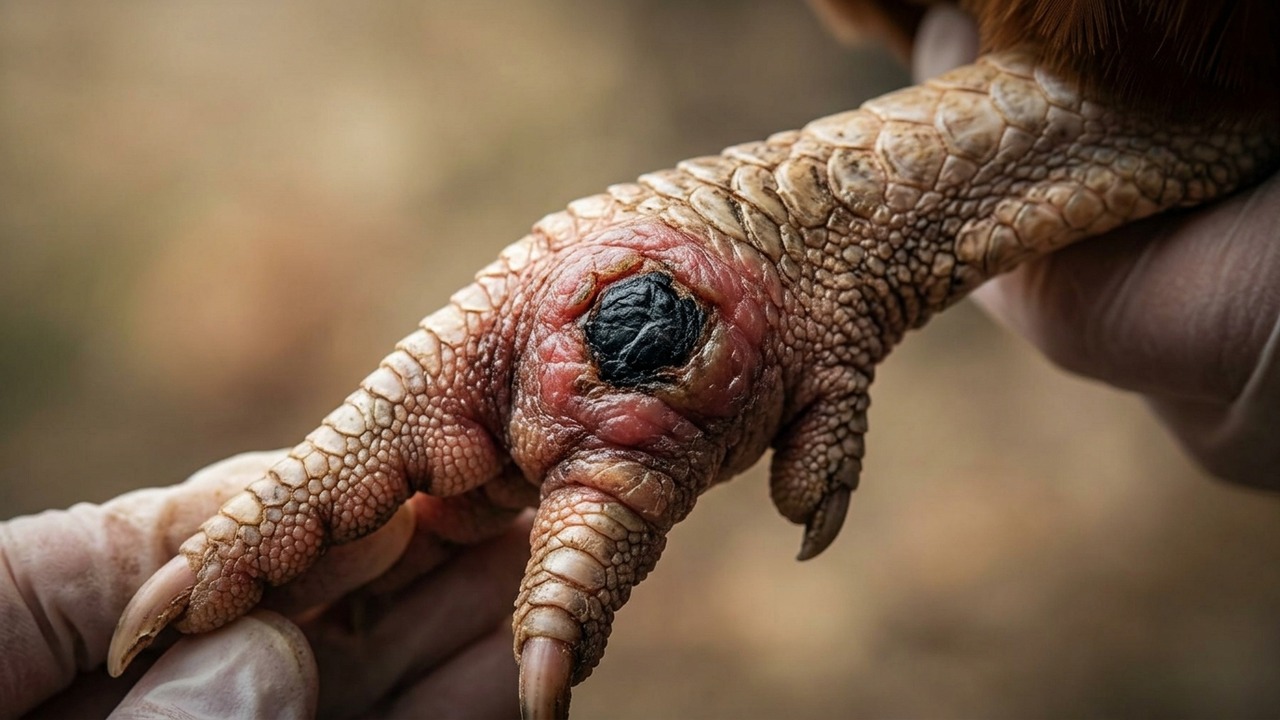
| Hallmark Symptom | Circular black or dark brown necrotic scab on bottom foot pad |
| Conservative Option | Epsom salt soak + 20% ichthammol (or PRID) drawing salve + padded wrap |
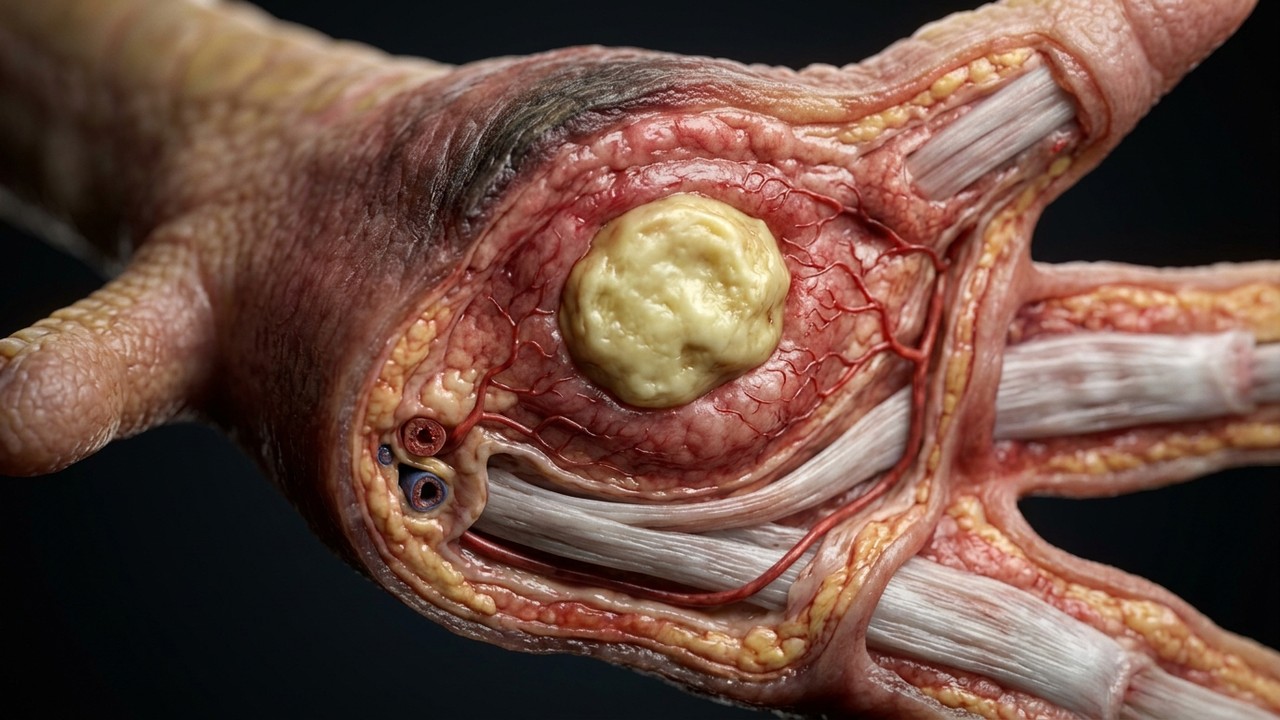
| Surgical Option | Sterile debridement to extract the solid waxy caseous infection kernel |
| Key Prevention | Smooth splinter-free roost bars, clean dry bedding, and soft run footings |
Bumblefoot Severity Ladder: Choosing the Right Treatment
Bumblefoot is one of the most common ailments in backyard poultry. Knowing whether your bird needs conservative topical drawing salve or invasive core debridement depends on the infection grade. Review this clinical staging guide:
| Infection Grade | Physical Appearance of Foot | Recommended Treatment Path |
|---|---|---|
| Grade 1: Superficial Scrape | Small red calloused spot or pinhead scab; zero swelling or heat | Clean foot, apply plain antibacterial ointment, and smooth roost perches |
| Grade 2: Localized Scab | Dark brown circular scab; slight localized swelling; no limping | Conservative Care: Daily warm Epsom salt soak + 20% ichthammol drawing salve wrap |
| Grade 3: Deep Abscess | Hard black kernel; prominent warm swelling on pad; bird favors foot | Surgical Debridement: Soften scab thoroughly and extract dense waxy kernel |
| Grade 4: Tendon Invasion | Massive swelling extending between toes; extreme lameness; hot to touch | Advanced surgical cleaning or veterinary debridement with systemic antibiotics |
| Grade 5: Bone Infection | Joint destruction, permanent deformity, and systemic illness | Veterinary intervention required; high risk of septic arthritis |
The Conservative Drawing Salve Protocol (No Cutting)
Many backyard keepers rush to operate on their hen’s foot unnecessarily. Avian pus is not liquid like mammalian pus; it is solid, waxy, and cheese-like (caseous). 20% ichthammol drawing salve draws circulation to the pad and softens tough skin, allowing the body to shed the scab naturally:
- Warm Epsom Salt Soak: Fill a shallow wash basin with warm water (100°F to 104°F) and stir in 1/2 cup of Epsom salt. Submerge the hen foot for 15 to 20 minutes to soften the dense, keratinized scab and soothe surrounding inflamed tissue.
- Antiseptic Cleansing: Gently pat the foot dry with a clean towel. Disinfect the plantar pad thoroughly using povidone-iodine (Betadine) or 2% chlorhexidine solution to neutralize surface bacteria.
- Apply 20% Ichthammol Salve: Dab a generous pea-sized layer of 20% ichthammol drawing salve (or PRID ointment) directly over the blackened scab. The sulfur-rich coal tar base increases localized blood flow and breaks down tough dead epidermal layers.
- Sterile Gauze and Figure-Eight Vetrap: Place a 2×2 sterile non-stick gauze pad over the salve. Secure the dressing firmly using 1-inch cohesive bandage wrap (Vetrap), weaving between the toes and around the lower shank in a figure-eight pattern. Repeat this soak and wrap routine daily for 7 to 14 days until the scab loosens and the underlying kernel sloughs away without cutting.
When Surgery is Necessary: Safe Core Debridement
When a hard waxy core forms deep within the pad tissue, topical salves cannot penetrate. The hardened plug acts like a painful pebble inside a shoe, grinding against tendons with every step. Follow these surgical precautions:
- Sterile Field and Assistant Restraint: Wrap the chicken securely in a clean towel like a burrito to prevent wing flapping and stress. Have an assistant hold the bird steadily on her side while keeping the foot flat on clean paper towels. Sterilize instruments, blunt tweezers, and skin with 70% isopropyl alcohol.
- Never Cut Bleeding Live Tissue: Only peel dead, insensitive yellow or blackened scab tissue that has softened completely. Avian foot pads bleed profusely if deep live tissue is disturbed, risking hemorrhage and tendon damage. If bright red blood appears, stop immediately, apply direct pressure with styptic powder, and wrap.
- Loosen Scab Margins: After a 20-minute soak, use the tip of a sterile tool or cuticle nipper to gently trace around the circumference of the black scab, separating the hardened edge from surrounding live skin.
- Extract the Solid Caseous Kernel: Use sterile blunt tweezers to grip the lifted edge of the scab and apply gentle, steady upward traction while gently pressing the pad from the sides. The waxy yellow core should pop free in one solid, cheese-like plug.
- Antiseptic Packing and Compression Wrap: Flush the vacated abscess cavity with sterile saline, pack it completely with plain triple antibiotic ointment, cover with sterile gauze, and apply a snug compression wrap with Vetrap.
Frequently Asked Questions
Can humans catch Staphylococcus aureus from chicken bumblefoot?
Yes. Staphylococcus aureus is a bacterial pathogen capable of causing serious skin infections in humans. Always wear disposable nitrile gloves when handling infected feet, and wash your hands and tools thoroughly with soap and disinfectant.
How long does bumblefoot take to heal with drawing salve?
Grade 1 and Grade 2 cases treated with daily warm soaks and fresh ichthammol salve wraps typically soften and resolve within 7 to 14 days as the healthy skin pushes the dead scab outward.
What wrap material works best for chicken feet?
Use self-adherent cohesive bandage wrap (commonly known as Vetrap). Apply a small square of non-stick gauze over the salve, weave the Vetrap in a figure-eight pattern around the foot and between toes, and ensure it is snug without cutting off circulation.
What roost bar shape prevents bumblefoot abrasions?
Use smooth, rounded 2×4 lumber positioned with the wide 3.5-inch side facing up. This allows hens to rest flat on their breast bones with feet tucked flat beneath warm feathers, eliminating pinpoint pressure points on foot pads.
Evidence & Research Citations
- University of Minnesota Extension: Bumblefoot Diagnosis and Prevention in Backyard Poultry
- Auburn University College of Veterinary Medicine: Avian Pododermatitis Treatment Strategies
- University of California Davis Poultry Extension: Staphylococcal Infections and Pododermatitis in Birds