Egg Bound Chicken: Warm Bath Protocol and Emergency Care
Quick answer
An egg bound hen cannot expel an egg stuck in her oviduct. Place her in a 100°F warm Epsom salt bath for 20 minutes, administer calcium gluconate, and place her in a dark, quiet recovery crate.
Quick Facts: Egg Binding in Backyard Chickens
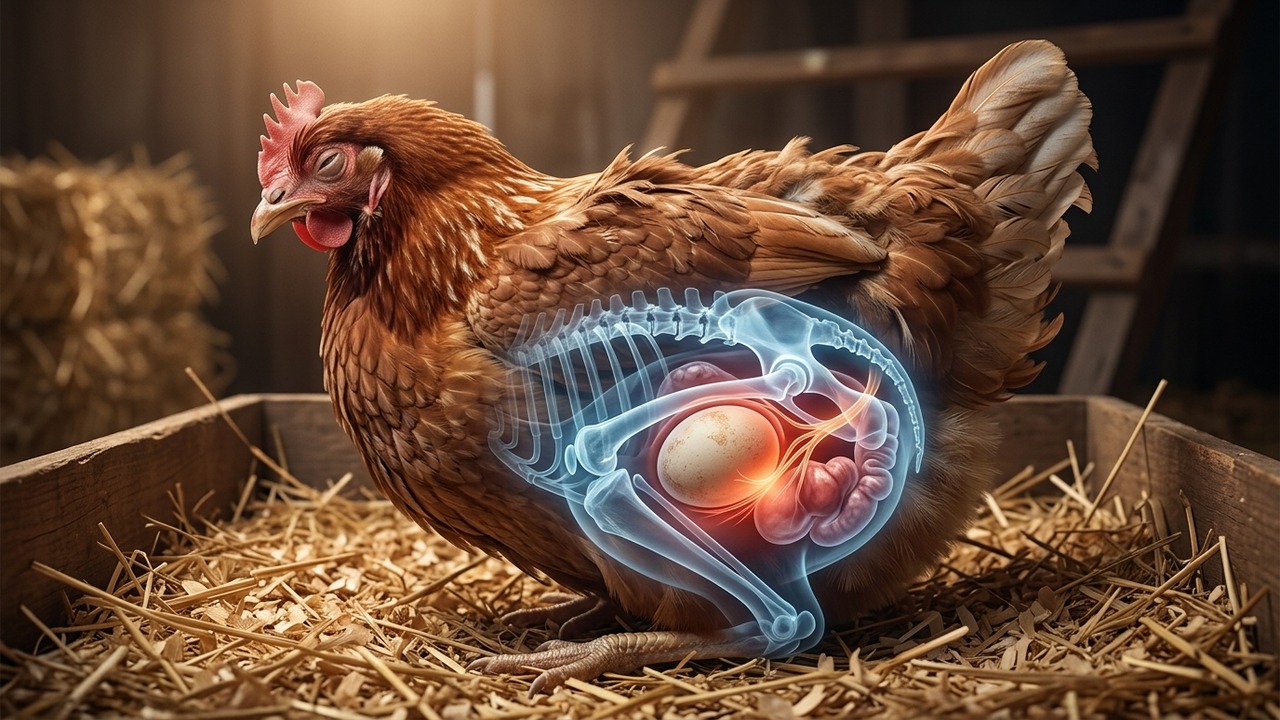
| Emergency Condition | Egg binding (dystocia in laying hens) |
|---|---|
| Critical Time Window | Hens must pass the stuck egg within 24 to 48 hours to survive |
| Primary Underlying Causes | Calcium deficiency, massive double-yolk eggs, obesity, or oviduct muscle fatigue |
| First-Line Treatment | 20-minute soak in 100°F warm water with Epsom salts |
| Key Medication | Liquid calcium gluconate (1 ml per 3 pounds body weight) orally or via treat |
| Critical Rule | NEVER crush or break the egg inside the bird; broken shells puncture internal tissue |
Identifying an Egg Bound Hen: Vital Warning Signs
An egg bound hen displays distinct physical signs of extreme pelvic distress. Because chickens instinctively hide weakness, observant keepers must look for subtle postural changes before the bird collapses. Review this diagnostic guide:
| Symptom | Physical Manifestation | What It Tells the Keeper |
|---|---|---|
| Penguin Posture | Hen stands upright with tail pumping down rhythmically | The bird is actively straining abdominal muscles to move the stuck egg |
| Repeated Nest Visits | Enters nesting box repeatedly for hours without producing an egg | Strong nesting instincts persist, but physical obstruction halts laying |
| Leg Weakness or Lameness | Dragging one leg, unsteady steps, or sitting flat on hocks | The heavy egg is pressing firmly against the sciatic nerve branches |
| Cloacal Bulging | Vent appears swollen, moist, and pulsates open and closed | The egg has traveled down into the lower shell gland or vagina |
| Total Lethargy | Eyes closed, pale comb, fluffed feathers, refuses all treats | Advanced exhaustion; hen requires immediate warming and calcium support |
Step-by-Step Warm Bath Protocol for Egg Bound Hens
Warm water soaks relax contracted pelvic musculature and hydrate tissues around the vent. Follow these four precise steps to bathe your hen safely without causing chilling or undue stress:
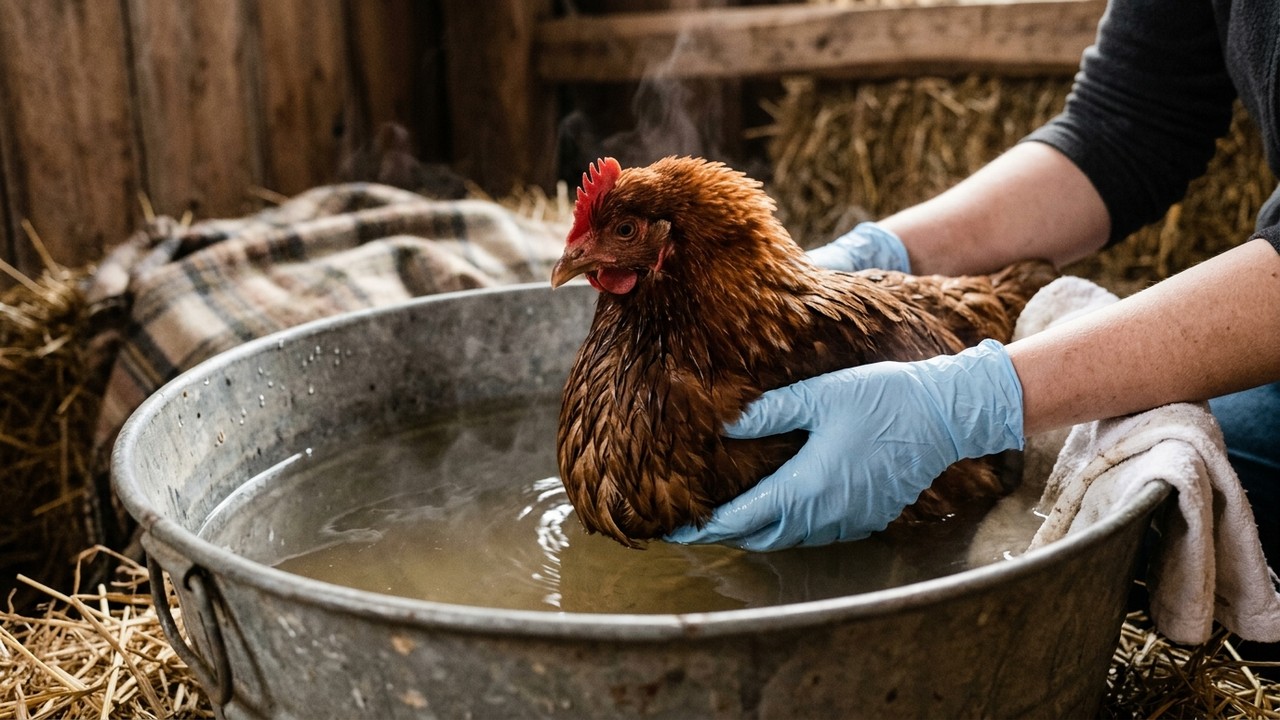
- Prepare the Soak Basin: Fill a deep utility tub or galvanized wash basin with 4 to 6 inches of warm water (100°F to 104°F, comfortably warm to the inside of your wrist). Dissolve 1/2 cup of plain Epsom salt. Ensure water depth covers the lower abdomen and cloaca while keeping head, neck, and wings completely above water.
- Quiet, Supported Immersion: Lower the hen slowly into the basin. Keep a steady, gentle hand on her breast and back to keep her calm. Allow her to soak for 20 minutes in a warm, quiet, dimly lit room. The moist heat relieves pelvic muscular cramps, dilates the distal oviduct, and softens cloacal sphincter tissues.
- Thorough Blow-Drying: Wet poultry lose body heat rapidly, creating hypothermia risks that compound shock. Lift the hen onto dry towels, pat her down gently, and use a blow dryer set to low heat and low speed, held at least 12 inches away, until her abdominal down feathers are completely dry.
- Dark, Steamy Recovery Crate: Place the hen into a dark, padded pet carrier lined with clean dry towels. Provide a hot water bottle or a heating pad on low tucked beneath half the carrier so she can choose warm or cool areas. Leave her in total darkness and quiet for 2 hours to encourage natural oviposition.
Why Calcium Gluconate is Essential for Egg Expulsion
When a hen produces an eggshell, her body draws massive amounts of calcium from blood reserves and medullary bones. If calcium levels fall too low, uterine smooth muscles lose the strength needed to contract. Administering bioavailable calcium stimulates muscular action:
- Veterinary Calcium Guidance: Consult your poultry veterinarian for appropriate liquid calcium gluconate amounts, or provide a water-soluble poultry calcium supplement with vitamin D3 according to package directions.
- Safe Syringe Technique: Draw the veterinarian-recommended liquid into a needleless oral syringe. Wrap the hen gently in a towel, hold her upright, and insert the syringe tip into the right side of her lower beak. Administer drop by drop, allowing her to swallow naturally. Never squirt liquid directly down the center of the throat, which enters the trachea and causes fatal fluid aspiration.
- Natural Contraction Onset: Calcium rapidly enters the bloodstream, restoring the electrochemical gradient across oviduct smooth muscle cells. Powerful rhythmic contractions typically resume within 30 to 90 minutes.
- Vent Lubrication Precautions: If the egg is visible in the cloaca, apply a small dab of water-based sterile lubricant (such as K-Y Jelly) around the vent opening. Never insert sharp tools, never use cooking oils that harbor bacteria, and never attempt to puncture or aspirate the egg internally, which causes fatal oviduct tears and peritonitis.
Frequently Asked Questions
Can I put oil inside the vent to help the egg slide out?
Applying a pea-sized amount of water-soluble lubricant or coconut oil around the outer cloacal rim is safe, but never probe deeply inside the vent with fingers or sharp instruments. Probing risks tearing fragile oviduct tissues or puncturing the egg.
How long after the warm bath should a hen lay her egg?
Most hens pass the stuck egg within 30 minutes to two hours after a warm bath and calcium dose while resting in a dark, quiet recovery crate. If she has not laid after four hours, repeat the soak once.
What should I do if the egg breaks inside the chicken?
A broken internal egg is a critical veterinary emergency that causes fatal bacterial egg peritonitis. Do not pull broken shell shards out forcefully. Seek immediate veterinary assistance for sterile antibiotic flushing.
How can I prevent egg binding in my flock?
Provide free-choice oyster shell in separate containers, feed a balanced commercial layer feed containing 16% protein, ensure clean water access, and avoid excessive scratch grains that cause obesity.
Evidence & Research Citations
- Cornell University College of Veterinary Medicine: Dystocia and Egg Binding in Avian Species
- University of Florida Extension: Common Reproductive Disorders in Backyard Poultry
- Auburn University Extension: Calcium Nutrition and Shell Quality in Laying Hens