
Water Belly in Chickens (Ascites): Symptoms, Causes, and Care
Quick answer
Water belly (ascites) occurs when heart strain or liver dysfunction causes clear yellow fluid to pool inside a chicken's abdomen. Affected birds stand upright like penguins and have swollen, squishy bellies.
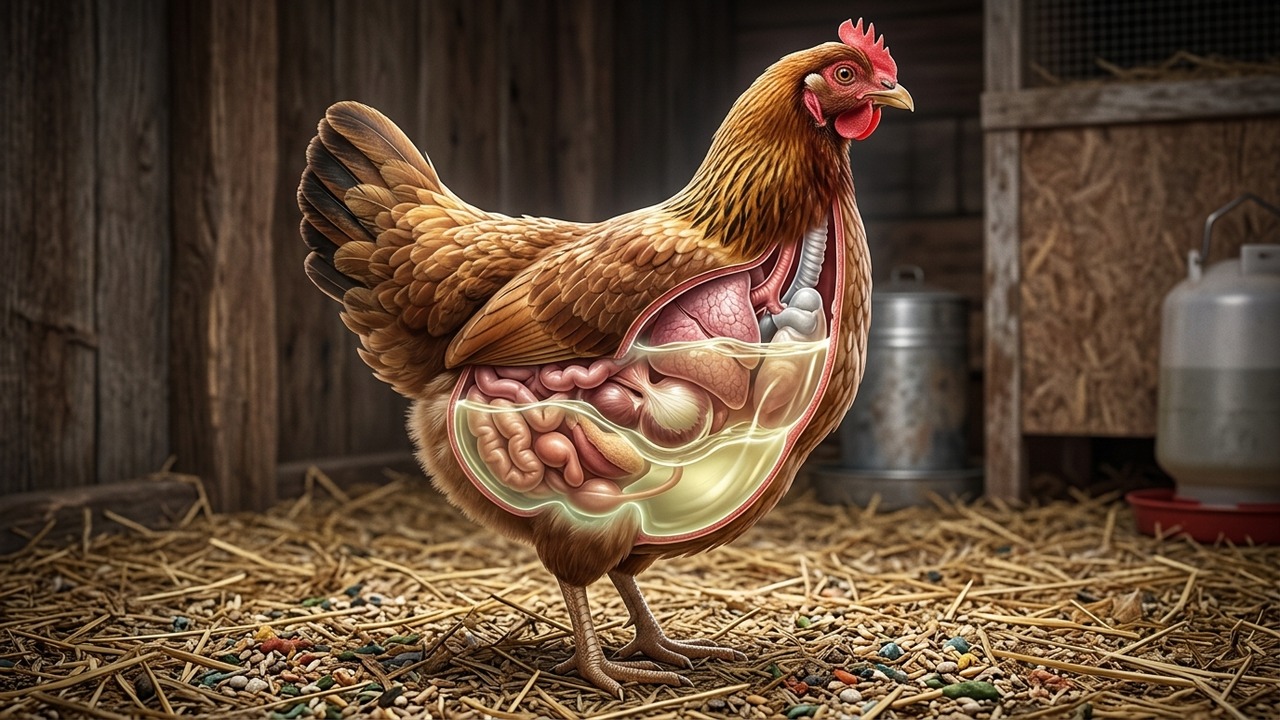
Quick Facts: Ascites (Water Belly) in Backyard Poultry
| Condition Name | Ascites syndrome (commonly called water belly) |
|---|---|
| Underlying Root Cause | Right ventricular heart failure, liver damage, or high altitude oxygen stress |
| Physical Appearance | Distended, squishy, fluid-filled lower belly; upright penguin posture |
| Breeds Most At Risk | Fast-growing meat birds (Cornish Cross) and older high-production laying hens |
| Contagious Status | Non-contagious; cannot spread to other flock members |
| Primary Danger | Severe fluid pressure collapses abdominal air sacs, causing suffocation |
Recognizing Water Belly Symptoms in Backyard Hens
Catching ascites early gives your hen the best quality of life. Unlike egg binding, which causes acute distress within hours, water belly develops gradually over several weeks. Review this symptom checklist to distinguish water belly from obesity or internal laying:
| Observation Area | Healthy Backyard Hen | Hen with Ascites (Water Belly) |
|---|---|---|
| Abdominal Palpation | Firm, trim, and tucked up neatly beneath pelvic bones | Heavy, swollen, and feels like a warm water balloon |
| Stance & Gait | Horizontal posture with active, balanced stride | Upright penguin-like waddle to prevent chest compression |
| Breathing Pattern | Quiet, rhythmic respiration through closed beak | Labored open-beak breathing and tail bobbing when standing |
| Comb & Wattle Color | Bright cherry red with vigorous blood circulation | Pale, dusky, or bluish purple combs due to oxygen lack |
| Activity Level | Active foraging, dust bathing, and perching | Rests sitting on keel bone; reluctant to jump onto perches |
The Biological Cascade: Why Fluid Accumulates
Water belly begins deep inside the avian circulatory system. Chickens possess rigid, non-expanding lungs surrounded by delicate air sacs. When metabolic demand outpaces oxygen delivery, the heart works overtime to pump blood through lung tissue, initiating a dangerous chain reaction:
- Pulmonary Hypertension: Rapid growth, cold exposure, high altitude, or poor coop ventilation increases oxygen demand. Because avian lungs are rigid and cannot expand, pulmonary capillary resistance spikes, forcing the right ventricle to generate extreme pumping pressure.
- Right Ventricular Dilation: Unlike mammals, birds possess a thin, muscular flap rather than a tricuspid valve. Under chronic strain, the right ventricle dilates, the muscular flap fails, and blood backs up into the right atrium and vena cava.
- Hepatic Venous Congestion and Weeping: Venous backpressure travels backward into the liver. Hepatic sinusoids engorge with blood, forcing clear protein-rich blood plasma to seep directly through the liver capsule into the peritoneal cavity.
- Peritoneal Transudate Pooling and Air Sac Collapse: Liters of clear amber fluid accumulate in the lower abdomen. This massive fluid weight pushes upward against abdominal air sacs, compressing lung volume and causing severe respiratory distress and upright penguin posturing.
Supportive Care: Managing a Hen with Water Belly
While ascites stemming from chronic organ failure is rarely curable, attentive supportive care can keep your hen comfortable and happy for months. Follow these flock management steps:
- Strict Sodium Restriction: Completely eliminate all salty kitchen scraps, processed breads, salted grains, and standard electrolyte hydration packs from her diet. Excess sodium draws additional fluid into the peritoneal cavity and worsens organ edema.
- Herbal Liver Support and Clean Water: Provide fresh, cool water supplemented with poultry-safe milk thistle extract or dandelion root tea, which contain natural silymarin to support remaining liver function. Add broad-spectrum poultry probiotics to maintain steady gut flora.
- Adjust Protein and Energy Levels: Feed a balanced, moderate 16% layer pellet rather than high-protein grower or broiler rations. Lowering metabolic processing loads reduces workload on the compromised cardiovascular system.
- Low-Stress, Accessible Quarters: Move the bird to ground-level roosts and low nesting boxes to prevent heavy abdominal impact when hopping down. Keep her with familiar flockmates in a quiet, dry, well-ventilated coop free of ammonia fumes.
Frequently Asked Questions
Should I drain the fluid from my chicken’s water belly at home?
Draining fluid with a needle (abdominocentesis) carries severe risks of fatal shock, septic peritonitis, and internal organ puncture. If your hen struggles to breathe, consult an avian veterinarian to evaluate drainage safely under sterile conditions.
Can chickens recover from water belly completely?
Full recovery is rare because ascites is the end result of underlying heart valve damage or liver failure. However, mild cases caused by temporary respiratory irritation or high sodium intake can improve once environmental triggers are removed.
Is water belly caused by poor coop sanitation?
No. Water belly is not an infectious bacterial or viral disease. Poor ventilation and ammonia fumes can irritate lung tissue and worsen heart strain, but the primary drivers are genetics, growth rate, and organ wear.
What foods should I feed a hen with ascites?
Feed a balanced commercial layer ration supplemented with fresh chopped oregano, dandelion greens, and cucumber slices. Avoid salty kitchen leftovers, crackers, and high-fat scratch grains that strain the liver.
Evidence & Research Citations
- University of California Davis Poultry Extension: Ascites Syndrome in Backyard Poultry
- Mississippi State University Extension: Understanding Pulmonary Hypertension and Ascites in Birds
- University of Florida Extension: Common Avian Cardiovascular and Metabolic Disorders