Hardware Cloth Fasteners: Wood Screws with Fender Washers vs Staples
Quick answer
Fasten hardware cloth to wooden coop frames using 1-inch exterior deck screws paired with 1-inch galvanized steel fender washers spaced every 6 to 8 inches. Never rely on light manual staple gun fasteners (T50 staples) or narrow crown pneumatic staples alone. Heavy predators like raccoons and dogs can pull stapled mesh directly off soft pine framing boards.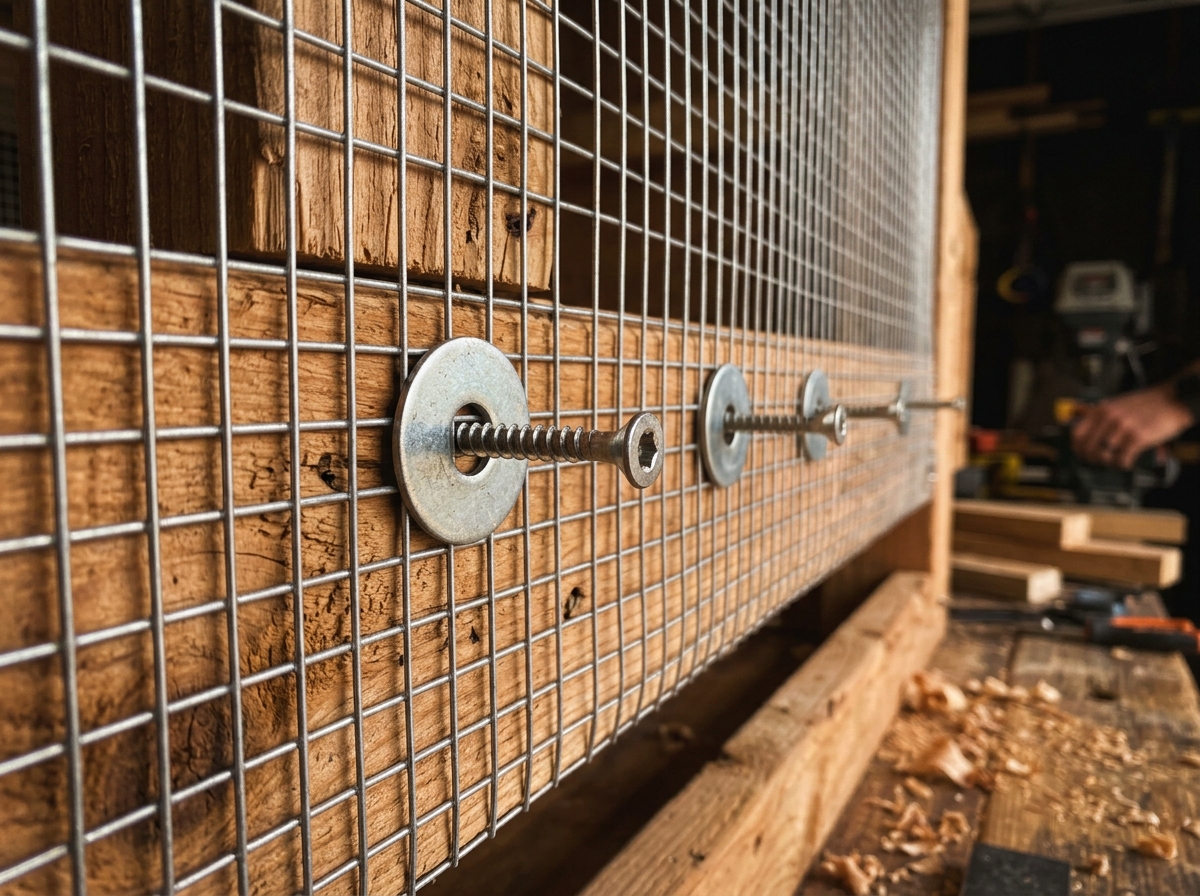
Quick Facts: Hardware Cloth Fasteners: Wood Screws with Fender Washers vs Staples
| Recommended Fastener | 1-inch #8 exterior wood screws + 1-inch steel fender washers |
|---|---|
| Dangerous Fastener | Manual T50 staples (pull out under 15 lbs of force) |
| Fastener Spacing | Every 6 to 8 inches along all framing perimeters |
| Washer Function | Clamps wire mesh flat against wood without cutting zinc coating |
| Batten Reinforcement | Sandwich fastened wire under 1×3 exterior wooden trim batten |
| Pull-Out Resistance | Screw and washer combination resists over 180 lbs of direct pull |
Why Staples Fail Against Persistent Predators
Manual staple guns fire light wire staples only 3/8 to 1/2 inch into wood. When moisture enters the wooden frame, the wood softens and fibers loosen around smooth staple legs. An adult raccoon weighing 20 pounds can grab 1/2-inch hardware cloth with both front paws and use body leverage to pop standard staples out one by one.
Even heavy-gauge pneumatic fencing staples can cut into the thin zinc galvanizing layer of your wire mesh, creating immediate rust points where wire strands snap under stress.
The Screw and Fender Washer Locking System
A steel fender washer features a small center hole designed for a #8 screw combined with a wide 1-inch outer diameter. When driven tight against hardware cloth, the wide washer spans across multiple wire grids, clamping the welded joints flat against the timber.
| Fastener Type | Holding Strength | Raccoon Resistance | Installation Speed |
|---|---|---|---|
| Manual T50 Staples | Very Low (under 15 lbs pull-out) | Poor (fails easily) | Fast |
| Pneumatic Crown Staples | Moderate (30 to 45 lbs pull-out) | Fair (can slice wire zinc) | Very Fast |
| Screws + 1-inch Fender Washers | High (180+ lbs pull-out per point) | Excellent (raccoon proof) | Moderate (drill driver) |
| Screws + Washers + Batten Strip | Maximum (Double physical lock) | Unbreakable by animal force | Moderate |
Best Practices for Fastening Hardware Cloth
Follow these construction guidelines when securing your coop run perimeter:
- Use Ceramic-Coated or Galvanized Screws: Pressure-treated lumber corrodes standard drywall screws. Use corrosion-resistant exterior deck screws.
- Pull Wire Taut Before Driving: Clamp the top edge of your hardware cloth sheet first, pull downward with locking pliers, and fasten the bottom edge to remove slack.
- Fasten Corner Joints Securely: Where two sheets meet on a stud, overlap the wire by 2 inches and drive your screw and washer through both layers.
- Cap with Wooden Batten Boards: Screw 1×3 pine or cedar boards directly over your fastened wire line to hide sharp wire ends and prevent predators from finding wire edges.
Frequently Asked Questions
What size screws should I use for hardware cloth?
Use 1-inch or 1-1/4-inch #8 exterior wood screws with 1-inch outer diameter galvanized fender washers.
Can you use poultry net staples (U-nails)?
Galvanized 3/4-inch poultry staples hammered into solid hardwood provide reasonable holding power, but screws with fender washers are more reliable and easier to tighten or remove during repairs.
How far apart should screws be on chicken wire?
Place screws and washers every 6 to 8 inches along all perimeter framing and every 12 inches along center support studs.
Evidence & Research Citations
- University of Georgia Extension: Constructing Backyard Poultry Housing
- Oregon State University Extension: Predator Proofing Backyard Poultry Coops