Predator Deterrent Lights vs Hardware Defense: Nite Guard Habituation & Reality
Quick answer
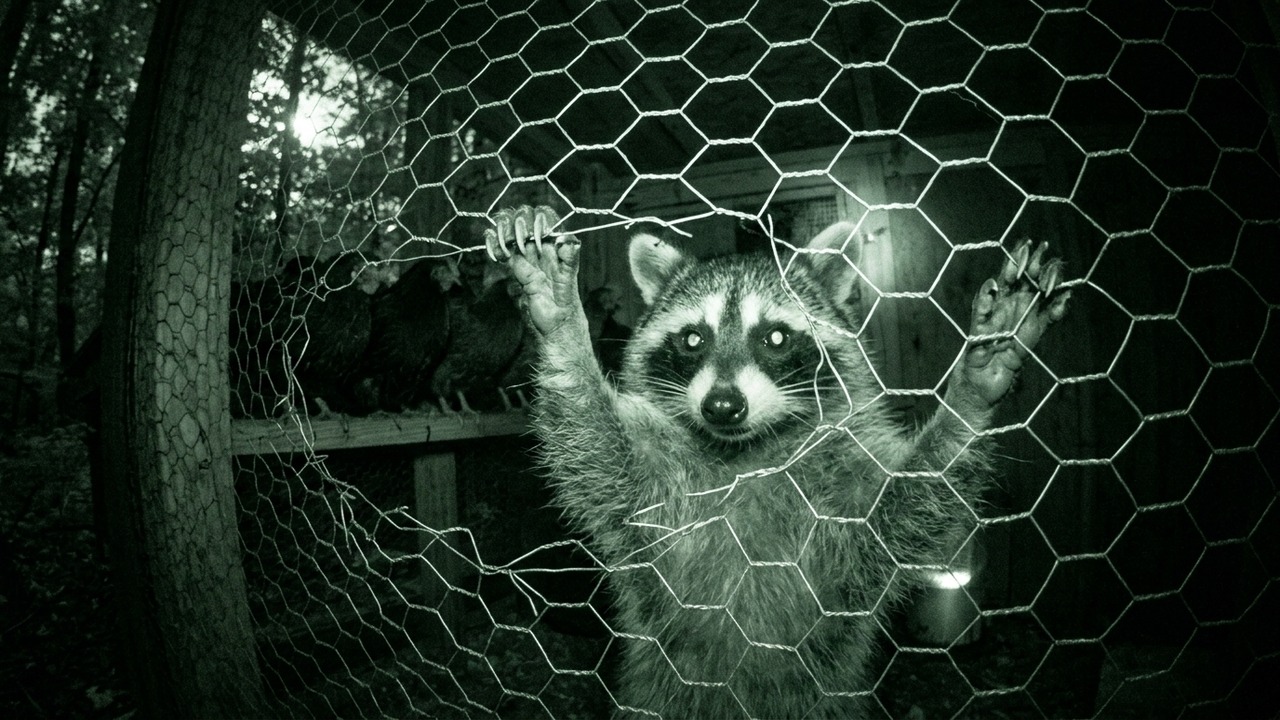
Immediate Comparative Answer: Solar predator deterrent strobe lights (such as Nite Guard and Predator Eye) create short-term psychological avoidance by mimicking the reflective tapetum lucidum eye shine of rival nocturnal carnivores. However, empirical wildlife behavioral research demonstrates that nocturnal predators (including raccoons, red foxes, coyotes, and skunks) undergo complete behavioral habituation within 14 to 21 days of continuous exposure. Once hungry predators realize the blinking red light is unaccompanied by tactile danger, sound, or physical consequence, they completely ignore the strobes. In contrast, physical hardware defense (consisting of 19-gauge 1/2-inch hot-dipped galvanized welded wire, two-step locking carabiner barrel bolts, and 12-inch horizontal buried anti-dig aprons) provides 100% mechanical exclusion that never degrades through habituation. Flashing lights function strictly as secondary perimeter warning devices (tier 3), never as standalone coop defense.
Quick facts
| Optical Deterrent Mechanism | Flashing 650 nm red LED strobes mimicking tapetum lucidum eye reflection |
|---|---|
| Empirical Habituation Curve | 14 to 21 days before nocturnal predators resume perimeter inspection |
| Hardware Cloth Exclusion Rate | 100% mechanical barrier against chewing, reaching, and digging predators |
| Applicable Target Species | Coyotes, red foxes, raccoons, skunks, and great horned owls |
| Primary Light Limitation | Zero physical resistance; fails instantly if hungry predator bypasses visual cue |
| Security Hierarchy Role | Tier 3 outer perimeter supplement; never a substitute for structural hardware |
| Hardware Cloth Minimum Gauge | 19-gauge hot-dipped galvanized welded wire with 1/2-inch grid spacing |
The Neurobiology of Deterrent Lights: Tapetum Lucidum Illusion
Solar-powered predator lights operate on a simple biomimetic principle. Most nocturnal mammalian predators possess a specialized reflective layer of tissue immediately behind their retinal photoreceptors known as the tapetum lucidum. When ambient nocturnal light strikes their eyes, it reflects forward, creating characteristic “eye shine” visible to other animals. In the wild, two glowing or flashing reflective points in darkness signal the close physical presence of a competing carnivore or a larger apex predator (such as an owl, wolf, or human).
Commercial units emit intermittent light pulses at approximately 650 nanometer wavelengths (deep red). Because mammalian night vision detects sudden movement and contrasting luminescence, a newly placed flashing light triggers an instinctual avoidance response. For the first several nights, inquisitive foxes and coyotes approach to within 40 to 60 feet of the coop boundary, observe the pulsing illumination, interpret it as an alert, vigilant rival, and divert their hunting trajectory elsewhere.
The 14 to 21-Day Habituation Curve: Empirical Wildlife Behavior
The critical flaw of optical predator deterrents lies in animal learning theory and habituation curves. Habituation occurs when repeated exposure to a non-consequential stimulus leads to a progressive decrease in behavioral response. When a predator encounters a novel flashing light, its initial flight response is high. However, if the predator repeatedly approaches the light and experiences no associated negative stimulus (such as an auditory alarm, physical deterrent, or pursuit by livestock guardian dogs), its brain reclassifies the light from “active predator threat” to “inert background feature.”
| Timeline | Predator Behavioral Response | Security Level |
|---|---|---|
| Days 1 to 5 | Acute neophobia; predators alter approach routes and avoid perimeter fence | High (psychological barrier active) |
| Days 6 to 12 | Cautious observation; predators hold position at 25 feet, watching light patterns | Moderate (testing boundaries) |
| Days 13 to 20 | First perimeter contact; raccoons test latches; coyotes scent-mark nearby posts | Low (habituation underway) |
| Day 21 and Beyond | Complete habituation; predators ignore flashing LEDs directly overhead while foraging | Zero (pure visual background noise) |
Raccoons (Procyon lotor) exhibit the fastest habituation rates due to their high problem-solving intelligence and opportunistic scavenging instincts. Urban and suburban raccoons, already acclimated to streetlamps, porch lights, and passing automobiles, frequently ignore solar predator strobes within 7 to 10 days of installation.
Physical Hardware Defense: The 4 Non-Negotiable Structural Pillars
Because optical illusions inevitably fail under prolonged predatory pressure, physical structural hardware represents the foundational bedrock of flock survival. Mechanical defense does not rely on psychology, hunger levels, or animal intelligence; it relies entirely on material tensile yield strength exceeding the physical bite, claw, and dig capacity of predators.
A gold-standard predator-proof enclosure incorporates four non-negotiable physical elements:
- 19-Gauge 1/2-Inch Welded Steel Wire: Replace all 1-inch or 2-inch poultry wire with hot-dipped galvanized welded wire. The 1/2-inch square grid prevents raccoons from reaching fingers through the wire to grasp roosting hens, while the 19-gauge thickness resists canine teeth and heavy wire cutters.
- Two-Step Mechanical Locking Latches: Raccoons possess dexterous five-toed forepaws capable of unhooking simple gate hooks, lifting wooden buttons, and opening standard one-step slide barrel bolts. All coop doors must feature two-action security: a heavy zinc slide bolt secured by an exterior spring-loaded stainless steel carabiner clip threaded through the padlock hole.
- 12-Inch to 18-Inch Anti-Dig Apron: Canines (foxes, coyotes, and neighborhood dogs) dig directly beneath vertical fence lines. Fasten a 12-inch to 18-inch strip of 1/2-inch hardware cloth horizontally to the bottom exterior baseboard, pinning it flat against the ground with 8-inch steel sod anchor pins every 12 inches. Grass roots grow through the mesh within 4 weeks, creating an invisible, impenetrable root-anchored barrier that halts digging paws instantly.
- Covered Overhead Enclosure: Solid metal roofing or high-tension knotted polyethylene netting prevents aerial raptor dive strikes and eliminates climbing predators from dropping into the run from above.
Multi-Tiered Predator Architecture: Layering Optical and Steel Defense
While solar flashing lights should never be trusted as the sole protective barrier, they serve a valuable role when integrated into a disciplined multi-tiered defense architecture:
- Tier 1 (The Core Roost): The inner coop where hens sleep on perches at night. Built with solid lumber, 1/4-inch eave ventilation screens, and locked pop-doors. This layer must be 100% physically impenetrable.
- Tier 2 (The Daytime Run Shell): 1/2-inch 19-gauge hardware cloth sides, anti-dig apron skirts, and overhead hawk netting. Provides mechanical exclusion when hens are active outside the coop.
- Tier 3 (Perimeter Optical & Acoustic Alerts): Solar deterrent strobe lights, motion-activated 120-decibel sirens, and passive infrared floodlights mounted 50 to 100 feet outside the run perimeter. This outer layer alerts keepers to nocturnal presence and keeps casual predators moving past the property boundary.
To delay habituation when using Tier 3 optical lights, reposition the solar units every 2 to 3 weeks along different fence lines, and rotate between red pulsing units and motion-activated white strobe floodlights.
Comparative Decision Matrix: Lights vs Physical Barriers Across 6 Threat Species
Examine how deterrent lights compare against physical hardware across specific backyard predator species:
| Target Threat Species | Flashing Strobe Light Effectiveness | Hardware Cloth & Mechanical Lock Effectiveness |
|---|---|---|
| Raccoons (Procyon lotor) | Poor (habituates in 7 to 14 days; ignores while solving latches) | 100% effective against claw entry and latch manipulation |
| Red Fox (Vulpes vulpes) | Moderate initial deterrence (14 to 21 days); fails if den kits need food | 100% effective against bite force and climbing entry |
| Coyotes (Canis latrans) | Good perimeter deterrence (18 to 30 days) in open rural pastures | 100% effective when combined with 18-inch horizontal dig apron |
| Weasels & Stoats | Zero effect (nocturnal burrowers hunt by scent and thermal detection) | 100% effective if 1/4-inch or 1/2-inch mesh is properly fastened |
| Norway Rats | Zero effect (completely immune to optical deterrent lights) | 100% effective (rats chew wood and plastic; cannot chew welded steel) |
| Great Horned Owls | Moderate deterrence when placed at roost elevation (6 to 8 feet high) | 100% effective when overhead run is covered with rigid mesh or netting |