Chicken Comb Pecking Injuries: Blood Stop First Aid & Reintegration
Quick answer
Immediate Clinical Answer: A chicken comb has an extensive network of superficial capillaries that bleed profusely when punctured or torn by flock mates. Because chickens are strongly attracted to the color red, active comb bleeding triggers immediate flock-wide cannibalistic pecking that can kill an injured bird within hours. Immediate emergency care requires: (1) isolating the injured bird from the flock, (2) applying firm direct pressure with a clean gauze pad for 3 minutes, (3) applying styptic powder, cornstarch, or plain flour to form an instant clot, and (4) coating the wound with antimicrobial hydrogel or non-red wound barrier before controlled reintegration.
| Injury Severity Grade | Wound Characteristics | Immediate First Aid Action | Isolation Duration |
|---|---|---|---|
| Grade 1: Superficial Scratches | Small 1 to 2 mm pinprick punctures, minor oozing | Direct pressure, apply plain antiseptic spray; return if no blood | 0 to 2 hours observation |
| Grade 2: Active Bleeding Tear | Continuous dripping blood, comb point partially split | Firm 3-minute gauze pressure, styptic powder, wound hydrogel | 24 to 72 hours in hospital crate |
| Grade 3: Severe Comb Avulsion | Deep laceration exceeding 1 cm, heavy spurting blood | Emergency direct pressure, styptic pack, veterinary suturing | 5 to 10 days until completely healed |
Step-by-Step Emergency Blood Stop Protocol
Execute this 4-step first aid procedure immediately upon discovering an actively bleeding chicken:
- Remove Bird from the Flock Immediately: Wrap the chicken in a large towel to secure its wings and prevent flapping, which elevates heart rate and accelerates blood loss. Move the bird completely out of sight and sound of the flock.
- Apply Firm Direct Pressure: Place a sterile gauze square or clean paper towel directly over the bleeding comb wound. Press firmly with your thumb and fingers for a minimum of 3 continuous minutes without lifting the pad to check. Avian blood contains thrombocytes instead of mammalian platelets, requiring uninterrupted pressure to initiate clotting.
- Apply Clotting Agent: If blood seeps through the gauze after 3 minutes, pack the wound with veterinary styptic powder (potassium aluminum sulfate). If styptic powder is not on hand, dry cornstarch or plain white wheat flour forms an effective mechanical barrier clot. Press the powder firmly into the wound for 60 seconds.
- Disinfect and Camouflage: Once active bleeding stops completely, spray the wound with Vetericyn Plus Antimicrobial Hydrogel. Do not rub the clot off. If you must use a colored spray, avoid bright purple or red tones that attract curious pecks. Dark pine tar or non-toxic blue wound coating can mask red blood when the bird returns to the flock.
Check the Interactive Chicken Symptom Checker to evaluate whether shock, dehydration, or deeper head trauma requires supplemental electrolytes and heat therapy.
Root Causes of Flock Comb Pecking
| Environmental Trigger | Underlying Mechanism | Immediate Corrective Action |
|---|---|---|
| Overcrowding | Under 4 square feet per bird in coop or under 10 sq ft in run | Expand run perimeter; add outdoor perches and visual barriers |
| Protein Deficiency | Dietary crude protein under 16% during molt or heavy laying | Upgrade to 18% to 20% flock grower feed; add black oil sunflower seeds |
| Excessive Coop Lighting | Artificial lighting exceeding 14 hours or intense bright bulbs | Dim coop lights; replace 100W bulbs with soft 25W or red bulbs |
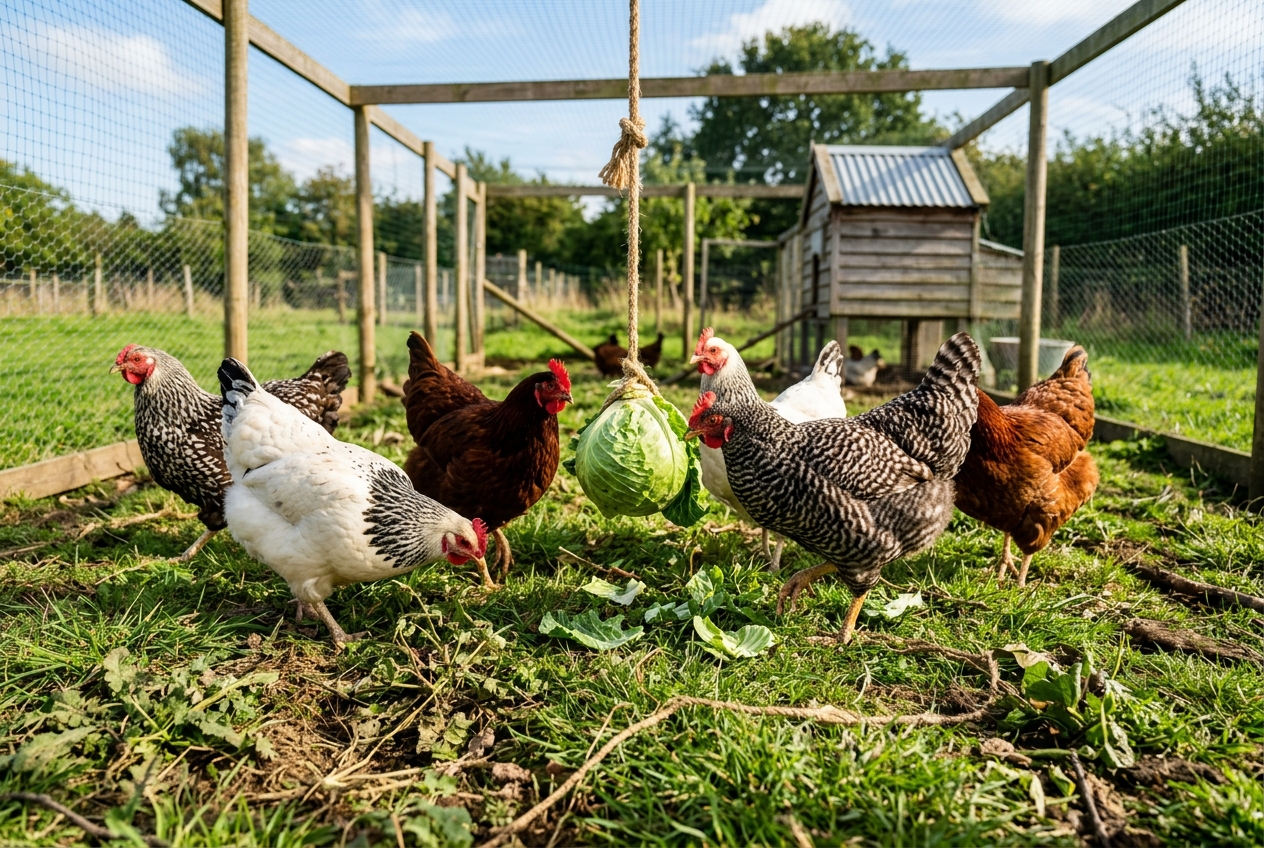
| Boredom & Confinement | Birds confined inside coop during bad weather without forage | Hang cabbage heads, scatter whole oats in deep pine shavings |
Safe Reintegration Protocol (The “See-But-Don’t-Touch” Method)
Returning an injured bird to the flock too early or without a barrier invites immediate re-injury. Follow these 4 steps to ensure safe reintegration:
- Confirm Complete Wound Scabbing: Never return a chicken with fresh red blood, open pink dermis, or active oozing. The scab must be dark brown, dry, and firm to the touch (typically 48 to 72 hours post-injury).
- Mask All Remaining Red Coloration: Dab plain blue-tinted wound spray or food-grade charcoal paste over the scab. If flock mates see zero red pigment, pecking instincts are not triggered.
- Install a See-But-Don’t-Touch Barrier: Place the injured bird inside a large dog wire crate positioned directly inside the main coop or run for 24 hours. The flock can see, hear, and interact with the bird through the wire mesh without physically pecking the comb.
- Evening Roost Re-Entry: Open the crate and place the healed bird onto the roost bar 30 minutes after sunset when the coop is completely dark. Chickens are naturally docile in the dark. By dawn, the flock wakes up as a unified group with minimal social re-ranking aggression.
When to Consult an Avian Veterinarian
Seek professional veterinary care if any of the following occur:
- Continuous arterial spurting from the comb base that fails to clot after 10 minutes of uninterrupted direct pressure and styptic packing.
- Comb avulsion where more than one-third of the comb tissue is torn loose and hanging, requiring surgical resection or sterile absorbable sutures.
- Signs of systemic shock: pale grey comb, hypothermic feet (under 95 degrees Fahrenheit / 35 degrees Celsius), closed eyes, and inability to stand.
- Foul-smelling, green or white pus oozing from the comb base, indicating deep subcutaneous cellulitis.
Verified Clinical References & Extension Sources
- Merck Veterinary Manual: Trauma and Cannibalism in Backyard Poultry.
- University of Georgia Extension: Cannibalism: Prevention and First Aid in Small Poultry Flocks.
- Pennsylvania State University Extension: Emergency First Aid for Injured Backyard Birds.
- University of Nebraska-Lincoln Extension: Controlling Feather Pecking and Cannibalism.