Chick Brooder Hygiene: Bedding Moisture & Coccidiosis Prevention
Quick answer
To prevent coccidiosis in baby chicks, keep brooder litter completely dry and elevate drinking fonts to the height of the chicks' backs. Coccidial oocysts require warmth, oxygen, and moisture to become infectious (sporulate). Raising waterers on wire stands and replacing damp shavings daily stops the parasite's life cycle before chicks ingest infective doses.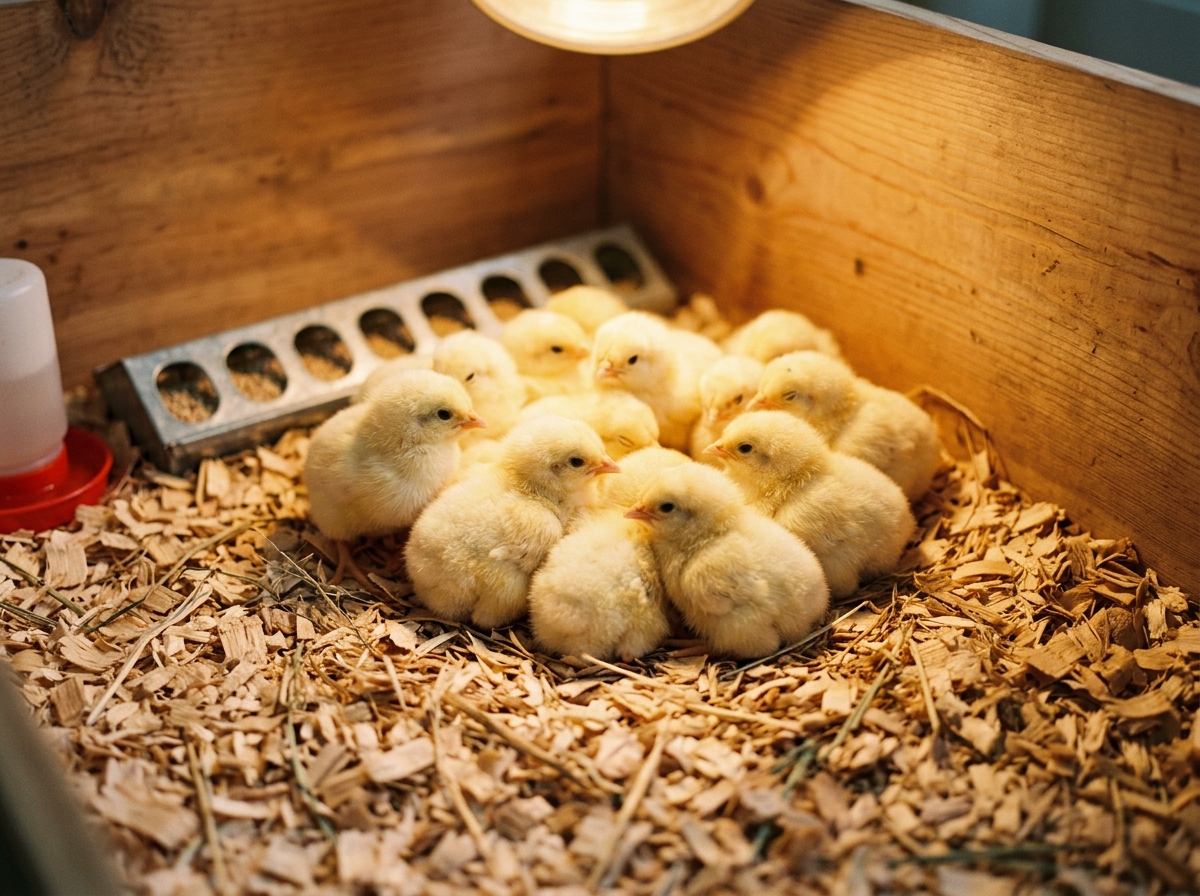
Quick facts
| Critical Moisture Level | Keep brooder bedding below 25% moisture to stop oocyst sporulation |
|---|---|
| Drinker Height Rule | Level with the middle of the chick’s back to stop dripping and manure contamination |
| Best Bedding Material | Large flake kiln-dried pine shavings (never cedar or newspaper) |
| Cleaning Frequency | Spot clean wet zones daily; full bedding change every 7 to 10 days |
1. The moisture and warmth equation
Coccidiosis outbreaks do not happen simply because parasites exist in the environment. They happen when environmental conditions allow harmless non-infective oocysts to transform into infective, disease-causing stages:
| Condition | Non-infective state | Infective sporulation trigger |
|---|---|---|
| Litter Moisture | Under 25% dry shavings | Over 35% wet soaked bedding around waterers |
| Brooder Temperature | Below 60°F or above 105°F | 75°F to 90°F (standard chick brooder range) |
| Oxygen Availability | Deep composted layer | Top 2 inches of loose bedding |
| Time to Infectivity | Oocysts remain dormant | Sporulation completes in 24 to 48 hours |
2. Three brooder setup rules for zero coccidiosis
- Elevate water fonts onto wire platforms: Place waterers on a 2-inch high wooden frame topped with 1/2-inch hardware cloth. Any spilled water drains through the mesh, away from the chicks’ feet and litter.
- Never use slick newspaper or cardboard: Newspaper cannot absorb moisture, forcing chicks to walk in wet fecal puddles while causing permanent joint damage (splay leg). Use a 3-inch layer of kiln-dried pine shavings.
- Adjust heat plates as chicks grow: Overheating causes chicks to crowd water fonts and spill moisture. Use our free brooder temperature guide to lower heat targets by 5°F each week.
3. Disinfection and setup between chick batches
Before introducing a new batch of day-old chicks into a used brooder, follow this sanitizing sequence:
- Scrape and vacuum all old dust, dander, and litter from corners.
- Wash non-porous brooder walls with hot soapy water.
- Disinfect with a 10 percent ammonia solution or veterinary-grade disinfectant (Virkon S). Standard household bleach does not penetrate the hard outer shell of coccidial oocysts.
- Allow the brooder to dry completely in direct sunlight for 48 hours before adding fresh pine bedding.
Frequently Asked Questions
Should I feed medicated chick starter?
Medicated chick starter contains small prophylactic amounts of amprolium. It allows chicks to ingest low levels of oocysts and develop natural lifetime immunity without suffering clinical disease. It is highly recommended for beginners brooding chicks on litter.
Can I feed medicated starter to chicks vaccinated for coccidiosis?
No. If your hatchery vaccinated your day-old chicks for coccidiosis (common with high-volume or organic orders), feed them non-medicated starter. The amprolium in medicated feed will kill the live vaccine culture and prevent immunity from forming.
Is cedar bedding safe for chicks?
No. Cedar shavings emit strong aromatic plicatic acid and volatile oils that destroy the delicate respiratory linings and livers of young chicks. Always use kiln-dried white pine shavings or chopped straw.
Sources and further reading
- University of Georgia Extension: Brooding Management for Small Flocks (Publication C1181).
- NC State Extension: Small Flock Biosecurity and Sanitation.
- Flockline Learn: Chicken Brooder Temperature Guide by Week.