Summer Chicken Run Shade & Ground Cooling: 70% Aluminet, Dust Pit Moisture & Ice Hacks
Quick answer
Immediate Field Answer: Mitigating extreme summer run temperatures requires disrupting radiant heat transfer and providing conductive ground cooling surfaces. Standard dark vinyl tarps represent an inferior shade solution because dark plastic absorbs 85% to 95% of solar radiation, trapping hot air beneath the run roof like a greenhouse. Instead, install 70% to 80% knitted Aluminet shade cloth, which reflects 70% of infrared solar radiation while allowing 100% passive thermal air ventilation, dropping temperatures beneath the cloth by 10 to 14 degrees Fahrenheit (5.5 to 7.8 degrees Celsius). For conductive ground cooling, excavate a 24 by 36-inch (60 by 90 cm) dust bathing trench 6 to 8 inches deep, fill it with coarse construction sand and wood ash, and soak the base with 2 gallons of cool water each morning. Chickens burrow their bare breasts into the damp 68-degree sand, transferring core heat directly into the soil. Supplement with 1-gallon frozen water jugs placed beside shade walls and feed chilled high-water treats like watermelon (92% water) while strictly avoiding cracked corn, which raises metabolic body heat by 15% during digestion.
Quick facts
| Superior Shade Material | 70% to 80% knitted Aluminet cloth (reflects 70% solar radiation) |
|---|---|
| Dark Tarp Greenhouse Flaw | Absorbs 85% to 95% of solar radiation, re-radiating heat downward |
| Temperature Drop Under Aluminet | 10 to 14 degrees Fahrenheit (5.5 to 7.8 C) lower than direct sunlight |
| Damp Sand Trench Depth | 6 to 8 inches (15 to 20 cm) filled with coarse construction sand and ash |
| Conductive Cooling Benefit | Damp sand maintains 68 to 72 F (20 to 22 C) substrate during 95 F heat |
| Summer Feed Rule | Banish cracked corn and scratch grain; digestive fermentation increases body heat 15% |
Passive summer cooling strategies transform an oppressive backyard run into a safe sanctuary during peak heat waves. Chickens spend over 80% of their daytime hours outdoors in the run, seeking relief from hot, stagnant coop interiors. By replacing heat-trapping solid roofs with reflective shade mesh and engineering subterranean cooling pits, keepers protect flock productivity and prevent mortality without running high electricity bills.
Shade Material Comparison: Thermal Reflection vs Heat Trapping
| Shade Material Type | Solar Reflection % | Airflow Permeability | Microclimate Temp Impact | Primary Drawback |
|---|---|---|---|---|
| 70% Knitted Aluminet | 70% to 75% reflection | High (open mesh structure) | Drops 10 to 14 F below sun | Requires sturdy anchor points |
| Standard Black Shade Cloth | 10% reflection (absorbs 90%) | High (open mesh structure) | Drops 4 to 7 F below sun | Radiates absorbed heat downward |
| Solid Vinyl / Poly Tarp | 0% reflection (absorbs heat) | Zero (completely impermeable) | Can increase heat 5 to 10 F | Acts like a hot air greenhouse |
| Natural Tree Canopy | 80% to 85% absorption | High (transpirational cooling) | Drops 12 to 16 F below sun | Seasonal; predator access branch risks |
Subterranean Conductive Cooling: The Damp Sand Dust Pit
Chickens possess natural behavioral instincts to dig down into cooler earth during high midday temperatures. Keepers can optimize this instinct through engineered conductive cooling pits:
- Excavation Dimensions: Dig a rectangular trench measuring 24 inches wide by 36 inches long (60 by 90 cm) with a depth of 6 to 8 inches (15 to 20 cm) in the most heavily shaded corner of the run.
- Substrate Blend: Fill the trench with 70% washed coarse construction sand, 20% dry topsoil, and 10% natural hardwood wood ash (with zero chemical fire starter residues). Avoid fine play sand, which creates respirable silica dust when scratched.
- Morning Hydration Routine: Every morning before 9:00 AM, pour 1.5 to 2.0 gallons of cool water into the bottom layer of the sand pit. The top 1 inch remains dry and friable for dust bathing, while the bottom 5 inches retain moisture at 68 to 72 degrees Fahrenheit (20 to 22 degrees Celsius).
- Thermoregulatory Heat Sink: When hens burrow into the damp sand, their bare apteria (non-feathered skin zones on the breast, belly, and flanks) press directly against the cool mineral substrate. Heat conducts away from the bird’s bloodstream 25 times faster through damp sand than through still air.
Frozen Water Jug Placement & Summer Feeding Protocols
Combine physical shade and subterranean pits with smart behavioral enrichment:
- The 1-Gallon Frozen Jug Perimeter: Freeze 3 to 4 clean 1-gallon plastic milk jugs filled 90% full of water overnight. Place these frozen thermal blocks directly inside the shaded sand pit or along preferred resting walls. Chickens will lean directly against the cool plastic containers to chill their femoral arteries.
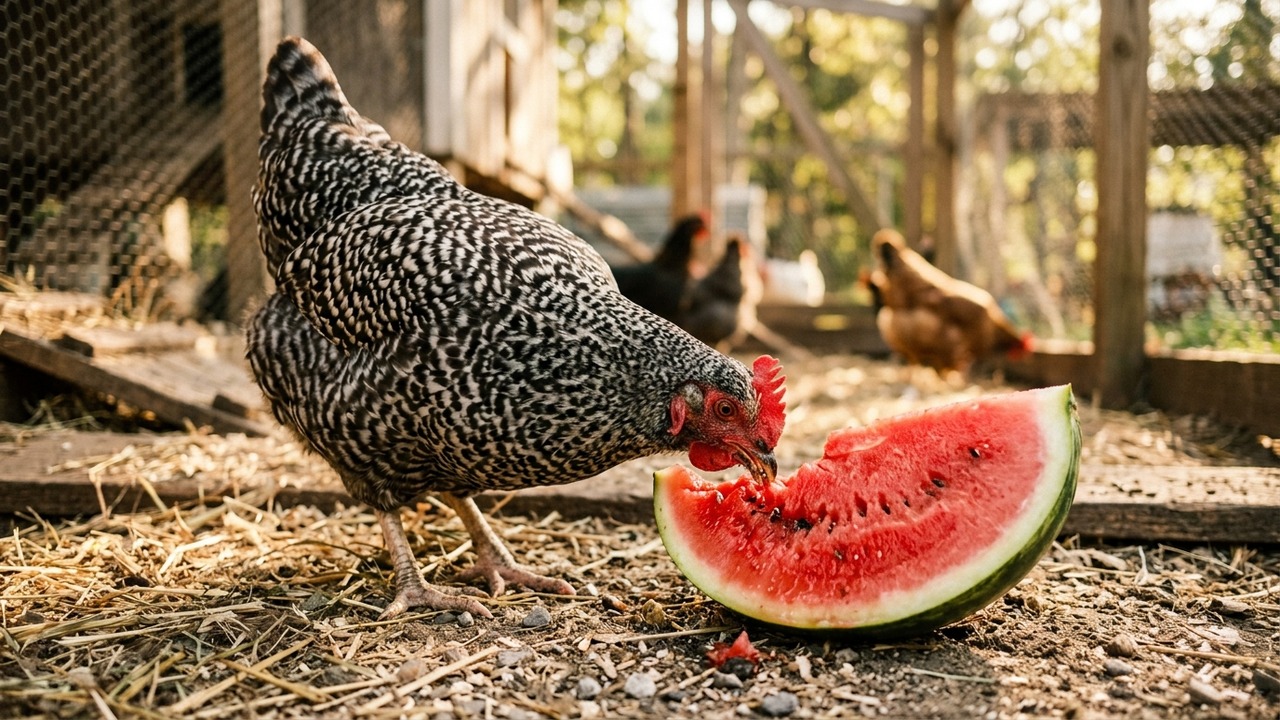
- High-Hydration Summer Treats: Offer chilled watermelon (92% moisture content, rich in electrolytes and lycopene), cool sliced cucumbers (95% moisture), or frozen blueberry ice blocks floating in shallow pans. These items stimulate oral fluid intake during afternoons when birds refuse warm waterers.
- Strict Summer Corn Ban: Immediately eliminate cracked corn, whole scratch grains, and heavy carbohydrate treats from summer rations. Digestion of dense starch in the avian gizzard requires intensive metabolic energy that elevates bird core body temperature by 15% for 4 to 6 hours after feeding (the dietary thermal effect of food). Feed exclusively high-protein complete crumbles early in the morning and late in the evening.
Verified Clinical References & Extension Sources
- University of California Agriculture and Natural Resources: Shade Structures and Heat Stress Abatement in Small Poultry Flocks.
- Kansas State University Extension: Dust Bathing Dynamics and Thermal Regulation in Free-Range Layers.
- University of Georgia Poultry Science: Dietary Energy Adjustments and Water Balance During Heat Stress.