Chicken Dog Attack Recovery: Shock Triage, Puncture Irrigation & Antibiotic Protocol
Quick answer
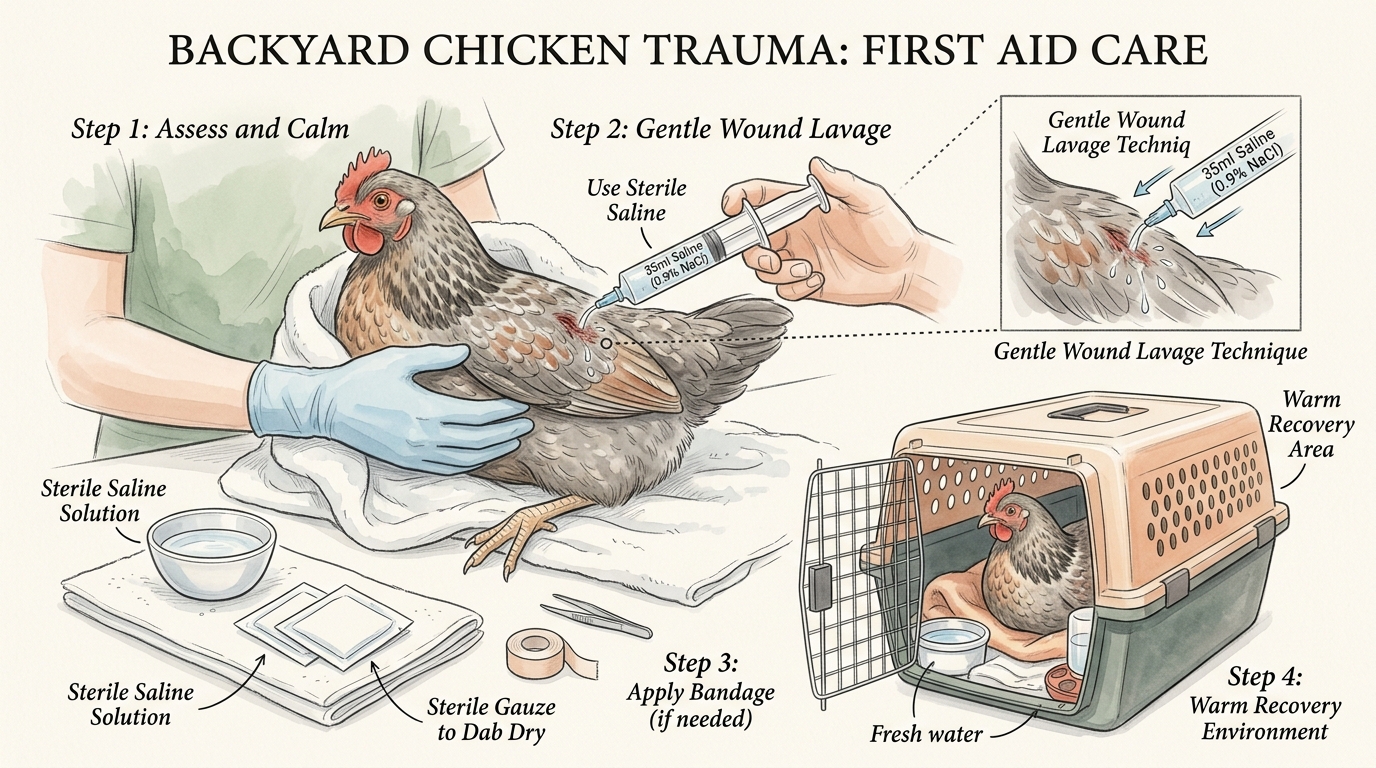
Immediate Clinical Answer: Domestic dog attacks on backyard chickens cause death primarily through hypothermic circulatory shock within the first 2 to 6 hours rather than external blood loss. Canine jaws deliver crushing blunt trauma (exerting 150 to 300 pounds per square inch of force) that ruptures internal abdominal air sacs, lacerates the liver, and tears subcutaneous tissue away from muscle fascia. Emergency triage requires three immediate clinical stages: First, isolate the victim in a warm (80 to 85 degrees Fahrenheit), pitch-dark, quiet recovery crate lined with clean towels to reverse systemic vasoconstriction; second, do not handle, force-feed water, or attempt painful wound debridement during acute shock. Third, once the hen displays spontaneous head movement and stabilized respiration, flush bite punctures using warm sterile 0.9% saline or 0.05% chlorhexidine solution via a 20 mL syringe. Banned substances include hydrogen peroxide (which lyses healthy cells) and blue alcohol sprays. Systemic broad-spectrum antibiotics (such as amoxicillin-clavulanic acid) are mandatory to neutralize lethal Pasteurella multocida bacteria deposited deep inside puncture tracts by canine saliva.
Quick facts
| Primary 6-Hour Mortality Cause | Hypothermic circulatory shock and pulmonary collapse, not surface bleeding |
|---|---|
| Hospital Box Environment | Pitch-dark, silent, towel-lined crate held at 80 to 85 degrees Fahrenheit |
| Safe Irrigation Solutions | Warm sterile 0.9% sodium chloride (saline) or 0.05% chlorhexidine diacetate |
| Banned Topical Treatments | Hydrogen peroxide (causes tissue necrosis); alcohol-based blue wound spray |
| Primary Pathogen Threat | Pasteurella multocida transmitted via canine oral secretions |
| Antibiotic Intervention | Oral amoxicillin-clavulanic acid (125 to 150 mg/kg) under veterinary prescription |
| Safe Analgesia Standard | Prescription meloxicam (0.5 to 1.0 mg/kg every 12 hours); ban human NSAIDs |
The Golden Hour: Severe Shock Resuscitation & Hypothermia Reversal
When a chicken survives a canine encounter, flock owners frequently make the tragic error of immediately plucking feathers, washing wounds with cold water, and applying stinging antiseptic sprays. This intensive handling during acute shock routinely causes fatal cardiac arrest. A bird in shock experiences systemic vasoconstriction: its heart rate spikes above 400 beats per minute, peripheral capillary beds collapse, and body temperature plummets from the normal 105 to 107 degrees Fahrenheit down into dangerous hypothermia (under 100 degrees Fahrenheit).
Observe the strict 60-minute shock resuscitation protocol:
- Warm, Dark Isolation: Place the injured chicken into a clean plastic pet carrier or cardboard hospital box lined with thick, clean cotton bath towels. Place a heating pad set to low beneath one half of the carrier bottom (or place a hot water bottle wrapped in a towel inside). Maintain ambient enclosure temperature at 80 to 85 degrees Fahrenheit.
- Absolute Sensory Deprivation: Move the recovery crate to a silent, dark interior room away from children, barking dogs, and television noise. Darkness triggers melatonin release, depressing acute catecholamine surges and stabilizing blood pressure.
- Withhold Food and Forced Liquids: Never syringe water, electrolytes, or food into the beak of an unconscious, gasping, or limp chicken. In shock, the pharyngeal reflex is depressed; forcing fluids leads to immediate tracheal aspiration and drowning.
- Initial Hemostasis Only: The single intervention permitted during acute shock is controlling active, arterial bleeding. Apply direct, gentle pressure to spurting wounds using a sterile 4×4 gauze sponge for 3 to 5 minutes. Do not wipe clots away. Once bleeding slows to an ooze, place the bird in the dark carrier undisturbed for 45 to 60 minutes.
Canine Bite Pathology: Blunt Crushing vs Subcutaneous Dead Space
Understanding the unique mechanical nature of canine bite wounds is essential for successful rehabilitation. Dogs possess blunt, conical dentition designed to crush, tear, and hold prey. When a dog bites a chicken, jaw compression generates 150 to 300 pounds per square inch of force across fragile avian anatomy.
External inspection often reveals only two or four tiny circular puncture marks on the skin. However, beneath those superficial skin punctures lies extensive internal destruction:
- Subcutaneous Fascial Shearing: The shearing action of shaking teeth rips thin avian skin away from the underlying pectoral and thigh muscle groups, creating vast subcutaneous dead-space pockets.
- Hematoma and Muscle Contusion: Capillary beds tear, pooling blood deep within muscular tissue and creating ideal anaerobic environments for bacterial multiplication.
- Air Sac Rupture (Subcutaneous Emphysema): Canine teeth easily penetrate thoracic air sacs. When an air sac tears, expired respiratory air escapes into the subcutaneous fascia, inflating the chicken’s skin like a balloon (manifesting as crackling, bubble-wrap sensations under the skin).
- Skeletal Fractures: Thin pelvic girdles, ribs, and coracoid bones frequently fracture without penetrating the skin, impairing normal bellows-style respiratory mechanics.
Wound Debridement & Irrigation: Saline vs Chlorhexidine Protocols
Once the patient exhibits stabilized clinical signs (alert eye tracking, spontaneous upright sternal recumbency, respiration rate below 35 breaths per minute), wound cleansing can proceed safely. Gather supplies prior to bringing the bird out of the recovery box:
| Antiseptic Solution | Avian Tissue Safety Rating | Clinical Application Rule |
|---|---|---|
| Sterile 0.9% Sodium Chloride (Saline) | Gold Standard (100% isotonic) | Ideal high-volume wound flush; causes zero cellular toxicity to exposed fascia |
| 0.05% Chlorhexidine Diacetate | Excellent Broad-Spectrum Antiseptic | Dilute 2% concentrate at 1:40 ratio in sterile water; highly effective against bacteria |
| Hydrogen Peroxide (3%) | Dangerous / Banned | Lyses viable granulating fibroblasts; destroys microvascular clotting; delays healing |
| Rubbing Alcohol (70% Isopropyl) | Dangerous / Banned | Causes extreme chemical burns, severe pain, acute shock relapse, and rapid hypothermia |
| Blue Wound Spray (Alcohol Base) | Contraindicated on Punctures | Seals anaerobic bacteria inside deep tissue pockets; creates severe chemical irritation |
Perform puncture irrigation using mechanical hydro-flushing: draw warm sterile 0.9% saline or 0.05% chlorhexidine into a 20 mL syringe fitted with an 18-gauge plastic intravenous catheter tip (needle removed). Position the catheter tip directly into the mouth of each puncture wound. Depress the syringe plunger firmly to generate 7 to 8 pounds per square inch of irrigation pressure. Flush 60 to 100 mL of fluid through each puncture tract until the return fluid emerges clear of canine saliva, feathers, and grit.
Following thorough irrigation, apply a generous layer of plain triple-antibiotic ointment (containing bacitracin, neomycin, and polymyxin B) over the wound. Never use products containing pramoxine, benzocaine, or lidocaine: birds absorb topical caine-family anesthetics rapidly through vascular avian skin, inducing fatal cardiac arrhythmias.
Antimicrobial & Systemic Infection Control: The Pasteurella Hazard
Canine oral cavities harbor virulent bacterial floras dominated by Pasteurella multocida, Staphylococcus aureus, Streptococcus species, and anaerobic bacteria. Pasteurella multocida is particularly lethal to avian physiology; if introduced into subcutaneous pockets, bacteria reproduce exponentially, crossing into the bloodstream within 24 to 48 hours to cause fulminant avian cholera (pasteurellosis), septic shock, and rapid death.
Consequently, topical ointment alone is insufficient for deep canine bite wounds. Veterinary intervention for systemic oral antibiotic administration is strongly indicated. The clinical drug of choice is amoxicillin-clavulanic acid (Clavamox or Augmentin) dosed at 125 to 150 mg per kilogram of body weight orally twice daily for 7 to 10 consecutive days. In severe cases involving compound fractures or deep coelomic puncture, veterinarians may prescribe enrofloxacin (Baytril) or trimethoprim-sulfamethoxazole.
For pain management, prescription meloxicam (Metacam) administered orally at 0.5 to 1.0 mg/kg every 12 hours relieves inflammatory pain and encourages voluntary hydration. Never administer human non-steroidal anti-inflammatory drugs (NSAIDs) such as ibuprofen, naproxen, or acetaminophen, which induce acute renal tubular necrosis in poultry within 48 hours.
7-Day Rehabilitation Timeline & Flock Reintegration Protocol
Rehabilitating an injured bird requires a structured schedule transitioning from emergency care to social reintegration:
- Days 1 to 2 (Intensive Shock & Hydration): Keep the patient in the heated hospital box. Once shock subsides, offer room-temperature water enriched with balanced poultry electrolytes and vitamins. Offer high-protein treats such as scrambled eggs or mealworms. Flush wounds twice daily and apply antibiotic ointment.
- Days 3 to 5 (Tissue Granulation & Mobility): Monitor puncture margins for signs of localized necrosis, foul odors, or yellow caseous pus. Avian pus is thick and cheese-like (heterophilic), not liquid. If subcutaneous emphysema develops, veterinary needle aspiration may be performed to deflate air pockets. Encourage gentle leg stretching.
- Days 6 to 10 (Dry Healing & Visual Contact): As wounds form healthy scabs and dermal edges contract, discontinue wet flushes. Move the bird into a wire dog crate placed directly inside the main coop or run during daylight hours. This “see-but-do-not-touch” arrangement maintains flock social hierarchy while preventing flockmates from cannibalizing red wound tissue.
- Days 11 and Beyond (Supervised Release): Apply a non-toxic anti-peck ointment or cover remaining bare skin with a poultry saddle. Reintroduce the bird to the flock at dusk as the flock settles on evening roosts. Supervise foraging for the first 30 minutes following morning coop release.