
Can Chickens Eat Watermelon? Rind, Seeds & Safety
Quick answer
Direct Answer: Yes, chickens can eat watermelon safely, including the flesh, seeds, and green rind as a nutrient-dense, hydrating treat. Watermelon contains 92 percent water, making it a great hot-weather snack to prevent heat stress. Because it provides natural sugars, treats should never exceed 10 percent of daily feed intake.
Direct Answer: Yes, chickens can eat watermelon safely, including the flesh, seeds, and green rind as a nutrient-dense, hydrating treat. Watermelon contains 92 percent water, making it a great hot-weather snack to prevent heat stress. Because it provides natural sugars, treats should never exceed 10 percent of daily feed intake.
Quick Facts: Watermelon Nutrition for Backyard Chickens
| Water Content | 92% moisture for rapid flock hydration |
|---|---|
| Natural Sugar | 6.2g per 100g (fructose and glucose) |
| Key Vitamins | Vitamin A, Vitamin C, and Vitamin B6 |
| Key Minerals | Potassium and magnesium for electrolyte balance |
| Feeding Frequency | 2 to 3 times weekly during warm weather |
Can Chickens Eat Watermelon Rind and Seeds?
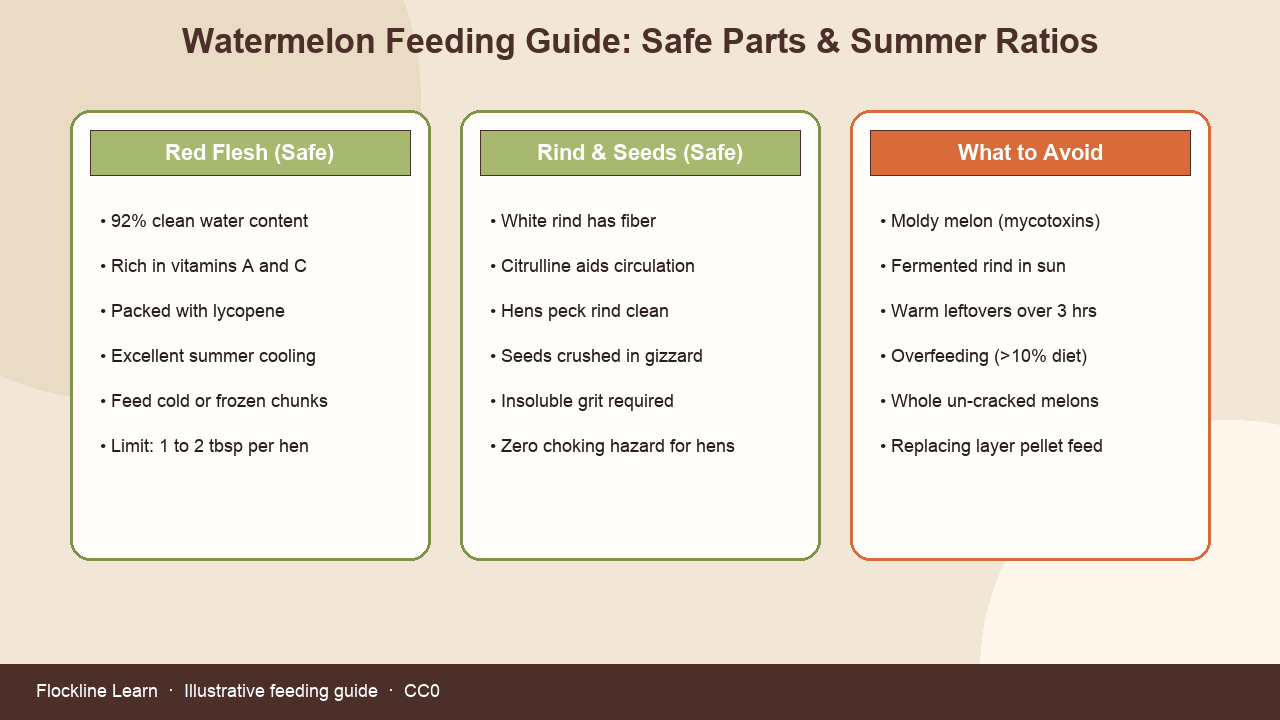
Backyard keepers often ask if chickens can eat watermelon rind and seeds safely. The answer is yes to both. Chickens peck pale white rind down to the skin. The white flesh provides dietary fiber and citrulline, an amino acid supporting blood circulation during hot weather.
Watermelon seeds are equally safe. Chickens swallow seeds whole. The muscular gizzard uses insoluble grit to grind them into digestible fats and protein. As long as your flock has free-choice granite grit, seeds pose zero hazard.
Watermelon Parts: Safe vs Parts to Avoid
Fresh watermelon is an excellent treat, but spoiled fruit can cause flock illness. Review this breakdown before sharing scraps with your birds.
| Plant Part | Safety Status | Keeper Guidance |
|---|---|---|
| Red Flesh | Safe | Hydrating and rich in lycopene. Feed fresh or chilled in shallow pans. |
| White Rind | Safe | High in fiber and citrulline. Hens peck it clean to the thin skin. |
| Seeds | Safe | Crushed easily by gizzard grit with zero choking hazard for hens. |
| Frozen Chunks | Safe | Helps drop internal body heat on afternoons above 90°F. |
| Moldy Melon | Prohibited | Mold produces mycotoxins that harm the liver and provoke crop illness. |
| Fermented Melon | Prohibited | Melon left in summer heat ferments into alcohol, risking sour crop. |
Inside the Crop: Healthy Digestion vs Sour Crop Risk
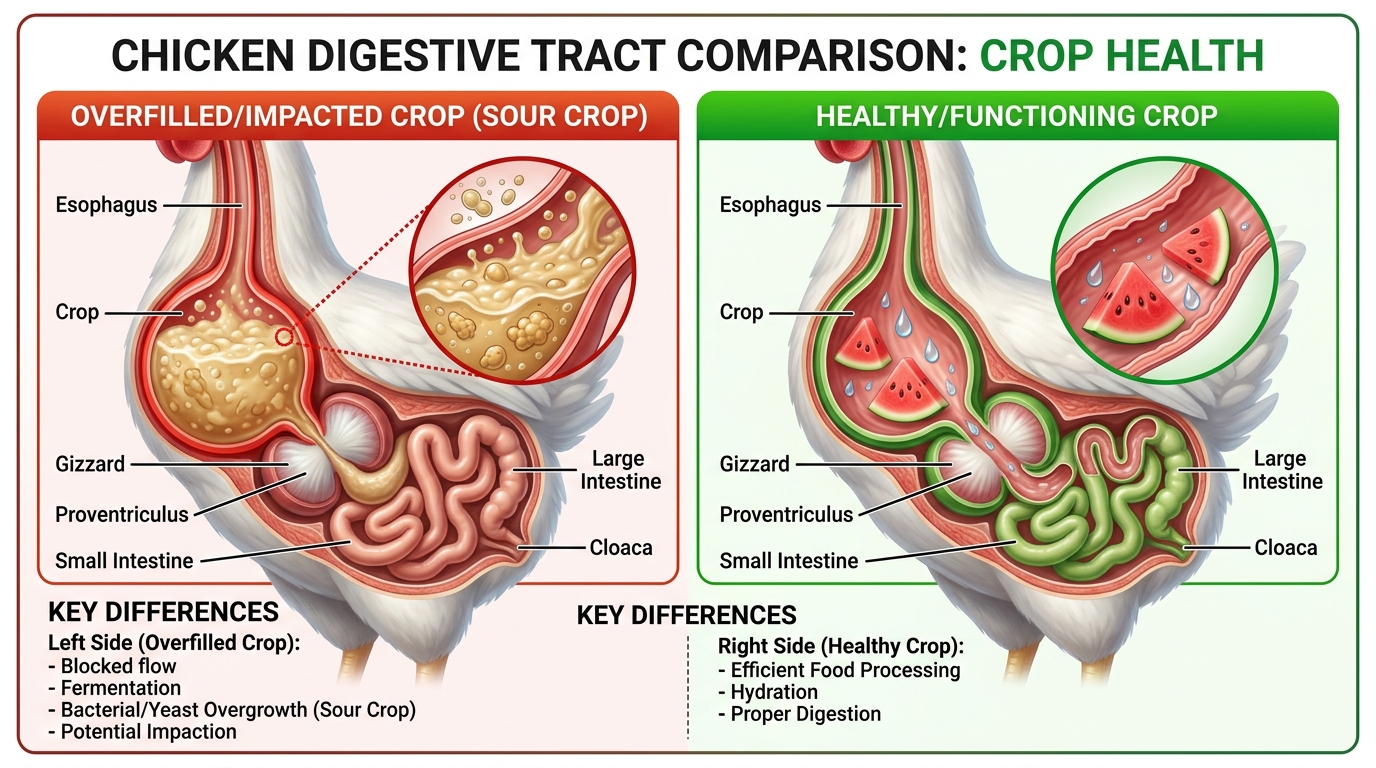
Chickens store food temporarily in the crop before it moves to the proventriculus and gizzard. Feeding warm, spoiled, or excessive sugary fruit can disrupt the natural crop environment.
How to Feed Watermelon for Summer Heat Relief
Chickens cannot sweat. When summer temperatures climb past 85°F (29°C), hens pant and spread their wings to shed heat. Heat stress reduces egg production and weakens eggshells. Watermelon provides an easy way to restore fluids and keep birds comfortable.
Cut a melon in half and chill it overnight. Place chilled halves in a shaded run during afternoon heat. Chickens peck at the cold melon, cooling their beaks while taking in fluids. If a hen seems sluggish, check her condition with our Flockline Symptom Checker.
How Much Watermelon Can Chickens Eat Daily?
Moderation is necessary with every sugary fruit. A balanced ration, such as a complete layer feed vs grower feed, must supply at least 90 percent of your flock’s daily calories. Treats must never exceed 10 percent.
Offer two tablespoons of watermelon per hen, two or three times weekly. Feeding too much fruit displaces protein and calcium, resulting in loose droppings and thin eggshells. Ensure your run allows enough room for peaceful feeding using our chicken coop size calculator, and review our guide on toxic foods for chickens.
See It in Context
Watch how poultry specialists manage summer heat relief and safe supplemental feeding for small-scale flocks:
The Bottom Line on Watermelon Treats
Watermelon is one of the best summer treats for backyard flocks. The flesh, rind, and seeds deliver clean hydration and valuable vitamins. Serve chilled melon in moderation, discard warm leftovers after a few hours, and maintain complete poultry feed as your flock’s nutritional base.
Frequently Asked Questions
Can baby chicks eat watermelon?
Baby chicks can eat small pinches of watermelon flesh starting at 2 to 3 weeks old, provided they have access to chick grit. Avoid feeding rind or seeds until chicks reach maturity.
Does watermelon cause runny chicken poop?
Yes, watermelon can cause watery droppings for several hours because it is 92 percent water. As long as droppings firm up by next morning and birds remain alert, this is harmless.
Can chickens eat yellow or seedless watermelon?
Yes, yellow and seedless watermelons are safe. Yellow melon provides identical hydration and higher beta-carotene, which helps support rich golden egg yolks.
Can feeding watermelon cause sour crop?
Fresh watermelon will not cause sour crop. However, warm fruit left in a hot run ferments rapidly, encouraging yeast growth. Clear away uneaten melon scraps within three hours.
Evidence & Research Citations
- Penn State Extension: Feeding Backyard Chickens and Summer Flock Hydration
- University of Georgia Extension: Nutrition for Backyard Flocks and Heat Stress Management
- NC State Extension: Backyard Flock Nutrition and Supplemental Feeding Practices