Can Chickens Eat Bananas? Peels, Portions & Safety
Quick answer
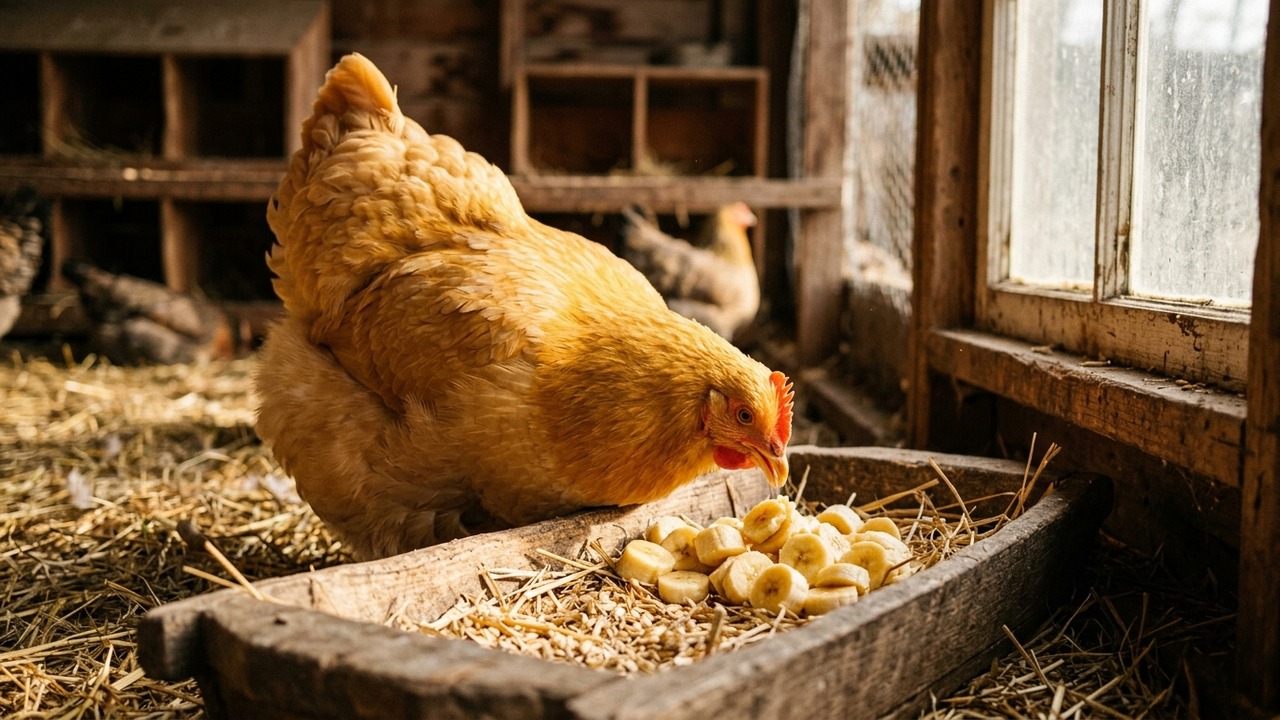
Yes, chickens can eat bananas safely, providing rich potassium, magnesium, and vitamin B6 when offered in moderation as a healthy flock treat. Both sweet flesh and clean peels are edible. Because bananas contain roughly 12 percent sugar, limit servings to a few thin slices per bird once or twice weekly to avoid digestive upset or obesity.
Quick Facts: Banana Nutrition for Backyard Chickens
| Water Content | 75% natural moisture |
|---|---|
| Sugar Content | 12.2g per 100g (dense natural sugars) |
| Key Minerals | Potassium (358mg) and magnesium for nerve function |
| Key Vitamins | Vitamin B6 and Vitamin C for feather growth |
| Feeding Frequency | 1 to 2 times weekly in small portions |
Can Chickens Eat Banana Peels?
Chickens can eat banana peels safely with proper preparation. Raw peels contain dense cellulose fibers difficult for beaks to tear. If an eager hen swallows a long peel strip, that fiber can knot inside the crop, creating an impacted crop.
To feed peels safely, wash off residues and chop skins into tiny quarter-inch pieces. You can also boil peels for ten minutes to soften them. Ensure hens have free-choice insoluble granite grit so the gizzard grinds fibrous material smoothly.
Safe Banana Parts: What to Avoid
While bananas offer great nutritional value, certain preparations can lead to digestive trouble. Review this breakdown before tossing bananas into the coop run.
| Banana Form | Safety Status | Keeper Guidance |
|---|---|---|
| Ripe Flesh | Safe | Soft and sweet. Slice or mash with standard feed in shallow bowls. |
| Overripe Flesh | Safe | Very soft. Great for older hens when mixed with rolled oats. |
| Whole Raw Peels | Risk | Tough and stringy. Swallowing long strips can cause crop blockage. |
| Diced Peels | Safe | Finely chopped peels soften fibers so gizzard grit grinds them. |
| Store Chips | Prohibited | Often fried in oils and coated with sugar, causing digestive stress. |
| Moldy Fruit | Prohibited | Mold produces harmful mycotoxins that damage poultry liver health. |
Banana Health Benefits for Laying Hens and Molting Birds
Bananas supply potassium, which helps regulate nerve signaling and muscle contraction in laying hens. During hot weather, hens lose electrolytes rapidly through panting; small banana slices help replenish those lost minerals.
Bananas also supply vitamin B6, supporting amino acid metabolism during autumn molting when hens rebuild feathers. Because feathers require high protein, pair banana treats with complete layer feed vs grower feed or dried black soldier fly larvae.
How to Feed Bananas to Chickens Safely
Because bananas contain around 12 percent sugar, they should remain an occasional snack. Complete commercial feed must comprise at least 90 percent of your flock’s daily diet. Offering too many sugary treats can cause loose droppings and excess fat deposition.
Limit portions to one or two thin slices per bird, once or twice a week. Scatter slices in clean dishes so every hen gets a turn. Check your setup with our chicken coop size calculator to ensure birds have space to eat without competition, and check our toxic foods for chickens list.
See It in Context
Ripe bananas supply bioavailable potassium, magnesium, and vitamin B6 that support laying hens through stress and hot weather. Follow these preparation rules to prevent crop impactions:
- Completely Remove Peels: Always peel bananas entirely before offering them to chickens. Tough, fibrous peel skins tangle into dense cellulose cords that easily cause crop impaction.
- Slice into Thin Medallions: Cut peeled banana flesh into 1/4-inch coins or mash coarsely with a fork. Soft sliced coins allow eager hens to peck clean bite-sized portions without choking.
- Portion for Small Groups: Limit treats to half a banana for every 4 to 6 hens, fed no more than twice a week. Dense natural sugars should supplement balanced layer rations, never displace them.
- Feed from Elevated Dishes: Serve banana coins on clean terracotta saucers or hanging treat feeders. Sticky banana pulp quickly collects coop bedding, dirt, and parasite eggs if dropped directly on soil.
The Bottom Line on Bananas for Chickens
Bananas provide rich potassium and energy for backyard chickens. Feed ripe banana slices as a weekly treat, chop peels finely to avoid crop compaction, and always prioritize balanced commercial ration as the cornerstone of your flock’s daily nutrition.
Frequently Asked Questions
Can baby chicks eat bananas?
Chicks older than 3 weeks can eat tiny dabs of mashed banana flesh as an occasional treat with chick grit. Avoid feeding peels to chicks because tough fibers can impact small crops.
Do bananas help chickens during molting?
Yes, bananas provide vitamin B6 and magnesium during molting. Because new feathers require 90 percent protein, always pair bananas with high-protein grower feed or grubs.
Will bananas make chicken poop watery or sticky?
Feeding too much banana can cause sticky or loose droppings due to high natural sugar. Stick to modest portions once or twice weekly to keep vent feathers clean.
Can chickens eat frozen bananas in summer?
Yes, frozen banana slices make a great summer cooling snack. Mash bananas into ice trays with a splash of water and rolled oats to help your flock cool down on hot afternoons.
Evidence & Research Citations
- University of Georgia Extension: Nutrition for Backyard Flocks and Table Scraps
- Oregon State University Extension: Feeding Scraps and Garden Treats to Backyard Chickens
- Cornell Cooperative Extension: Backyard Poultry Feeding and Nutritional Management