Can Chickens Eat Grapes? Seeds, Stems & Safe Feeding
Quick answer
Yes, chickens can eat grapes safely, but you should always slice them in half or quarters to prevent choking and crop impaction. Grapes provide vitamin C, vitamin K, and potassium. While grapes are toxic to dogs, chickens process them without kidney harm. Because grapes contain 16 percent sugar, feed two or three sliced grapes per bird once or twice weekly.
Quick Facts: Grape Nutrition and Feeding Guidelines
| Water Content | 82% hydrating moisture |
|---|---|
| Natural Sugar | 15.5g per 100g (simple sugars) |
| Key Vitamins | Vitamin C and Vitamin K for immunity |
| Key Minerals | Potassium for hydration balance |
| Feeding Frequency | 1 to 2 times weekly as an occasional treat |
Safe Grape Parts: What to Avoid
Grapes make a tasty snack, but incorrect feeding creates genuine risks. Review this safety chart before feeding grapes to your flock.
| Grape Variety or Part | Safety Status | Keeper Guidance |
|---|---|---|
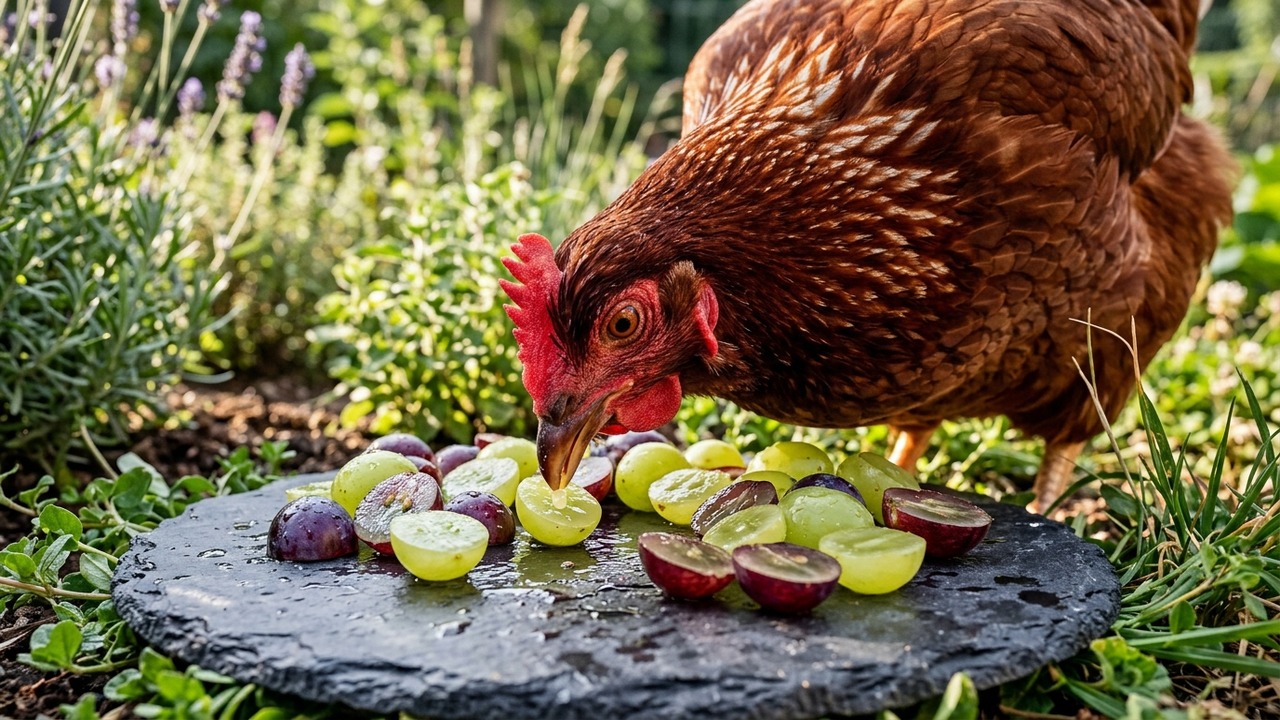
| Halved Grapes | Safe | Juicy and tender. Slice lengthwise to eliminate choking hazards. |
| Whole Uncut Grapes | High Risk | Hens can choke or suffer crop obstruction by bolting whole fruit. |
| Grape Seeds | Safe | Granite grit in the gizzard easily grinds seeds into nutrients. |
| Woody Stems | Prohibited | Fibrous stems tangle inside the crop, causing impaction. |
| Raisins | Extreme Caution | Concentrated sugar (over 60%) that swells inside the crop. |
| Moldy Grapes | Prohibited | Mold harbors mycotoxins, and fermenting fruit contains toxic alcohol. |
Why Whole Grapes Pose a Choking Hazard for Chickens
Chickens do not have teeth to chew their food. When you scatter treats, birds compete aggressively and try to swallow whole pieces. A smooth, round grape is the exact size to lodge in a hen’s throat, causing immediate distress.
Even if swallowed, a whole grape can sit inside the crop and block digestion. Always slice grapes in half lengthwise, or quarter them for bantam breeds. Slicing breaks tough skin so digestive fluids enter immediately.
Can Chickens Eat Grape Seeds and Stems?
Chickens eat grape seeds without issue. Muscular gizzard contractions grind seeds against granite grit into useful trace minerals and healthy oils. Seedless and seeded varieties are equally suitable for backyard flocks.
However, woody stems and vines should never be fed. Fibrous stems do not break down in the crop and can form a knot that blocks digestion. Always pluck grapes off stems before feeding your birds.
Are Grapes Toxic to Chickens Like Dogs?
Backyard keepers often worry because grapes cause kidney failure in dogs from tartaric acid. Fortunately, avian kidney biology differs from canine biology. Chickens process tartaric acid without experiencing renal distress.
The main concern is high natural sugar content (roughly 16 percent). Follow the standard 90/10 feeding rule: feed 90 percent complete feed, such as layer feed vs grower feed, and under 10 percent treats. Check your run spacing with our chicken coop size calculator, and read our guide on toxic foods for chickens.
See It in Context
Whole round grapes present a severe choking risk because chickens swallow food whole without teeth to chew. Follow these preparation rules to share vineyard treats safely:
- Slice Every Grape in Half: Always cut whole grapes lengthwise into halves or quarters. Slicing breaks the firm spherical skin, allowing the fruit to glide smoothly past the glottis into the crop.
- Remove Long Woody Stems: Inspect grape clusters and remove all tough, woody stem pieces. Fibrous stems are indigestible and can puncture delicate crop or gizzard linings.
- Scatter Widely to Prevent Brawls: Chickens treat grapes like high-value gold nuggets and will aggressively chase any flockmate holding one. Scatter halved grapes widely across clean boards so subordinate hens get their share peacefully.
- Enforce Strict Moderation: Feed no more than 2 to 3 grape halves per bird once or twice a week. High fructose concentrations in grapes can trigger loose, watery droppings if overfed.
The Bottom Line on Grapes for Backyard Hens
Grapes are a wonderful, hydrating flock snack when prepared correctly. Always halve or quarter fresh grapes to stop choking, discard woody stems, and offer just two or three pieces per hen once or twice weekly to protect digestive health.
Frequently Asked Questions
Can baby chicks eat grapes?
Do not feed grapes to chicks under 4 weeks old. Older chicks with chick grit can enjoy tiny minced grape bits the size of a rice grain. Never feed whole or halved grapes to chicks.
Can chickens eat red, green, and black grapes?
Yes, all commercial table grape varieties are safe for chickens. Red and black grapes contain slightly higher anthocyanin antioxidants, while green grapes offer a crisp, juicy texture.
Can chickens eat raisins instead of grapes?
Raisins contain over 60 percent concentrated sugar and swell when absorbing crop fluid. While an occasional raisin will not harm a hen, fresh halved grapes are far safer and healthier.
What should I do if a chicken chokes on a grape?
If a hen chokes, hold her calmly, point her head downward, and massage her throat upward toward the beak to clear the fruit. Use our Flockline Symptom Checker if distress continues.

Evidence & Research Citations
- Penn State Extension: Backyard Poultry Nutrition and Healthy Treats
- University of Georgia Extension: Nutrition for Backyard Flocks and Supplemental Feeding
- Ohio State University Extension: Safe Table Scraps and Feed Guidelines for Backyard Chickens