Can Chickens Eat Tomatoes? Vines, Seeds & Safe Care
Quick answer
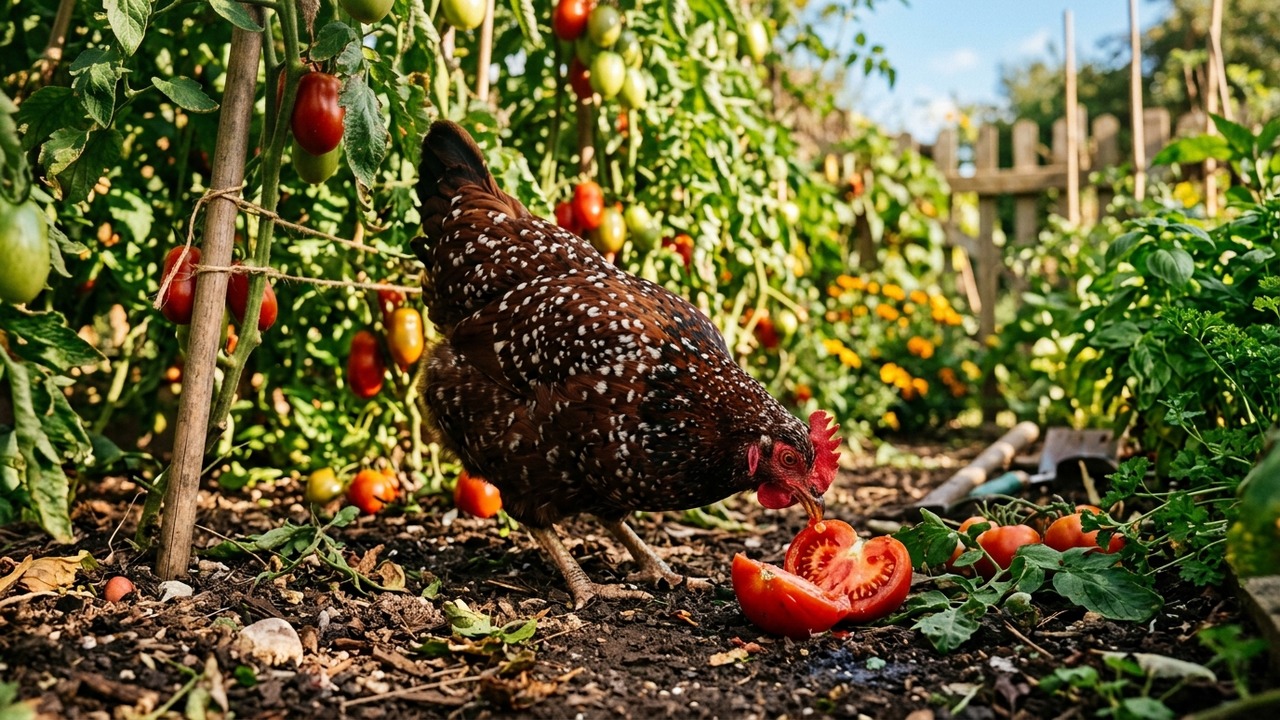
Yes, chickens can eat ripe red tomatoes safely, but you must never feed green unripened tomatoes, tomato leaves, stems, or vines. The red flesh supplies hydrating moisture, potassium, and beneficial lycopene antioxidants. However, all green parts of the tomato plant contain solanine and tomatine, toxic glycoalkaloids that damage poultry nervous and digestive systems.
Quick Facts: Tomato Nutrition for Backyard Chickens
| Water Content | 94% hydrating moisture |
|---|---|
| Natural Sugar | 2.6g per 100g (low sugar content) |
| Key Antioxidants | Lycopene and beta-carotene for yolk pigment |
| Key Vitamins | Vitamin C, Vitamin K, and potassium |
| Toxic Plant Parts | Green fruit, leaves, stems, and garden vines |
| Toxic Compounds | Solanine and tomatine (nightshade glycoalkaloids) |
| Safe Feeding Ratio | Under 10% of total daily ration |
Tomato Plant Parts: What Is Safe for Flocks?
Gardeners love sharing extra tomatoes with their flock. However, tomatoes belong to the nightshade family along with potatoes and eggplants. While ripe red fruit is harmless, green vegetation contains potent poisons.
Review this safety matrix before feeding garden scraps to your hens:
| Plant Part | Safety Status | Keeper Guidance |
|---|---|---|
| Ripe Red Fruit | Safe | Juicy, tender, and rich in lycopene. Slice in half for easy pecking. |
| Overripe Split Fruit | Safe | Very soft. Toss fresh splits into feed bowls; avoid fuzzy mold. |
| Yellow / Orange Ripe | Safe | Completely safe; milder acidity for sensitive birds. |
| Green Unripe Tomatoes | Toxic Hazard | Contains high tomatine; irritates gut lining and causes lethargy. |
| Leaves and Stems | Lethal Hazard | Contains concentrated solanine; causes nervous distress and paralysis. |
| Tomato Vines and Roots | Lethal Hazard | Never throw pulled tomato plants into the run or compost. |
| Commercial Tomato Sauce | Caution | Avoid canned sauces with added salt, garlic, onions, or fats. |
Why Solanine in Green Vines Creates a Toxic Threat
All green parts of the tomato plant produce glycoalkaloids, primarily solanine and tomatine. These bitter chemicals serve as natural pest defenses for the plant, but avian digestive systems cannot break them down safely.
When chickens eat tomato foliage, vines, or green unripened fruit, solanine irritates the gut lining and harms nerve function. Poisoned birds show loose droppings, droopy wings, heavy panting, and lethargy. In severe cases, solanine causes paralysis or death. Always fence home gardens so chickens cannot peck green vines.
Health Benefits of Ripe Red Tomatoes for Layers
As tomatoes ripen to deep red, natural enzymes break down tomatine completely. Ripe red tomatoes offer great flock benefits. With 94 percent water content, they provide refreshing hydration on warm afternoons.
Red tomatoes also deliver lycopene, a powerful carotenoid antioxidant that strengthens flock immunity and deepens egg yolk color. Tomatoes also supply potassium and vitamin K, supporting sturdy eggshells.
How to Feed Tomatoes to Chickens in the Run
Because ripe tomatoes are acidic and watery, feed them in moderation to avoid loose droppings. Complete commercial feed, like balanced layer feed vs grower feed, must supply 90 percent of daily rations.
To feed tomatoes safely, twist off green stem tops completely. Slice tomatoes in half so hens peck easily. Offer half a tomato per bird once or twice weekly. Check feeder spacing with our chicken coop size calculator, and browse our list of toxic foods for chickens.
The Bottom Line on Tomatoes for Backyard Flocks
Ripe red tomatoes make a juicy, nutrient-dense treat that hens love. Always remove green stems, never feed nightshade garden vines, and limit treats to small weekly portions to keep your flock healthy and active.
Frequently Asked Questions
Can baby chicks eat ripe tomatoes?
Chicks older than 4 weeks can eat small nibbles of ripe red tomato pulp with chick grit. Avoid feeding tomatoes to younger chicks because acidic juice can upset tiny crops.
Will feeding tomatoes turn egg yolks red?
No, tomatoes will not turn egg yolks red. The lycopene and beta-carotene simply deepen pale yolks into a rich golden-orange color over time.
What should I do if a hen pecks a green tomato?
A single peck at an unripe tomato rarely causes trouble. If a hen eats multiple green tomatoes, isolate her, provide electrolytes, and check our Flockline Symptom Checker.
Can chickens eat canned or stewed tomatoes?
Only plain canned tomatoes with zero added salt are safe in small amounts. Never feed jarred pasta sauces that contain garlic, onions, heavy salt, or cooking oils.
Evidence & Research Citations
- NC State Extension: Feeding Garden Produce and Table Scraps to Backyard Poultry
- University of Florida IFAS Extension: Toxicity of Nightshade Plants to Domestic Animals
- Oregon State University Extension: Safe Treats and Garden Scraps for Laying Hens