Can Chickens Eat Celery? Crop Impaction Risks & Chopping Rules
Quick answer
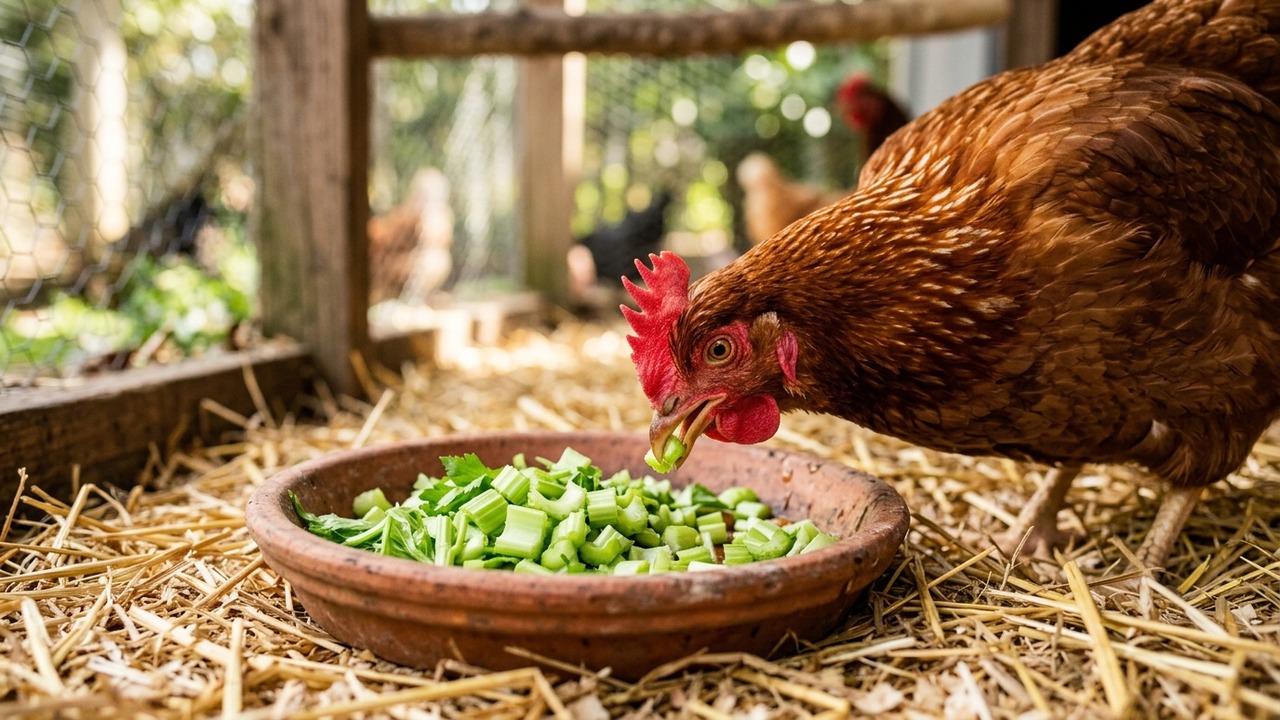
Yes, chickens can eat celery safely, but you must chop the stalks into tiny quarter-inch pieces before feeding. Celery contains long, tough stringy cellulose fibers that can knot together inside the chicken crop, causing serious crop impaction.
Quick Facts: Celery Nutrition for Backyard Chickens
| Water Content | 95% natural moisture |
|---|---|
| Natural Sugar | 1.3g per 100g (extremely low sugar) |
| Fiber Structure | Dense longitudinal cellulose strands |
| Best Plant Part | Celery leaves (tender, vitamin-rich, zero impaction risk) |
| Primary Risk | Crop impaction from swallowing long unbroken fibers |
| Preparation Rule | Slice crosswise into 1/4-inch pieces or smaller |
Safe Celery Parts: Leaves vs Stalks vs Roots
Celery is packed with water, vitamin K, and folate. However, because poultry swallow food without chewing, physical texture matters more than chemical composition. Review this celery parts guide before feeding garden scraps:
| Celery Part | Safety Status | Keeper Guidance |
|---|---|---|
| Celery Leaves | Safe | Tender, flavorful, and loaded with vitamins. Feed whole or torn by hand. |
| Finely Diced Stalks | Safe | Slice crosswise into 1/4-inch bits to sever long strings into tiny fragments. |
| Whole Uncut Ribs | High Risk | Eager hens gulp long strings whole, forming a bird nest ball in the crop. |
| Celery Root (Celeriac) | Caution | Dense and woody. Must be grated or cooked soft before chickens can eat it. |
| Wilted Brown Celery | Avoid | Slimy celery harbors bacterial rot. Only feed crisp, fresh stalks to birds. |
| Cooked Celery Scraps | Safe | Boiled soup celery is soft and safe, provided it has no added salt or onion. |
Why Celery Strings Cause Serious Crop Impaction
Chickens do not have teeth. When a hen pecks at a long piece of celery, she pulls off long longitudinal stringy fibers. Because her beak cannot grind food, she tosses her head and swallows these strings whole.
Once inside the moist crop, these stringy fibers act exactly like long coarse grass. Normal crop contractions roll the strings around and around until they knot into a dense, fibrous ball. This ball plugs the exit into the proventriculus, trapping all other feed and water. Over time, trapped food ferments, leading to sour crop and life-threatening blockage.
Nutritional Benefits of Celery for Backyard Flocks
When chopped properly into tiny bits, celery provides healthy refreshment. It is made of 95 percent water, making it a great low-calorie hydrator during summer weather without the high sugar spikes of fruits.
Celery also delivers vitamin K, which is essential for blood clotting and bone mineralization. The tender leaves contain beta-carotene and lutein, natural carotenoids that deepen yolk color in laying hens. Always provide granite grit so your flock can grind up the chopped fiber inside the muscular gizzard.
How to Prepare Celery Properly for Your Birds
Never toss whole celery stalks onto the coop floor. Instead, place stalks on a cutting board and slice them horizontally across the grain into 1/8-inch to 1/4-inch slices. This cutting motion chops through every long string.
Scatter the diced bits into a feeder tray or mix them with dark leafy greens like kale and spinach. Remember that treats should never replace complete commercial rations, like balanced layer feed vs grower feed. Use our chicken coop size calculator to make sure your feeding station has plenty of run space.
The Bottom Line on Celery for Chickens
Celery leaves and diced stalks make a crunchy, hydrating treat for chickens. Always slice stalks crosswise into tiny quarter-inch pieces to sever dangerous strings, provide free-choice granite grit, and keep treats under 10 percent of your flock’s diet.
Frequently Asked Questions
Can chickens eat celery leaves?
Yes, celery leaves are the safest and most nutritious part of the plant. They do not have tough stringy fibers and can be fed whole to adult chickens.
Can baby chicks eat celery?
No, avoid feeding celery stalks to chicks under 6 weeks old. Their small crops easily become impacted by fibrous vegetables. Offer chick starter crumble instead.
What should I do if a chicken has an impacted crop from celery?
Isolate the hen with water but no feed. Gently massage the crop downward to help soften the mass. If the crop remains hard and swollen after 12 hours, seek veterinary care.
Can chickens eat cooked celery from soups?
Yes, cooked celery is soft and breaks down easily in the crop. Ensure the soup contains no added salt, butter, garlic, or onions before sharing scraps.

Evidence & Research Citations
- University of Maine Cooperative Extension: Preventing Crop Impaction in Backyard Poultry
- Cornell Cooperative Extension: Feeding Garden Vegetables and Greens to Chickens
- Mississippi State University Extension: Avian Digestive Anatomy and Crop Disorders