
Can Chickens Eat Onions? Hemolytic Anemia Risks & Toxic Rules
Quick answer
No, chickens should not eat onions in any form, raw or cooked. Onions contain sulfur compounds called thiosulfates that rupture chicken red blood cells, causing severe Heinz body hemolytic anemia, lethargy, pale combs, and potential mortality.
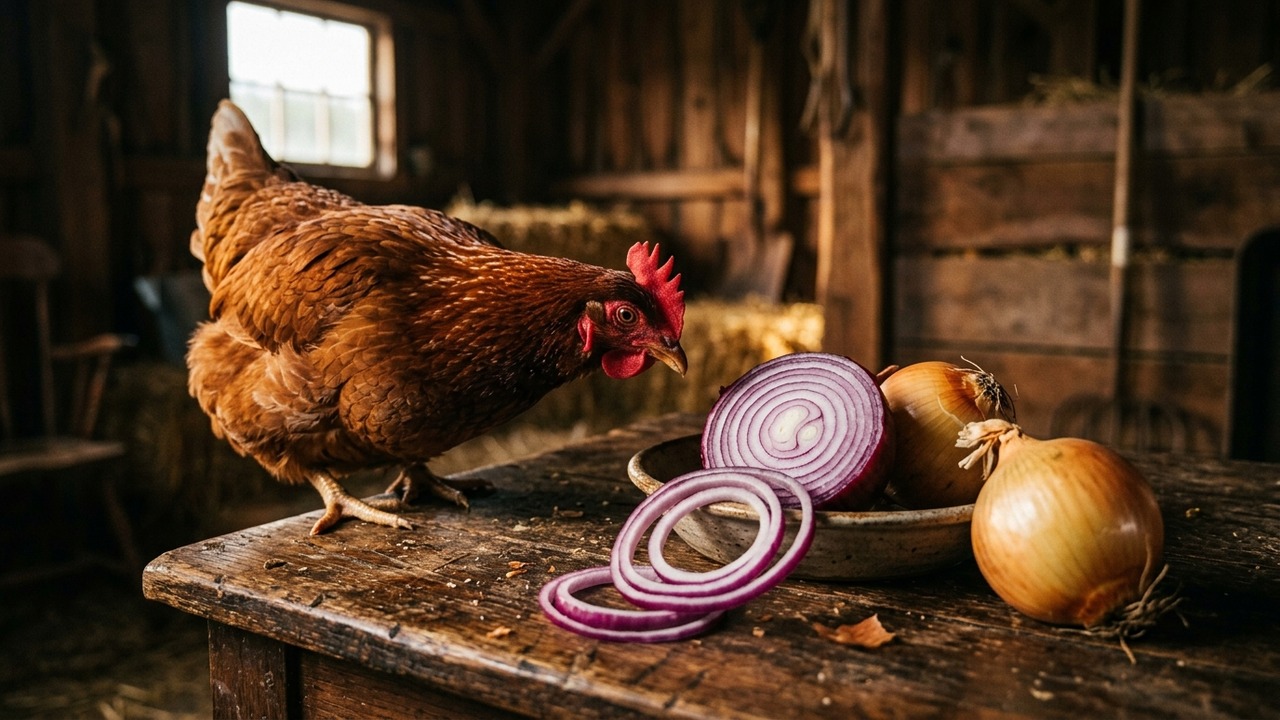
Quick Facts: Onion Toxicity in Backyard Chickens
| Toxicity Status | Toxic (prohibited poultry feed) |
|---|---|
| Toxic Compound | Thiosulfate and N-propyl disulfide |
| Mechanism of Harm | Oxidative hemolysis rupturing red blood cells |
| Resulting Condition | Heinz body hemolytic anemia |
| Clinical Signs | Pale comb and wattles, lethargy, dark urine, panting |
| Safe Preparation | None (cooking or drying does NOT destroy thiosulfate) |
Allium Family Toxicity: What to Keep Away from Chickens
Onions belong to the Allium genus, which includes shallots, leeks, scallions, and chives. All members of this plant family contain organosulfur compounds that damage poultry red blood cells. Review this safety chart before sharing table scraps:
| Allium Variety | Toxicity Level | Keeper Guidance |
|---|---|---|
| Raw Yellow & Red Onions | Highly Toxic | Concentrated thiosulfate damages avian blood cells within hours of eating. |
| Cooked Onions (Soups/Stews) | Toxic | Heat does not degrade thiosulfates. Never feed leftover onion scraps. |
| Green Onions & Scallions | Toxic | Both white bulbs and green hollow tops contain harmful sulfur compounds. |
| Leeks & Shallots | Toxic | High concentration of sulfides. Discard kitchen trimmings in compost. |
| Onion Powder & Seasonings | Extremely Toxic | Dehydrated powder is hyper-concentrated. Never feed seasoned table scraps. |
| Fresh Garlic (Small Doses) | Caution | Lower thiosulfate than onions; small crushed cloves are used for flock immunity. |
How Thiosulfate Destroys Chicken Blood Cells
When a chicken eats onion pieces, digestive enzymes break down sulfur compounds into thiosulfates and disulfides. These compounds absorb into the bloodstream and generate reactive oxygen radicals.
Avian red blood cells contain nucleated hemoglobin that is particularly vulnerable to oxidative stress. The sulfur compounds oxidize hemoglobin, causing it to denature and clump into microscopic clusters called Heinz bodies. Spleen and liver filters identify these deformed blood cells and destroy them rapidly. As red blood cell counts plummet, the chicken suffers severe oxygen deprivation and hemolytic anemia.
Spotting Onion Toxicity Symptoms in Your Flock
If a chicken accidentally consumes onion scraps, symptoms often develop within 24 to 72 hours as red blood cells break down. The most noticeable warning sign is a pale, shrunken comb and pale wattles, indicating poor blood oxygenation.
Affected birds become lethargic, sit with fluffed feathers, and show zero interest in foraging. Because their body is starved for oxygen, hens pant rapidly even in cool weather. In severe cases, droppings and urates turn unusually dark brown or reddish due to filtered hemoglobin waste. If you observe these symptoms, isolate the bird immediately.
What to Do If Your Chickens Accidentally Eat Onions
If you discover that your flock ate table scraps containing onions, act promptly. Remove all leftover scraps from the coop run and replace them with fresh, clean water. Offer balanced, protein-rich layer feed vs grower feed to support natural blood regeneration.
Add poultry vitamins with iron and vitamin B12 to their drinking water to help bone marrow synthesize new red blood cells. Keep affected birds quiet, warm, and stress-free while their bodies clear the toxins. Check your birds using our chicken symptom checker to monitor recovery progress.
The Bottom Line on Onions for Chickens
Never feed onions to backyard chickens in any form. Thiosulfate compounds in raw, cooked, or powdered onions cause Heinz body hemolytic anemia and oxygen starvation. Keep all kitchen onion trimmings in secure compost bins out of flock reach.
Frequently Asked Questions
Does cooking onions make them safe for chickens?
No, heat does not break down thiosulfate compounds. Cooked onions, sauteed vegetables, and onion-seasoned broth remain equally toxic to poultry.
How much onion is fatal to a chicken?
Consuming just 0.5 percent of a chicken’s body weight in onions can cause measurable blood cell damage. That equals less than a tablespoon of chopped onion for an average hen.
Do onions affect the taste of chicken eggs?
Yes, even sublethal amounts of onion contain sulfur oils that transfer into developing egg yolks, giving morning eggs an unpleasant sulfurous odor and pungent taste.
Can chickens eat chives from the garden?
No, chives belong to the Allium family and contain the same organosulfur compounds as onions. Fence off herb patches to keep hens from grazing on chives.
Evidence & Research Citations
- University of Illinois College of Veterinary Medicine: Allium Toxicity and Heinz Body Anemia in Avian Species
- Merck Veterinary Manual: Toxicology of Allium Species in Domestic Poultry
- UC Davis Veterinary Medicine Extension: Toxic Plants and Food Safety for Backyard Poultry