Egg Bound Chicken: Emergency Calcium Triage, Warm Soaks & Vent Care
Quick answer
An egg-bound chicken has an egg physically lodged in her oviduct or cloaca that she cannot pass. Common clinical signs include repetitive tail pumping, straining in nesting boxes, a wide-legged penguin stance, and pale or purple comb tips. The primary supportive first aid treatment is administering bioavailable calcium (such as 1.0 mL of liquid calcium gluconate 10 percent orally or 100 to 200 mg crushed calcium tablet) to stimulate smooth muscle contractions in the oviduct. Follow with a 15-minute warm water soak (100°F to 104°F) in high humidity, lubricate the vent margin with sterile K-Y jelly, and place the hen in a warm, dark crate.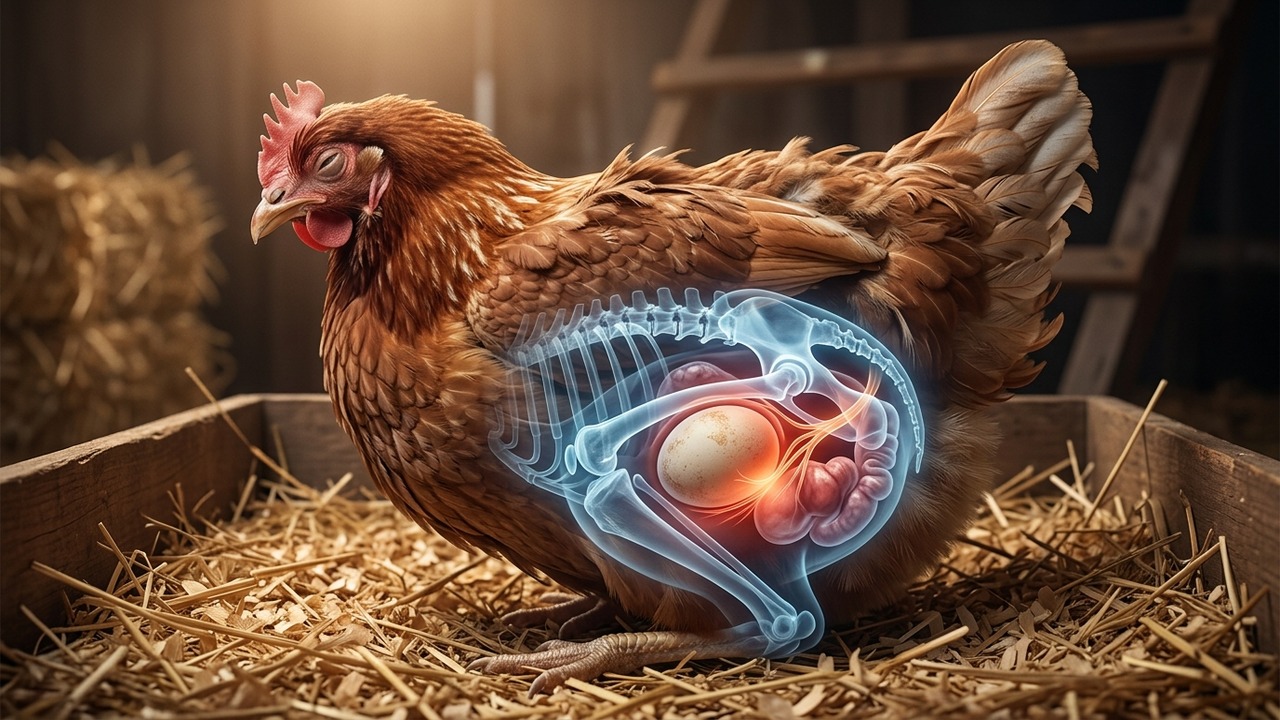
Quick facts
| Definition | Physical obstruction where a formed egg becomes lodged in the lower oviduct or cloaca and cannot be expelled |
|---|---|
| Primary Supportive Catalyst | Liquid calcium gluconate 10 percent (1.0 mL per kg body weight) provides immediate bioavailable calcium for oviduct contractions |
| Soak Temperature & Limit | Warm Epsom salt bath at 100°F to 104°F (38°C to 40°C) for exactly 15 minutes; dry immediately to avoid hypothermia |
| Fatal Intervention Error | Never attempt to break or crush an egg inside the hen; sharp shell fragments puncture oviduct walls and cause fatal sepsis |
| Differential Diagnosis | Distinguish egg binding from abdominal ascites in Water Belly (Ascites) Guide |
1. Recognizing the definitive clinical signs of egg binding
Egg binding is an acute medical emergency. When an egg is stuck, it exerts physical pressure on the hen’s kidneys, pelvic nerves, and caudal vena cava. Watch for these progressive signs:
- The Penguin Stance: The hen stands upright with her tail pointed down toward the ground, wings drooping, and legs planted wide apart to minimize abdominal pain.
- Repetitive Tail Pumping: Rhythmic bobbing and pumping of the tail feathers accompanied by visible abdominal straining efforts (tenesmus).
- Dropping Retention or Watery Urate Smears: Because the lodged egg mechanically compresses the colon, the hen cannot pass normal droppings. You may see small watery white squirts of liquid urate coating her vent feathers.
- Leg Paralysis or Weakness: A large egg pressing against the sacral plexus nerves can cause partial paralysis or lameness in one or both legs, causing the bird to collapse onto her hocks.
2. The emergency calcium protocol
The vast majority of egg-binding cases stem from hypocalcemia (depleted blood calcium). When a hen’s bloodstream lacks calcium ions, her oviduct smooth muscles suffer fatigue tetany and lose the physical strength required to push the egg through the cloaca:
| Calcium Source | Dosage & Delivery Method | Absorption Speed | Clinical Application |
|---|---|---|---|
| Liquid Calcium Gluconate 10% | 1.0 mL per 1 kg (2.2 lbs) body weight, administered slowly onto the tongue | Fastest: absorbed within 15 to 30 minutes | Gold standard emergency treatment for acute muscular weakness and binding |
| Crushed Calcium Carbonate (Tums / Caltrate) | 100 to 200 mg crushed powder dissolved in 2 mL warm water, given via oral syringe | Moderate: absorbed in 45 to 60 minutes | Readily available household first aid remedy when veterinary liquids are absent |
| Coarse Oyster Shell / Limestone | Free-choice in feed hopper; not for acute syringe dosing | Slow: sustained release over 12 to 18 hours | Preventative flock maintenance; useless for immediate acute binding triage |
3. Safe warm bath and steamy recovery protocol
Follow this gentle thermal relaxation workflow after administering oral calcium:
- Prepare a Warm Shallow Bath: Fill a plastic basin or utility sink with 3 to 4 inches of warm water (100°F to 104°F, 38°C to 40°C). Dissolve 1/4 cup of Epsom salt in the water. The water should reach her lower abdomen without submerging her chest or wings.
- Soak for Exactly 15 Minutes: Place the hen in the water, supporting her under her keel. The warmth relaxes the oviduct sphincter muscles and eases abdominal spasms. Never leave a soaking hen unattended; exhausted birds can droop their heads and drown.
- Thorough Towel Drying: Remove the hen and wrap her immediately in a dry, thick bath towel. Gently blow-dry her underbelly feathers on the lowest warm setting. Placing a damp chicken into a cool crate triggers rapid hypothermia, which shuts down muscle contractions.
- Lubricate the Vent Opening: Put on clean examination gloves. Apply a nickel-sized dab of sterile water-soluble lubricant (such as K-Y Jelly) around the rim of the cloaca. Do not insert sharp instruments, pipettes, or hard syringe tips into the oviduct.
- Warm, Dark Hospital Enclosure: Place the dry hen in a darkened recovery carrier kept at 80°F to 85°F (27°C to 29°C) using a safe radiant heat panel. Leave her undisturbed in the dark for 2 hours to let the calcium trigger productive contractions.
4. Critical mistakes to avoid during egg binding triage
Well-meaning keepers frequently cause fatal complications by applying aggressive home remedies:
- Never Puncture the Egg Shell: Attempting to pierce a visible egg with a needle or crush it inside the vent almost always lacerates the paper-thin oviduct mucosa. Sharp shell shards tear internal tissues, causing fatal hemorrhaging and incurable egg yolk peritonitis.
- Never Force Heavy Mineral Oil Down the Vent: Squirted into the vent under pressure, oil can push bacteria deeper into the magnum and cause aspiration if the hen is handled improperly. Use only water-soluble lubricant at the cloacal rim.
- Never Let the Hen Chill: A damp hen in a 65°F room will rapidly lose core body temperature. Shivering expends all available metabolic glucose, causing sudden cardiac collapse.
5. When to consult an avian veterinarian
If the hen has not passed the egg within 6 to 8 hours following calcium administration and warm supportive care, or if her comb turns dark purple and she becomes non-responsive, transport her immediately to an avian veterinarian. The vet can administer injectable oxytocin, perform cloacoscopy, or execute an ultrasound-guided ovocentesis (aspirating egg contents safely through a fine needle to collapse the shell under sedation).