
How to Stop Chickens Eating Their Eggs: Nest and Collection Fixes
Quick answer
To stop chickens eating their eggs, prevent the first broken egg from becoming a snack: enough cushioned nests, frequent collection, complete layer nutrition, and quick cleanup. Remove persistent eaters if the habit spreads.
Quick facts
| Core truth | Egg eating is usually learned after birds taste a broken egg |
|---|---|
| Prevention beats cure | Penn State: the habit is extremely hard to break once established |
| Nest math | About one nest per 4-5 hens; cushioned litter; collect early |
| Nutrition | Complete layer feed; free-choice calcium supports stronger shells |
| Last resort | Remove persistent eaters before the habit spreads |
How to stop chickens eating their eggs starts earlier than most listicles admit. Penn State Extension’s prevention article is blunt: once hens taste broken egg, the habit is extremely difficult to break. Your job is to make breakage rare, collection fast, and nutrition boringly complete.
This is not soft-shell triage and not blood-spot triage. Those pages explain odd eggs. This page breaks the breakage-to-taste loop.
Why egg eating starts
Mississippi State Extension frames egg eating as a husbandry problem: thin shells, crowded nests, slow collection, and stress create breakage, then curiosity does the rest. Predators or rodents that leave egg mess can teach the same lesson. Dried yolk on a hen’s beak or face is a classic keeper clue.
Nest math and collection rhythm
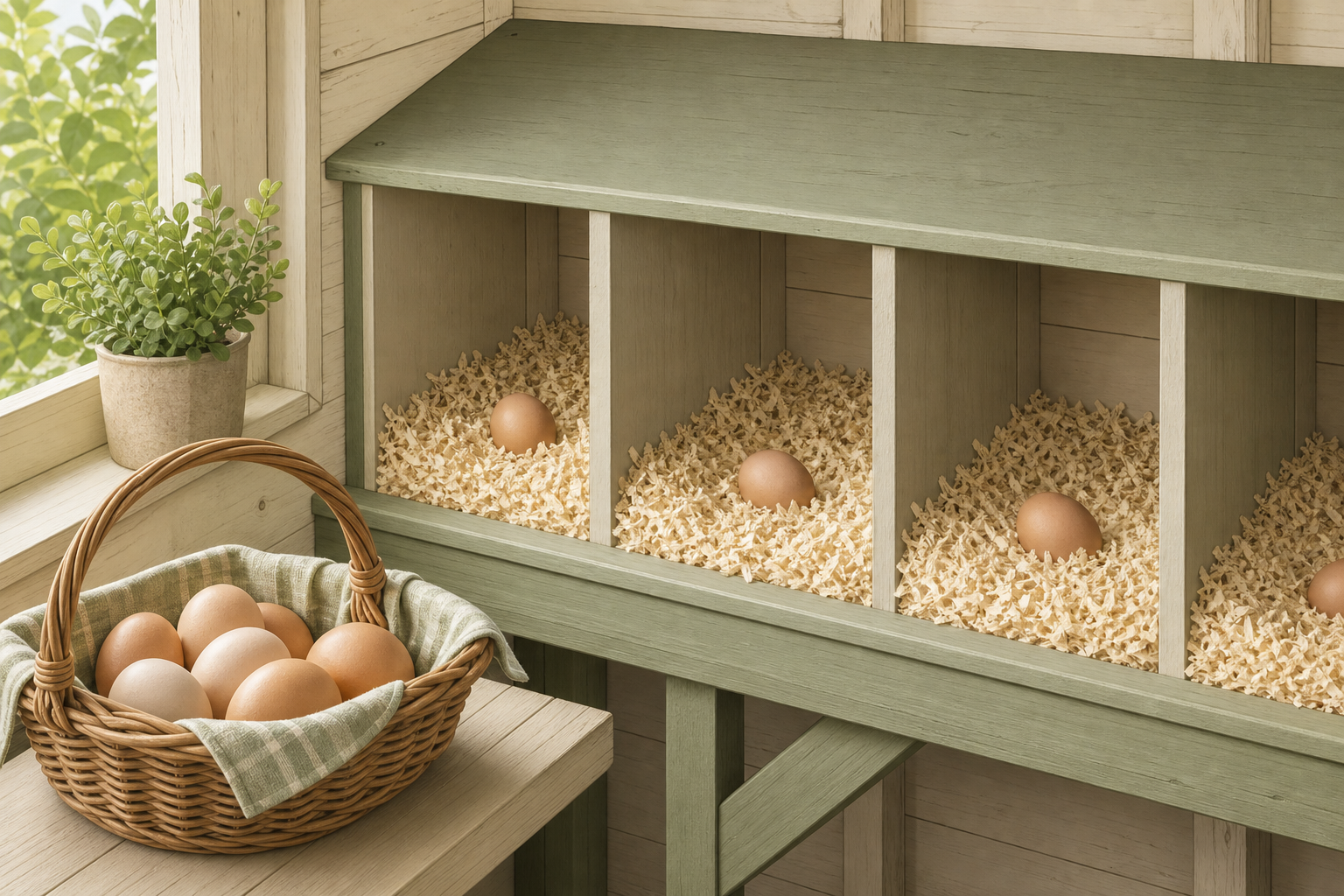
Penn State recommends about one 12×12 inch nest per four to five hens, never fewer than four boxes in small flocks, nests off the floor and away from roosts, and about two inches of clean dry nesting material. Collect early and often. Most hens lay before mid-morning. Popular nests that pile up eggs need even more frequent collection. Details on capacity: nesting boxes per chicken. Soft shells that smash easily need soft-shell triage in parallel.
Do not scare hens out of boxes. Sudden launches break eggs. Dim nesting areas reduce pecking interest. Remove broody hens that clog boxes and force traffic into the remaining nests.
Progress saves in this browser. Print this page or download the PDF for a paper copy.
Nutrition and shell strength
Strong shells break less. Feed a complete layer ration. Offer free-choice oyster shell or limestone in a separate dish rather than inventing random kitchen calcium. Penn State warns against feeding recognizable eggshell pieces that teach birds what an egg is. If you recycle shells, dry and crush them finely.
If the habit already exists
Fix every breakage driver the same day. Curtains, ceramic eggs, and rollaway nests can help some flocks, but they do not replace collection discipline. If one hen is a confirmed eater and others are learning, Penn State and MSU both support removing the offender. Leaving a practiced egg eater in a small flock is how you train the group.
How to spot the eater
Watch quietly near peak lay time. Yolk on the beak or side of the head is a giveaway. Some hens linger in nests after laying and peck. Others train the flock by leaving mess that everyone samples. Mark suspects with temporary leg bands if you need proof before removal.
Rollaway or sloping nests that drop eggs out of reach are a solid upgrade when management alone fails. They cost more than curtains and save more eggs than another stern lecture at the coop door.
Light, boredom, and protein myths
Harsh bright light over nests increases pecking interest. Boredom and overcrowding raise mischief. Protein craving is a popular story; Penn State still puts complete ration and shell strength ahead of folklore. Fix breakage and diet first. Entertainment toys are optional after the nest math is honest.
A one-week reset plan
Day one: clean nests, refresh cushion, collect three times. Day two: confirm layer feed and free-choice calcium. Day three: add curtains or dim the nest wall. Day four: watch and identify suspects. Day five to seven: cull or isolate confirmed eaters if breakage has stopped but eggs still disappear. Reassess nest count with the nesting-box guide if traffic remains high.
Common mistakes
- Leaving broken eggs in the nest as “protein.”
- Too few nests so eggs pile and crack.
- Hard nest floors with no cushion.
- Scaring hens off nests and creating the first smash.
- Diluting layer feed with scratch until shells thin.
- Keeping a known eater while hoping ceramic eggs will retrain her.
FAQ
How do I stop chickens from eating eggs?
Prevent breakage, collect often, feed a complete layer diet, and remove persistent eaters.
Why did egg eating start suddenly?
Often after a broken egg, thin shells, overcrowded nests, or a scavenger mess.
Do golf balls help?
Dummy eggs help some flocks learn pecking pays nothing. They are not a substitute for nest management.
Is egg eating a calcium deficiency?
Thin shells from poor nutrition can increase breakage. Confirm complete layer feed and free-choice calcium support.
How many nesting boxes do I need?
About one per four to five hens. See the nesting boxes guide.
Sources and further reading
- Penn State Extension: Prevention of Egg Eating in Chickens
- Mississippi State Extension: Causes for hens eating their eggs
- Related Flockline Learn: nesting boxes, soft-shell eggs, layer vs grower feed.