
Chicken Lethargic or Not Eating? What to Check First
Quick answer
A chicken that is unusually quiet, withdrawn, or not eating is showing a change, not a diagnosis. Observe from a distance first, then compare appetite, drinking, breathing, posture, eyes, droppings, and flock behaviour with that bird's normal. Contact a veterinarian promptly if the bird cannot stand, has extreme breathing difficulty, marked neurologic signs, uncontrolled bleeding, or is worsening quickly.
Quick facts
| Minute 1: Observe | Stance, tail posture, breathing rate, response to high-value treats |
|---|---|
| Minute 2: Compare | Check crop fullness, comb color, and vent cleanliness against flockmates |
| Minute 3: Escalate | Isolate in warm brooder with fresh water and electrolyte solution |
Lethargic Chicken First Aid Protocol & Hospital Setup
The 6-step sick bay isolation setup, 85°F warmth rule, emergency electrolyte delivery, and life-threatening red flags.
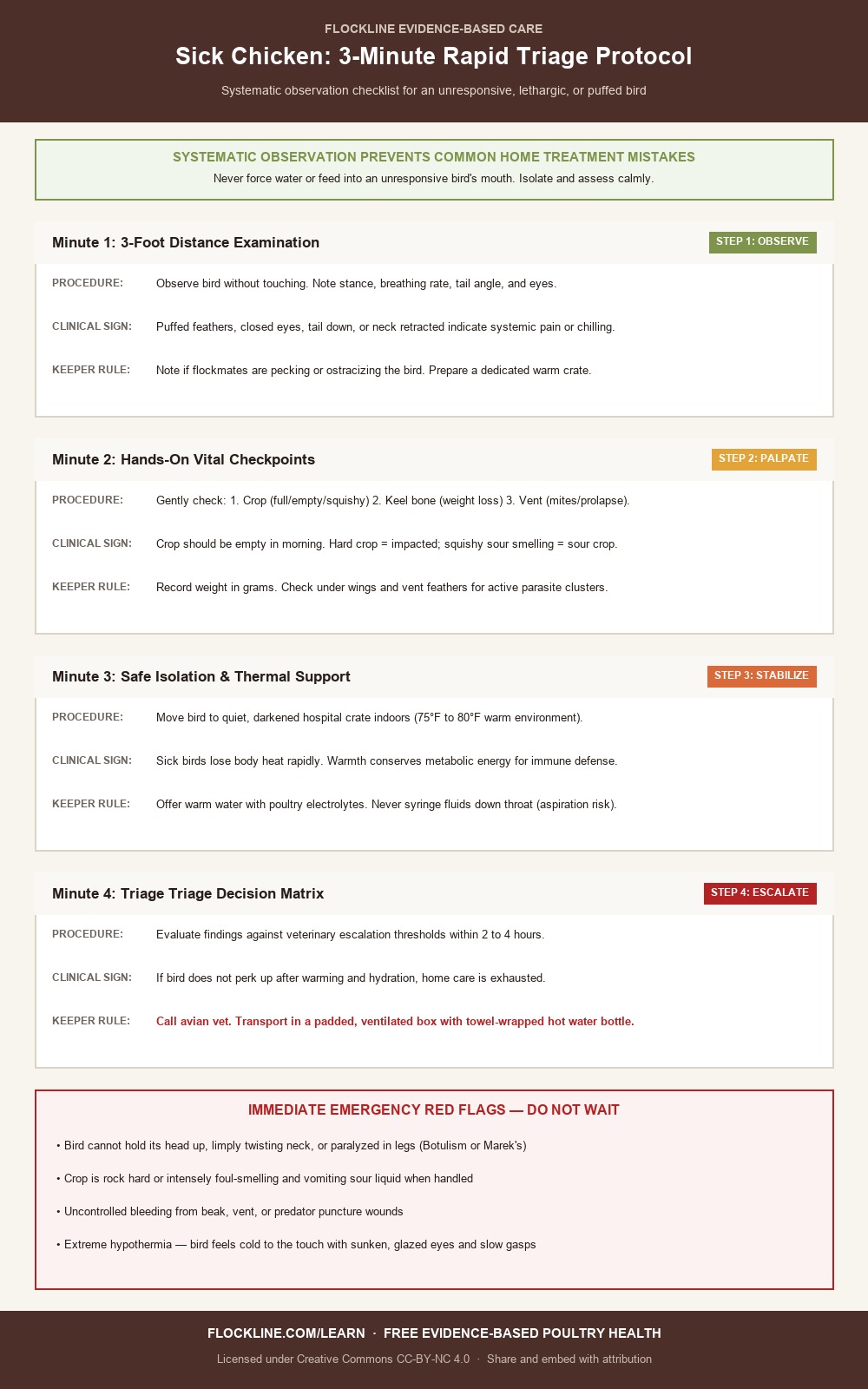
What lethargy looks like in a chicken
Use the word lethargic for a meaningful change from this bird’s normal. A sick bird may be withdrawn, less interested in feed or water, droopy, or quiet with the head pulled toward the shoulders. Context matters. A bird resting at the usual time is different from one that stays apart while the flock feeds.
Watch before touching the bird. Handling can change posture and breathing, which removes useful clues. Note whether the bird responds to flock movement, walks evenly, reaches feed and water, and keeps both eyes open.
The Flockline three-minute observation sequence
1. Observe
- Position
- With the flock, at the edge, or alone
- Breathing
- Quiet, open-mouth, noisy, or visibly effortful
- Posture
- Standing, crouched, tail lowered, wings drooped
2. Compare
- Today
- What changed and when
- Normal
- How this individual usually behaves
- Flock
- Whether any other bird shows the same change
3. Escalate
- Record
- A mild change with no urgent sign
- Veterinarian
- Persistent, worsening, or combined signs
- Urgent
- Collapse, extreme breathing difficulty, major injury, neurologic signs, or a fast multi-bird event
What to check next without trying to diagnose
Look for the clearest second observation. A lowered tail directs you to posture and movement. A comb colour change directs you to compare the bird in even light. An eye change directs you to compare both sides of the face and listen to breathing. A repeated droppings change directs you to record colour, form, frequency, and the bird’s behaviour.
Continue through the chicken symptom checker if you need help choosing that second observation.
When this needs urgent help
Seek urgent veterinary help if the bird collapses or cannot stand, has extreme difficulty breathing, uncontrolled bleeding, seizures or other marked neurologic signs, or is worsening quickly. Sudden illness or death in several birds, especially with respiratory, neurologic, swelling, or diarrhea signs, also needs prompt professional and local animal-health guidance.
What owners usually notice next
Choose the observation that most closely matches what you can see now. If urgent signs are present, contact a veterinarian rather than continuing through the guides.
FAQ
Does a lethargic chicken always have a disease?
No. Lethargy describes a change in activity. It does not identify a cause by itself.
Should I wait for another symptom?
Record what you see now. Seek help sooner if the bird worsens, stops standing, has breathing difficulty, or shows another urgent sign.
Can a photo diagnose the problem?
No. A photo can document posture, comb, eyes, or droppings, but diagnosis may require history, examination, and testing.
Sources and references
- Merck Veterinary Manual: Physical Examination of Backyard Poultry.
- Ohio State University Extension: Poultry Brooding & Triage Guidelines.