Chicken Gasping for Air: Emergency Respiratory Triage & Differential Diagnosis
Quick answer
When a chicken is gasping for air with an open beak, immediately check ambient temperature and examine the glottis at the base of the tongue. In ambient temperatures above 85°F (29°C), open-mouth breathing with rapid throat flutter is normal heat dissipation. In cool or moderate conditions below 75°F (24°C), gasping indicates acute airway obstruction from tracheal parasites (gapeworm), diphtheritic wet pox plaques, viral infectious laryngotracheitis (ILT), or mechanical compression from an impacted crop. Never pour water or oil down a gasping chicken's throat, because fluid enters the open trachea and causes immediate drowning.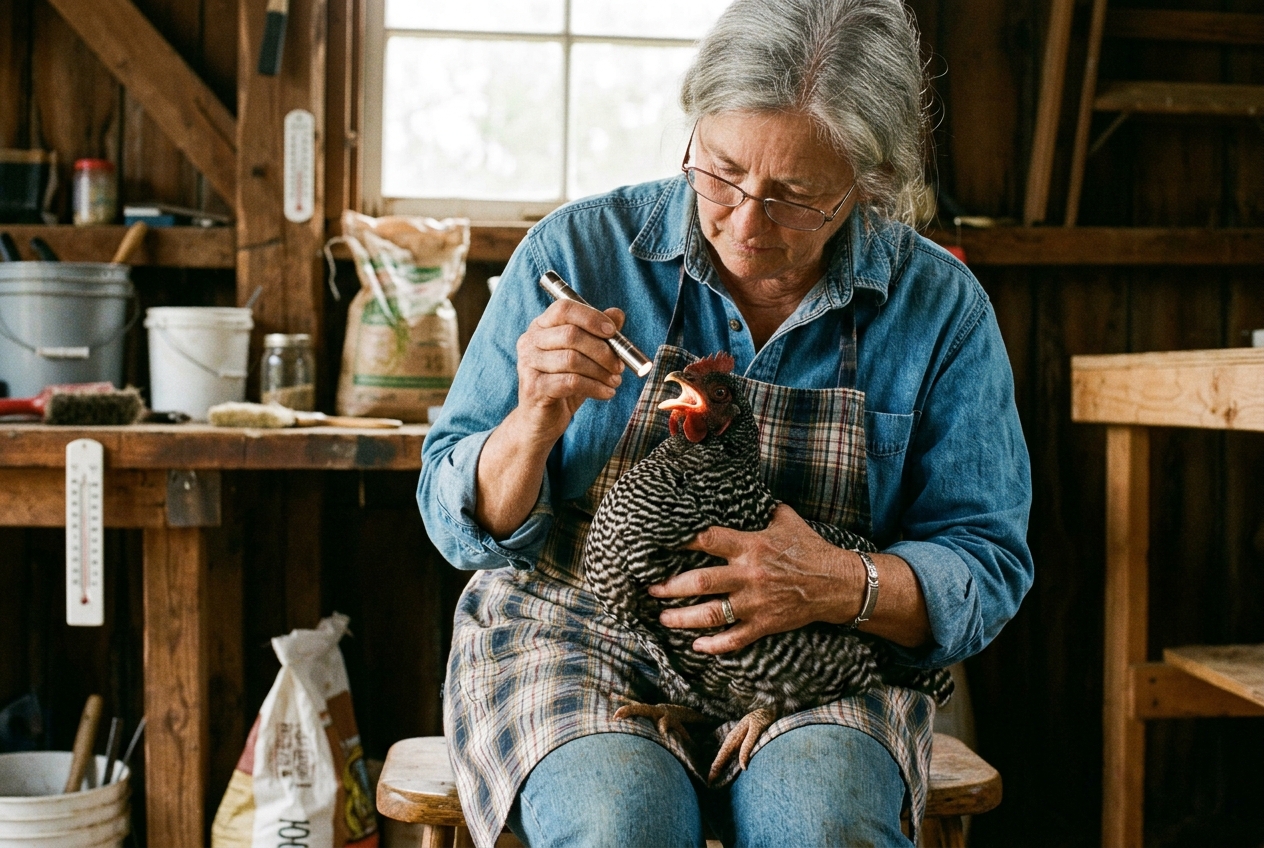
Quick facts
| Primary Sign | Beak opened wide, neck extended outward and upward, accompanied by audible rattling, wheezing, or silent stridor |
|---|---|
| Ambient Heat Cutoff | Temperatures above 85°F (29°C) cause heat panting; gasping below 75°F (24°C) indicates mechanical or infectious pathology |
| Fatal Intervention Hazard | Administering oral liquids down the beak during gasping enters the open glottis, causing pulmonary aspiration and death within 60 seconds |
| Urgent Cyanosis Marker | Comb, wattles, and facial skin turning dusky purple or dark blue signals arterial oxygen desaturation below 80 percent |
| Symptom Differential Tool | Cross-reference respiratory distress and lethargy using the Chicken Symptom Checker |
1. The 60-second respiratory triage protocol
When you discover a gasping bird, move methodically to prevent cardiac arrest from handling stress. Complete these physical checks in order:
- Record Ambient Coop Temperature: If ambient air exceeds 85°F (29°C), the bird is likely suffering from heat stress. Move the hen to shaded airflow and apply cool water (65°F to 70°F) to her bare feet and wattles. Do not submerge her body in ice water.
- Inspect Comb and Mucosal Color: A healthy comb is bright pinkish-red. If comb points or wattle margins show cyanosis (dark purple or slate-blue edges), the blood lacks oxygen due to severe airway occlusion.
- Listen for Respiratory Sounds: Place your ear against the chicken’s back between her shoulder blades. Whistling stridor indicates tracheal narrowing. Wet bubbling indicates exudate in the syrinx or air sacs. Silent gasping points toward severe exhaustion, neuromuscular paralysis, or heat shock.
- Palpate the Crop: Gently feel the right breast area. A rock-hard or massively distended, fluid-filled crop can press directly against the cervical trachea, mechanically cutting off air exchange. See our guide on impacted crop vs sour crop for digestive decompression steps.
2. Flashlight examination of the glottis and trachea
To inspect the upper airway, secure the chicken under your arm like a football. Use your thumb and index finger to gently depress the lower beak while extending the neck. Use a bright penlight to illuminate the back of the oral cavity:
| Observed Oral Pathology | Primary Clinical Differential | Physical Characteristics | Immediate First Aid Action |
|---|---|---|---|
| Red, Y-shaped threadlike worms | Gapeworm (Syngamus trachea) | Adult worms measure 0.5 to 2.0 cm, anchored firmly into tracheal mucosa | Consult vet for fenbendazole anthelmintic therapy; do not pull worms with forceps |
| Thick, cheesy yellow plaques | Wet Pox (Diphtheritic Avian Pox) | Firm yellow necrotic membranes glued to the larynx, tongue, and pharynx | Do not peel plaques forcibly (causes fatal hemorrhage); swab gently with povidone-iodine |
| Blood-tinged mucus and tracheal plugs | Infectious Laryngotracheitis (ILT) | Hemorrhagic tracheal exudate, violent head shaking, blood splattered on coop walls | Immediate quarantine; high-mortality viral pathogen requiring avian veterinary diagnostic swab |
| Foul cheesy exudate without blood | Infectious Coryza or Mycoplasma | Facial swelling, eye foam, thick mucus blocking internal nares (choanal slit) | Flush eyes with sterile 0.9 percent saline; review our coryza vs MG differential guide |
| Lodged grain stalk or bedding shaving | Foreign Body Tracheal Choke | Acute distress after feeding, panicky clawing at beak, visible obstruction | Carefully extract visible loose foreign debris using blunt tweezers under direct light |
3. Heat stress panting vs pathological air sac gasping
Chickens possess no sweat glands and rely entirely on evaporative cooling from their respiratory tract. During warm weather, birds initiate rapid, shallow breathing known as gular fluttering, vibrating the hyoid apparatus and upper throat tissues up to 150 to 200 cycles per minute. In contrast, pathological gasping involves deep, desperate abdominal contractions, neck elongation, and a wide-open beak held agape during both inhalation and exhalation.
Examine the flock context. If eight hens are panting quietly with wings held 2 inches away from their bodies on a 92°F afternoon, the flock is managing thermal load. If a single hen is gasping violently in 68°F weather while her flock mates dust bathe normally, an individual obstruction or localized infection is active.
4. Emergency sick bay setup and supportive care
Do not leave a respiratory-compromised bird in the general coop. Flocking companions will peck at purple combs, swollen eyes, and open beaks. Establish an emergency isolation enclosure:
- Temperature Control: Maintain sick bay air strictly between 70°F and 75°F (21°C to 24°C). Avoid hot brooder lamps that exacerbate respiratory dehydration.
- Bedding Hygiene: Avoid dusty pine shavings or straw that release fungal spores (Aspergillus fumigatus). Use clean, unscented puppy training pads or smooth paper towels replaced twice daily.
- Air Exchange: Provide cross-ventilation without direct drafts. Ammonia levels must remain below 10 parts per million; if you smell ammonia, the air is already damaging avian tracheal cilia. Check coop parameters in our chicken coop ventilation specifications.
- Hydration Access: Provide shallow water containers enriched with poultry electrolytes. Never force liquids via syringe or dropper into a panting or gasping bird.
5. When to consult an avian veterinarian
Respiratory distress in poultry deteriorates rapidly due to their rigid lung structure and delicate nine-air-sac anatomy. Seek immediate professional veterinary intervention if you observe:
- Persistent cyanosis where comb and wattles remain dusky blue for more than 30 minutes
- Audible wet clicking or rattling sounds heard from several feet away
- Blood splatters discharged from the beak during coughing or head shaking
- Yellow necrotic plaques obstructing more than 30 percent of the glottis opening