
Safe Chicken Coop Heaters: Radiant Panels vs Heat Lamps
Quick answer
Traditional glass heat lamps are extremely hazardous in chicken coops and should never be used due to severe fire risk from feather dust ignition. For sub-zero winter temperatures, safe heating alternatives include 200W radiant flat-panel heaters, thermal heating plates, and thermo-regulated waterer bases that provide gentle contact warmth without heating ambient air.
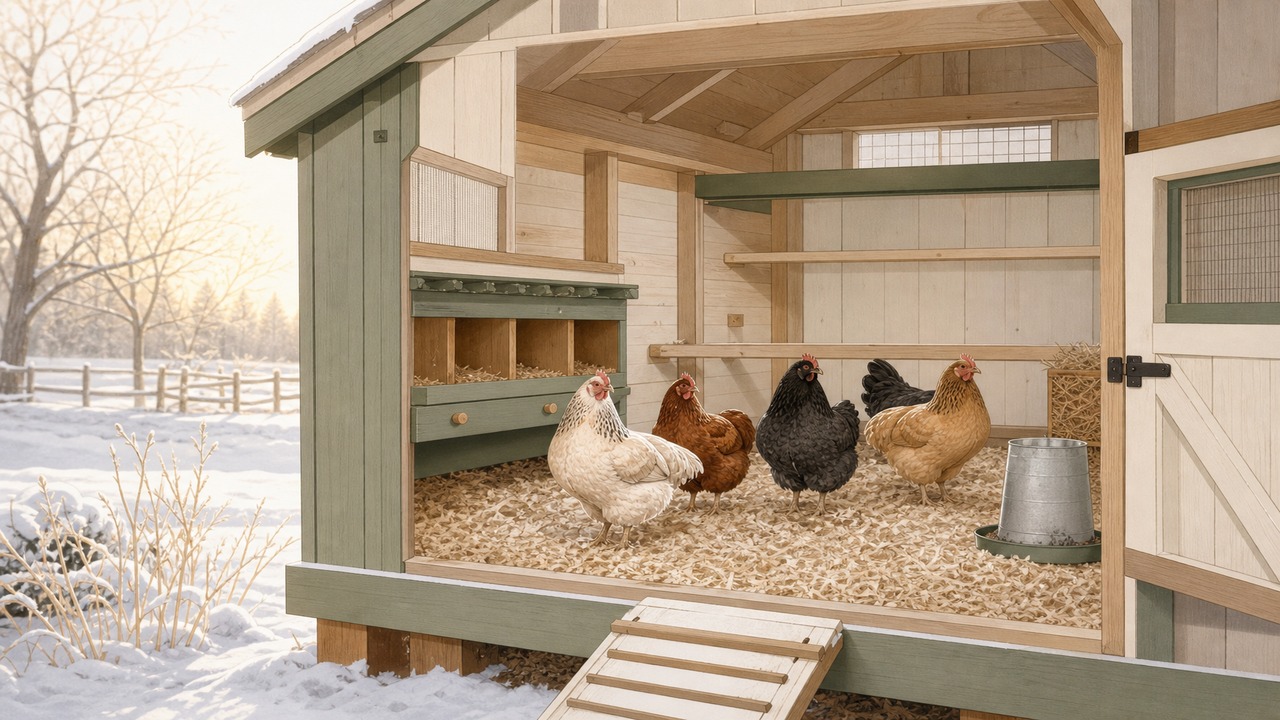
Quick Facts: Safe Chicken Coop Heaters vs Heat Lamps
| Recommended Safe Heater | 200W radiant flat-panel heater with zero-clearance safety |
|---|---|
| Most Dangerous Device | 250W glass clamp heat lamp (leading cause of barn fires) |
| Coop Surface Temp Risk | Heat lamps reach 450°F+; radiant panels stay under 150°F |
| Primary Cold Danger | Moisture and humidity accumulation causing frostbite, not cold air |
| Natural Insulation | Healthy adult chickens stay warm down to -10°F (-23°C) with dry bedding |
| Key Winter Equipment | Heated poultry waterer base to prevent freezing drinking water |
Why Traditional Heat Lamps Cause Coop Fires
Standard 250-watt red glass heat lamps are designed for industrial applications, not dusty chicken coops. Coops generate continuous dry feather dander, wood shavings, and combustible dust. When a flapping chicken bumps a flimsy clamp lamp, or when settled dust ignites on glass reaching over 450 degrees Fahrenheit, a coop fire can start within seconds.
Artificial heating also disrupts natural cold acclimatization. When chickens are artificially warmed to 60 degrees in freezing weather, their bodies fail to build dense down layers. If a winter blizzard cuts electricity, hens experience catastrophic cold shock and can freeze overnight.
Coop Heating Devices: Safety & Risk Matrix
Compare heating devices before deciding how to winterize your coop. The wrong heat source puts your flock and property in danger.
| Device Type | Surface Temp | Fire Risk Level | Keeper Guidance |
|---|---|---|---|
| Radiant Flat Panel (150W-200W) | Under 150°F | Zero Risk | Safe. Mounts flat to walls near roosts. Birds cuddle near it for contact warmth. |
| Thermal Brooder Plate | Under 125°F | Zero Risk | Ideal for chicks. Simulates a broody hen with zero exposed heating elements. |
| Heated Waterer Base | Under 100°F | Very Low | Keeps water liquid down to -10°F. Essential for winter hydration. |
| Ceramic Heat Emitter | 350°F to 400°F | High Risk | No light emission, but surfaces remain hot enough to ignite dry pine shavings. |
| 250W Glass Clamp Lamp | 450°F+ | Extreme Risk | Prohibited. Clamps slip easily and feather dust ignites on the bulb surface. |
| Propane / Space Heater | Open Flame | Prohibited | Carbon monoxide accumulation and catastrophic fire hazard in enclosed coops. |
Safe Heating Alternatives for Winter Coops
If you keep delicate large-combed breeds or live in regions where winter temperatures plummet below -20°F (-29°C), choose equipment built with thermal shut-offs.
Radiant flat-panel heaters look like slim computer screens attached to the wall. They emit gentle infrared energy that warms nearby chickens directly without heating empty coop air. The outer casing never reaches ignition temperatures, even when covered in feather dust.
In most backyard setups, keeping fresh water liquid is the only supplemental heat required. Chickens consume double their normal water intake when eating dry winter rations. A thermostatically controlled metal waterer base uses just 100 watts and powers on only when air temperatures drop below freezing.
Ventilation Beats Heating for Frostbite Prevention
Backyard keepers often make the mistake of sealing coops airtight to hold in warmth. In reality, comb and wattle frostbite is caused by trapped moisture, not cold air. Chickens exhale massive volumes of water vapor while roosting, and fresh droppings release additional dampness.
When high humidity condenses on cold skin, frostbite sets in rapidly. Ensure your coop provides continuous high-level gable ventilation well above roosting bars. Cold, dry air protects combs far better than warm, humid air. Calculate your flock space and airflow needs using our chicken coop size calculator, and assess sick birds with the Flockline Symptom Checker.
Using Deep Litter for Natural Thermal Warmth
Instead of drawing electricity to your coop, consider the deep litter method. Build an 8 to 12 inch base of dry pine shavings and straw. Turn the litter weekly or allow your chickens to scratch through it with a pinch of scratch grains.
Beneficial microbes break down the organic matter throughout winter, creating passive radiant heat that keeps coop floors several degrees warmer than outside ground temperatures. Pair deep litter with complete layer feed vs grower feed to fuel flock metabolism.
The Bottom Line on Winter Coop Heating
Adult chickens handle winter cold remarkably well thanks to dense down feathers and cooperative roosting. Ditch dangerous clamp heat lamps permanently. If supplemental warmth is required during extreme cold spells, rely solely on radiant flat panels and heated waterer bases while keeping high roof ventilation wide open.
Frequently Asked Questions
Do adult chickens need a heat lamp in winter?
No. Healthy adult chickens do not need heat lamps. Their feathers trap body heat efficiently down to sub-zero temperatures as long as the coop is dry and draft-free.
What is the safest heater for a chicken coop?
A radiant flat-panel heater is the safest option. They use low wattage, have no exposed bulbs, and will not ignite bedding or dry feather dust.
Can chickens survive -20 degrees without heat?
Yes, cold-hardy breeds with full feathering easily survive -20°F when given deep dry bedding, shelter from direct wind, high-protein feed, and unfrozen water.
Why does high humidity cause chicken frostbite?
Chickens exhale moisture while sleeping. In poorly ventilated coops, that dampness condenses on exposed comb tips and wattles, freezing solid and destroying tissue.
Evidence & Research Citations
- University of Minnesota Extension: Caring for Backyard Chickens in Cold Weather and Frostbite Prevention
- University of Maine Cooperative Extension: Winter Care and Housing Management for Small Poultry Flocks
- Cornell University CALS: Cold Weather Management and Fire Prevention in Poultry Coops