
Raccoons vs Chicken Wire: Why Wire Fails & How to Predator-Proof
Quick answer
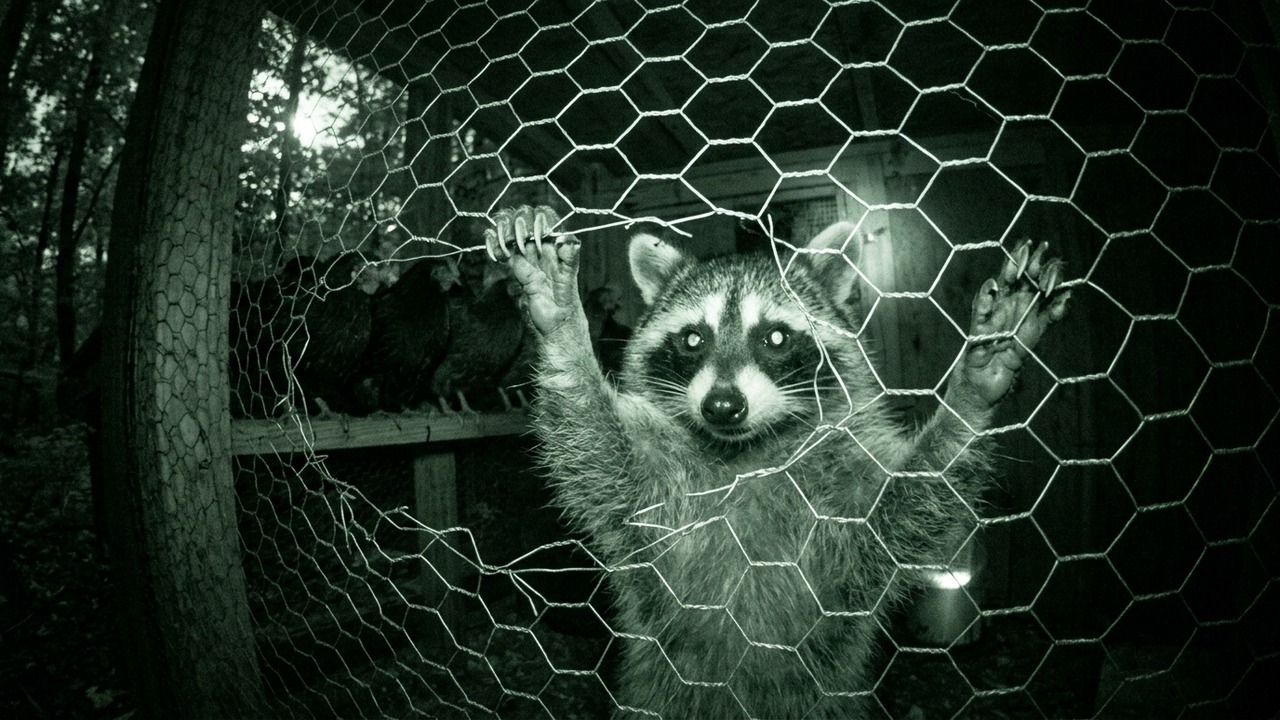
Chicken wire does not stop raccoons. Raccoons easily untwist, chew, or rip through thin 20-gauge chicken wire, and they can reach their nimble paws through the large 1-inch hex holes to grab and mutilate roosting birds. Only heavy 1/2-inch hardware cloth keeps coops secure.
Quick Facts: Raccoon Break-Ins vs Coop Mesh Security
| Raccoon Paw Dexterity | Five human-like fingers capable of opening simple slide latches |
|---|---|
| Chicken Wire Gauge | Thin 20 to 22 gauge galvanized wire (easily chewed or untwisted) |
| Chicken Wire Hole Size | 1 inch to 2 inch hexagonal openings (paws pass through freely) |
| Hardware Cloth Standard | 1/2-inch welded 19-gauge hot-dipped galvanized mesh |
| Fastener Requirement | 1-inch screws with 1-inch fender washers (never hammer staples) |
| Primary Attack Window | Dusk to dawn (especially during autumn fattening period) |
Why Chicken Wire Fails: Structural Weaknesses
Many new backyard keepers believe chicken wire provides complete security because of its name. In reality, chicken wire was engineered solely to contain peaceful grazing hens, never to stop powerful, intelligent nocturnal carnivores. Review this security comparison:
| Security Feature | Traditional Chicken Wire | 1/2-Inch Hardware Cloth |
|---|---|---|
| Wire Strength | Thin 20-22 gauge; bends and stretches by hand. | Thick 19-gauge welded steel wire; rigid and stiff. |
| Joint Construction | Loose mechanical twists that untwist under pull force. | Electrically welded intersections that cannot unravel. |
| Mesh Opening Size | 1 to 2 inches; raccoon paws reach inside easily. | 1/2-inch square; impossible for paws or teeth to enter. |
| Teeth & Chew Defense | Raccoons and dogs can chew or snap thin strands. | Completely bite-proof against teeth, claws, and snouts. |
| Lifespan in Weather | Rusts through at ground level within 2 to 3 years. | Hot-dipped galvanized coating lasts 10 to 15 years. |
The Reach-Through Hazard: How Raccoons Hunt Chickens
Raccoons rarely need to breach an entire coop wall to cause devastating flock loss. Because chicken wire has 1-inch or 2-inch hexagonal holes, raccoons simply reach their forepaws through the mesh into the coop.
Chickens roosting near the perimeter wire suffer catastrophic injuries. Raccoons grab feathers, wings, or heads while birds sleep on their perches, pulling pieces of the chicken through the mesh. Even if the bird cannot fit through the hole, the injuries are fatal. Hardware cloth with 1/2-inch openings stops paws from entering entirely.
Two-Step Latches: Stopping Clever Raccoon Paws
Raccoons possess remarkable intelligence and tactile memory. Simple slide bolts, hook-and-eye latches, and wooden turn-buttons pose zero obstacle. A raccoon can slide a bolt open with its fingers in less than 30 seconds.
Every coop and run door must feature two-step locking mechanisms. Use a heavy barrel slide bolt with a hole in the pin, and insert a spring-loaded metal carabiner clip through the hole. Raccoons cannot perform the simultaneous squeeze-and-slide motion required to open a carabiner. Check our hardware cloth fasteners guide for mounting details.
Installing Hardware Cloth the Right Way
When installing 1/2-inch hardware cloth, never rely on standard hammer staples or light staple guns. Raccoons can wedge their claws under the wire and pull light staples straight out of soft wood studs.
Fasten the mesh using 1-inch corrosion-resistant exterior wood screws fitted with 1-inch galvanized steel fender washers. Space screws every 6 to 8 inches along all wood framing. Sandwiching the wire between the washer and the wood creates a clamping force that no predator can tear loose. Use our chicken coop size calculator to map your run perimeter.
The Bottom Line on Raccoons and Chicken Wire
Chicken wire will never stop a hungry raccoon. Protect your flock by replacing all chicken wire with 1/2-inch 19-gauge welded hardware cloth, securing edges with screw-and-washer clamps, and locking all coop doors with two-step carabiner latches.
Frequently Asked Questions
Can raccoons chew through chicken wire?
Yes, raccoons have sharp carnivore teeth and strong jaws that can snap through thin 20-gauge chicken wire strands, especially around rusted joints and loose seams.
Can raccoons dig under chicken runs?
Yes, raccoons will dig beneath run framing. Install a 12-inch to 18-inch horizontal hardware cloth dig apron around the entire coop perimeter to stop diggers.
What time of night do raccoons attack chicken coops?
Raccoons are nocturnal hunters. Most attacks occur between sunset and 2:00 AM, with another surge right before dawn. Lock your coop pop door every evening at dusk.
Will solar predator lights keep raccoons away?
Flashing red solar predator lights offer temporary deterrence, but intelligent raccoons quickly learn the lights pose no real danger. Physical hardware cloth is your only true defense.
Evidence & Research Citations
- Cornell Cooperative Extension: Predator Control for Backyard Poultry Flocks: Raccoon Behavior and Defense
- University of Maryland Extension: Predator Proofing Backyard Chicken Housing and Runs
- Penn State Extension: Constructing Secure Poultry Housing to Deter Mammalian Predators