
Integrating Chickens into a Flock: See-but-Do-Not-Touch Stages
Quick answer
Integrating chickens into a flock works best as stages: quarantine, 1-2 weeks of see-but-do-not-touch, supervised shared time, then full housing. Match size when you can, add extra feeders, and separate immediately if blood is drawn.
Quick facts
| Order | Quarantine, then see-but-do-not-touch, then supervised mix, then full integrate |
|---|---|
| Barrier time | Often 1-2 weeks of sight and sound without contact |
| Size match | Similar size and age integrates more safely than tiny birds with adults |
| Stop rule | Separate immediately if blood is drawn |
| Night roost trick | Finishing assist after visual weeks, not a shortcut |
Integrating chickens into a flock is social engineering with feathers. Dumping new birds into an established pecking order overnight is how you get blood. The reliable pattern used across backyard husbandry writing is slow: quarantine for health, visual introduction through a barrier, supervised shared time, then full housing together.
If you are integrating because you only have one bird left, pair this with can one chicken live alone. If newcomers are still chicks, confirm outdoor readiness in when chicks can go outside.
Quarantine is not optional theater
New birds can carry parasites and disease. House them away from the main flock first, with their own gear, while you watch droppings, breathing, and energy. How long depends on your risk tolerance and source; many keepers use multiple weeks. Do not skip this because everyone looks fine in the carrier.
See but do not touch
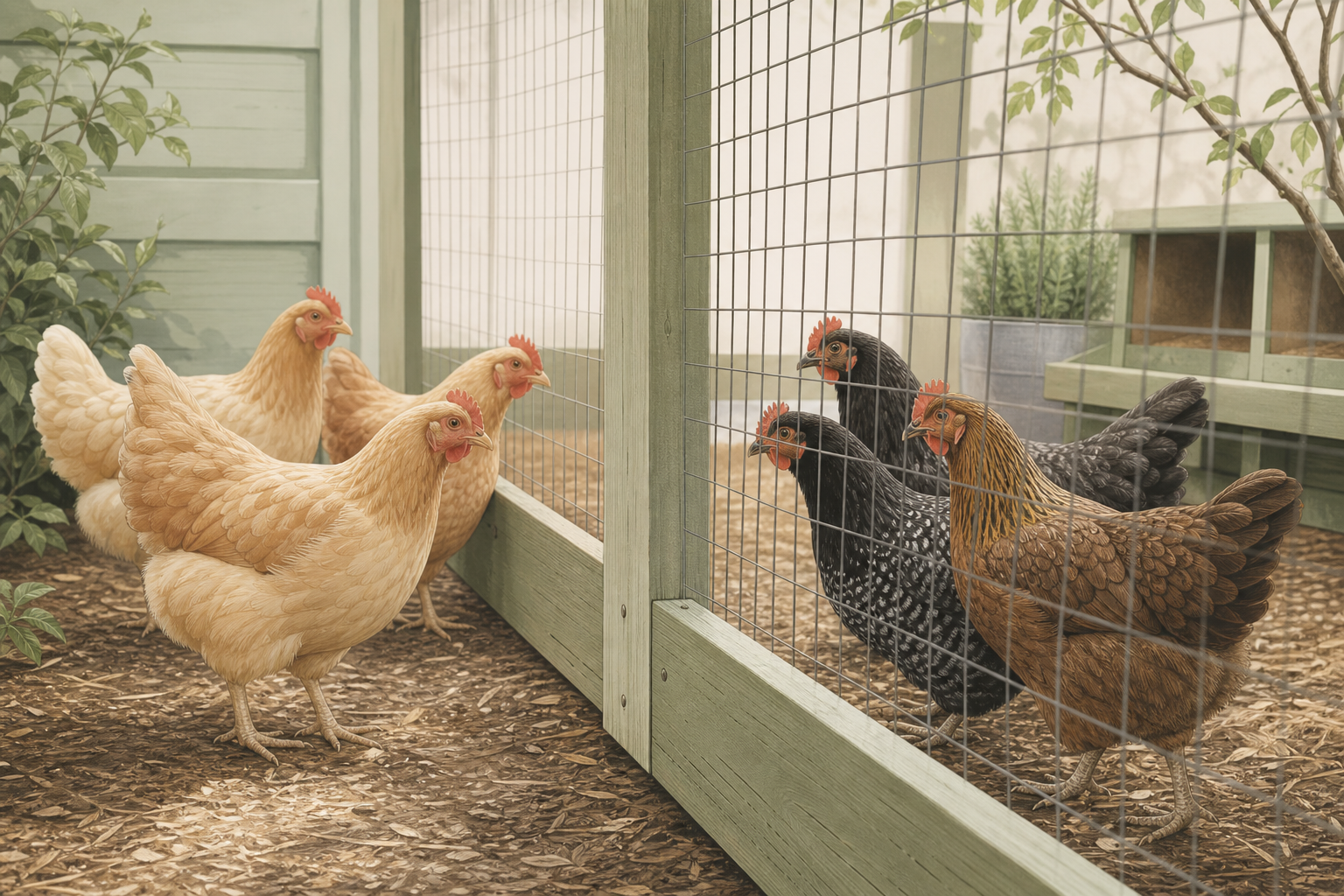
Place a secure pen or partition so flocks can see, hear, and smell each other without pecking through to draw blood. One to two weeks is a common window. Mild posturing at the fence is normal. Relentless attempts to fight through wire mean you keep the barrier longer and add visual breaks so birds can look away.
Progress saves in this browser. Print this page or download the PDF for a paper copy.
Supervised shared space
When both sides look bored with the fence, try short shared sessions in a roomy area. Extra feeders and waterers reduce resource fights. Scatter treats so birds forage instead of focusing on newcomers. End the session before fatigue turns into bullying. Increase time across days.
Full integrate and roost politics
Some keepers place calm birds on the roost at night as a finishing step after the visual period. That can reduce the first morning’s drama. It is not a substitute for quarantine and barrier weeks. Expect pecking-order negotiations for days. Provide multiple roost spaces. Watch for a bird cornered without escape. Free-range introductions need the same patience plus predator security: free-range guide.
Special cases: roosters, one newcomer, big age gaps
Two adult roosters in one small run is a project with a high fight risk. Introductions need space and an exit plan. A single new hen facing six established hens often takes more bullying than a pair or trio of newcomers who arrive together. Huge age and size gaps (eight-week chicks with mature heavy hens) are how serious injuries happen.
Rearranging perches and moving feeders the day of full integrate can reduce “this is my exact corner” territorial focus. It is a small trick, not magic. Supervision still matters.
Space and enrichment during integration
Run the coop size calculator before you add bodies. Crowding makes every peck worse. Offer a dust bath and scattered forage so birds have jobs other than policing newcomers. Secure the perimeter while attention is divided: integration week is a bad week to leave a gate propped open. Predator standards still apply: predator-proof run.
The week after full integrate
Expect squabbles at dusk for roost spots. Add a second roost if birds are piled. Check under wings and around vents for hidden peck wounds. Keep feed stations doubled for at least a week. If one bird hides all day and cannot eat, separate and restart supervised sessions. Integration is successful when newcomers eat, drink, dust bathe, and roost without daily blood.
Common mistakes
- Same-day dump-ins after a feed-store purchase.
- Night roost only with no prior visual introduction.
- One tiny pullet into a rough adult flock.
- Single feeder that becomes a weaponized resource.
- Ignoring bloody heads as “they will work it out.”
- Skipping quarantine because the seller seemed nice.
FAQ
How long should see-but-do-not-touch last?
Often 1-2 weeks. Longer if birds stay highly aggressive at the barrier.
When can chicks meet adults?
When they are close in size and fully feathered enough for your climate. Rushing size mismatches causes injuries.
Does the nighttime roost method work?
As a finishing assist after visual introduction, sometimes. Alone, it often fails by morning.
Should I introduce one bird or several?
Several newcomers usually fare better than one singleton facing the whole flock.
What if fighting draws blood?
Separate, treat wounds, and step back to barrier or supervised sessions.
Sources and further reading
- Backyard husbandry consensus on quarantine plus see-but-do-not-touch integration (public keeper education articles). Synthesized patterns, not proprietary trial data.
- Related Flockline Learn: can one chicken live alone, free range, when chicks can go outside.
- Biosecurity principle: new birds are a disease risk until observed away from the flock.