
Predator Proof Chicken Run: Mesh, Roof, and Dig Defense
Quick answer
A predator proof chicken run uses hardware cloth on vulnerable openings, solid framing, dig protection, secure gates, and often overhead cover. Chicken wire alone is not enough. Maintain staples and latches.
Quick facts
| Primary job | Build a daytime enclosure predators cannot casually defeat |
|---|---|
| Mesh | Hardware cloth on openings and weak panels (not chicken wire alone) |
| Dig apron | Outward apron or buried barrier, especially at corners and gates |
| Overhead | Cover against climbing and aerial threats where your site needs it |
| Gates | No under-gate gaps; raccoon-aware latches; no propped “shortcuts” |
| Sibling guides | Fox habits and lockup · Raccoon latches |
| Space | Size the run with the coop size calculator |
| Materials example | 1/2-inch galvanized hardware cloth (retail listing) |
If you came here looking for a predator proof chicken run, you are already thinking the right way: the daytime enclosure is a build, not a vibe. Soft poultry netting looks tidy in photos and fails the first night a raccoon or fox decides to test the cheapest edge.
This page is the construction brief: mesh, framing, dig defense, overhead strategy, and gates that still work when you are tired. For fox-specific habits (dusk lockup, free-range tradeoffs), use the sibling guide how to protect chickens from foxes. Latch dexterity lives in raccoon proofing.
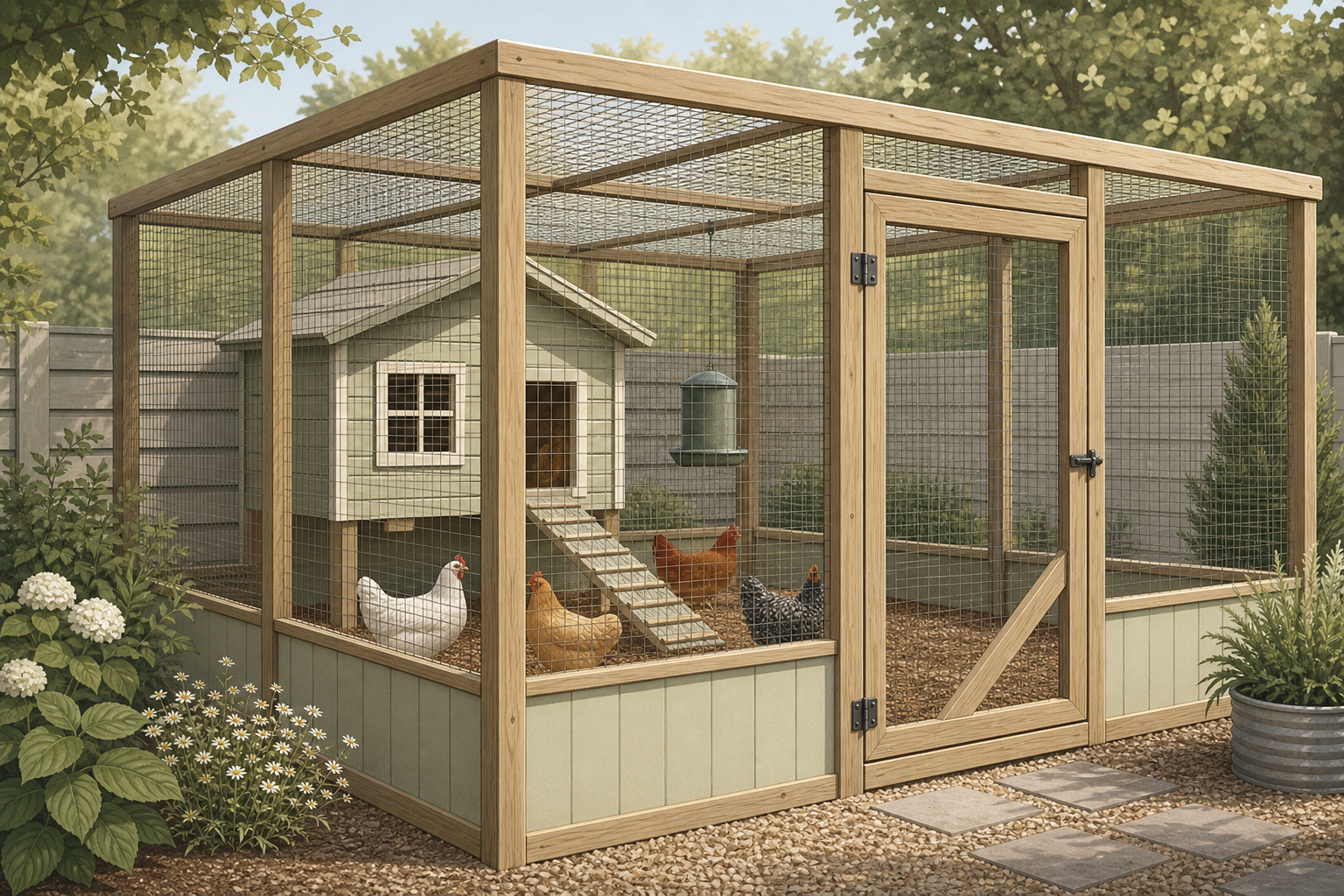
What a secure run actually looks like
Think in layers instead of one magic fence: hardware cloth on vulnerable faces, solid framing, dig barrier, an overhead plan that matches your predators, and gate hardware that survives daily use. A pretty run with soft wire is a display case for predators. Size for flock welfare with the coop size calculator so birds are not packed into a secure misery box. Security and space are both design requirements.
Mesh and framing (the non-negotiable)
Use hardware cloth on openings and weak panels. Fasten it to solid wood or metal framing with screws and washers or heavy staples that bite into sound timber. Chicken wire is for keeping chickens in, not predators out. If a panel flexes when you push it like fabric, it is not a predator barrier.
When you are shopping, look for galvanized 1/2-inch hardware cloth in a gauge stiff enough that it does not crumple in your hands. A concrete retail example is this 1/2-inch galvanized hardware cloth listing; confirm roll width and gauge at checkout against your framing plan. Overlaps at corners matter more than brand loyalty.
Dig defense before birds move in
Foxes and other diggers probe corners, gate thresholds, and any place the mesh stops short of the soil. An outward apron (often about 12 to 24 inches) or a buried barrier turns that first dig into a dead end. Install dig defense before occupancy. Retrofitting under a finished, muddy run is miserable and easy to postpone until after a loss.
Inspect after freeze-thaw and heavy rain. If a raccoon or fox can dig a test hole overnight along a soft edge, your apron needs work at that exact spot, not “someday.”
A practical look at run design
University of Kentucky’s UKNOW series walks through backyard chicken run design with the kind of boring specifics that actually save flocks. Watch it after you sketch your footprint, then come back to the checklist below and mark what your sketch is still missing.
Overhead cover without wishful netting
Covered runs block climbing entries and reduce aerial risk. Netting quality varies wildly. Weak net that tears in a storm is not cover. Choose materials for the predators and weather you actually face, and fasten them so wind does not turn the roof into a sail.
Gates: where good builds quietly fail
Gates fail when bottoms gap, latches are too simple, or people prop them open “just for a minute.” Use raccoon-aware closures (raccoon proofing) and eliminate under-gate crawl space. A flashlight gap check at dusk is worth more than another gadget.
Build checklist (walk the job)
Use this as a calm walk-through while the lumber is still on the ground. Check items in order, write down failures, and fix them before birds move in.
Progress saves in this browser. Print this page or download the PDF for a paper copy.
Common mistakes
- Open-top runs in hawk or climbing-predator country.
- Chicken wire walls without hardware cloth.
- No dig apron where diggers are active.
- Soft gate gaps and weak latches.
- Temporary fencing treated as permanent housing.
- Skipping seasonal staple and rust checks.
FAQ
How do I predator proof a chicken run?
Hardware cloth, solid framing, dig defense, secure gates, and often overhead cover, plus maintenance after storms.
Is chicken wire OK?
Not as the predator barrier. It can contain birds; it does not reliably exclude determined predators.
Do I need a roof?
Often wise where climbers or aerial predators are active. Match cover strength to your real threats.
What about dig defense?
Use aprons or buried barriers, especially at corners and gates, and re-check after freeze-thaw.
Can chicks use the run?
Only when ready and the run is finished; see when chicks can go outside.
Is free range the same?
No. Free range is a different risk model; see chicken free range.
Sources and further reading
- NC State Extension: Keeping Garden Chickens in North Carolina
- University of Georgia Extension publication B1317
- University of Georgia Extension publication C1181
- eXtension poultry resource hub (poultry.extension.org)
- UKNOW How-to: Backyard Chickens: How to Design Your Chicken Run
- Example retail listing: 1/2-inch galvanized hardware cloth (confirm gauge and roll size before you buy)
- Flockline Learn related guides linked in this article.
- Community patterns synthesized from public backyard-poultry discussions; individual forum URLs are not cited because they rot and anecdotes vary.