
Raccoon Proof Chicken Coop: Latches, Mesh, and Night Habits
Quick answer
To raccoon proof a chicken coop, use hardware cloth (not chicken wire alone), solid framing, dig protection, and latches raccoons cannot open. Lock birds in at night and audit gaps with a flashlight.
Quick facts
| Mesh | Use hardware cloth, typically 1/2-inch or finer |
|---|---|
| Not enough | Chicken wire alone is not a raccoon barrier |
| Latches | Raccoons open simple hooks; use complex or locked latches |
| Dig defense | Aprons or buried barriers around runs |
| Night rule | Birds locked in before dusk pressure rises |
| Related | Also see fox protection and predator-proof run |
| Nests | Exterior nest doors are common weak points |
| Vents | Screen vents without killing ventilation |
A raccoon proof chicken coop starts with the right mesh and ends with latches and habits. Raccoons climb, reach, dig, and open simple fasteners. Chicken wire may keep chickens in; it does not reliably keep raccoons out.
Use standards from hardware cloth for chicken coops, then harden doors, nest boxes, and the run (predator proof chicken run). Fox pressure needs related tactics in how to protect chickens from foxes.
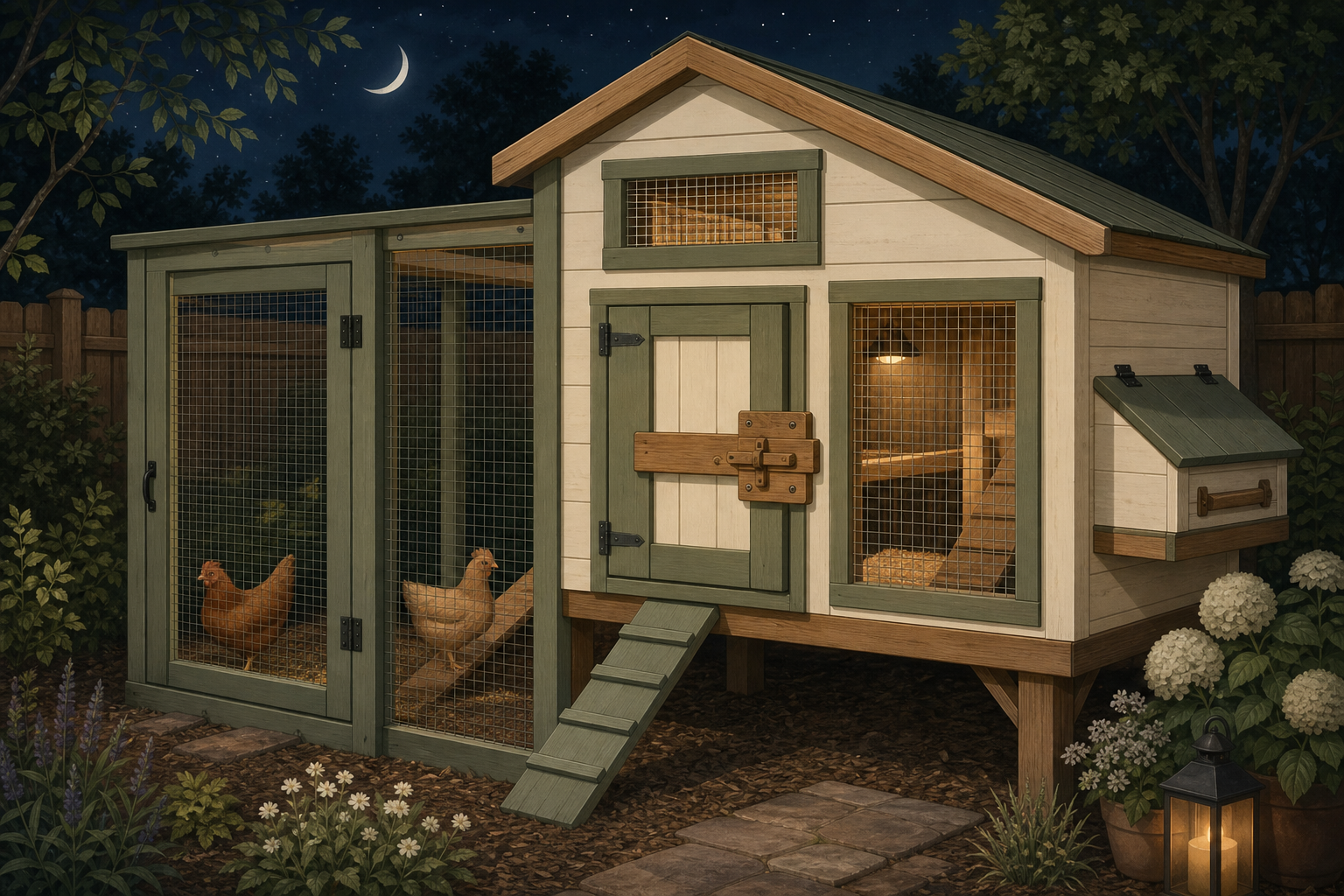
Mesh first
Cover openings with hardware cloth fastened to solid framing. Pay attention to vents, windows, fan ports, and gaps under eaves. Soft hexagonal poultry netting may keep chickens in; it does not reliably keep raccoons out.
Review sizing, fasteners, and install details in hardware cloth. This page assumes that mesh standard and then asks whether a raccoon can still open, peel, or reach something.
Latches raccoons hate
Simple hook-and-eye closures are practice toys. Raccoons pull, twist, and lift with more patience than most keepers expect. Use two-step latches, carabiners clipped through hasps, locks, or designs that require more than one motion.
Test every door, including nest collection doors and feed-room access. A perfect coop door with a soft nest door is still a raccoon plan with one soft hinge.
Digging and climbing
Raccoons dig and climb. For apron depth, roof mesh, and run failure points, use the dedicated predator-proof chicken run and hardware cloth guides. This page stays on raccoon dexterity: latches, openings, and night habits.
Night habits
Lock birds in before dusk. Raccoon pressure often rises as light fades, and a flock left on the run edge is an easy win. Do a flashlight audit of corners, latch status, and anything that moved since last week.
Automatic doors help only if they close fully and still leave a raccoon-resistant coop behind them. A timer on a chicken-wire box is still a soft target.
Nests and vents
Exterior nest doors and winter vent covers are frequent failures. Keep ventilation while screening openings. Nest banks still follow nest box placement rules without sacrificing security.
Practical checklist
Use this checklist as a calm walk-through for raccoon-proofing. Check items in order, note what fails, and fix failures before buying another gadget or copying an unverified internet recipe. A short note beats a vague memory when the same problem returns next month.
Progress saves in this browser. Print this page or download the PDF for a paper copy.
Common mistakes
- Chicken wire only on openings raccoons can reach.
- Simple hook latches on doors and nest lids.
- Unmeshed vents and eave gaps.
- Leaving birds out at dusk.
- Automatic door alone without a raccoon-resistant coop behind it.
- Skipping night flashlight audits.
FAQ
How do I raccoon proof a chicken coop?
Use hardware cloth, solid framing, dig defense, raccoon-resistant latches, and night lockup.
Is chicken wire enough?
No.
What latch works?
Two-step, locked, or otherwise difficult latches beat simple hooks.
Do automatic doors solve it?
Only if the coop behind them is already raccoon resistant.
Are nest doors a risk?
Yes. Treat them like any other opening.
What about the run?
Harden the run too; see the predator-proof run guide.
Sources and further reading
- NC State Extension: Keeping Garden Chickens in North Carolina
- University of Georgia Extension publication B1317
- eXtension poultry resource hub (poultry.extension.org)
- Flockline Learn related guides linked in this article.
- Community patterns synthesized from public backyard-poultry discussions; individual forum URLs are not cited because they rot and anecdotes vary.