
Can One Chicken Live Alone? Survive vs Thrive
Quick answer
A chicken can live alone for a time, but chickens are flock animals and usually do not thrive in long-term solitude. Temporary isolation for illness differs from permanent solo housing. Add companions carefully or rehome.
Quick facts
| Social species | Chickens normally live in flocks, not as solitary pets |
|---|---|
| Survive vs thrive | A single chicken may survive; welfare usually suffers long term |
| Temporary isolation | Sick or quarantine separation is different from permanent solitude |
| Practical minimum | Many keepers plan for at least three birds when rules allow |
| Best fixes | Add compatible companions carefully, or rehome to a flock |
Can one chicken live alone? Technically, yes, for a while. Ethologically and practically, that is a poor long-term plan. Chickens are flock animals. They eat, rest, dust bathe, and alarm-call in social context. A lone hen may bond to people and still look incomplete at dusk when there is nobody to roost beside.
This page is honest about thrive versus survive. It is not free-range risk math, and it is not the full integration protocol. Those live next door on Learn.
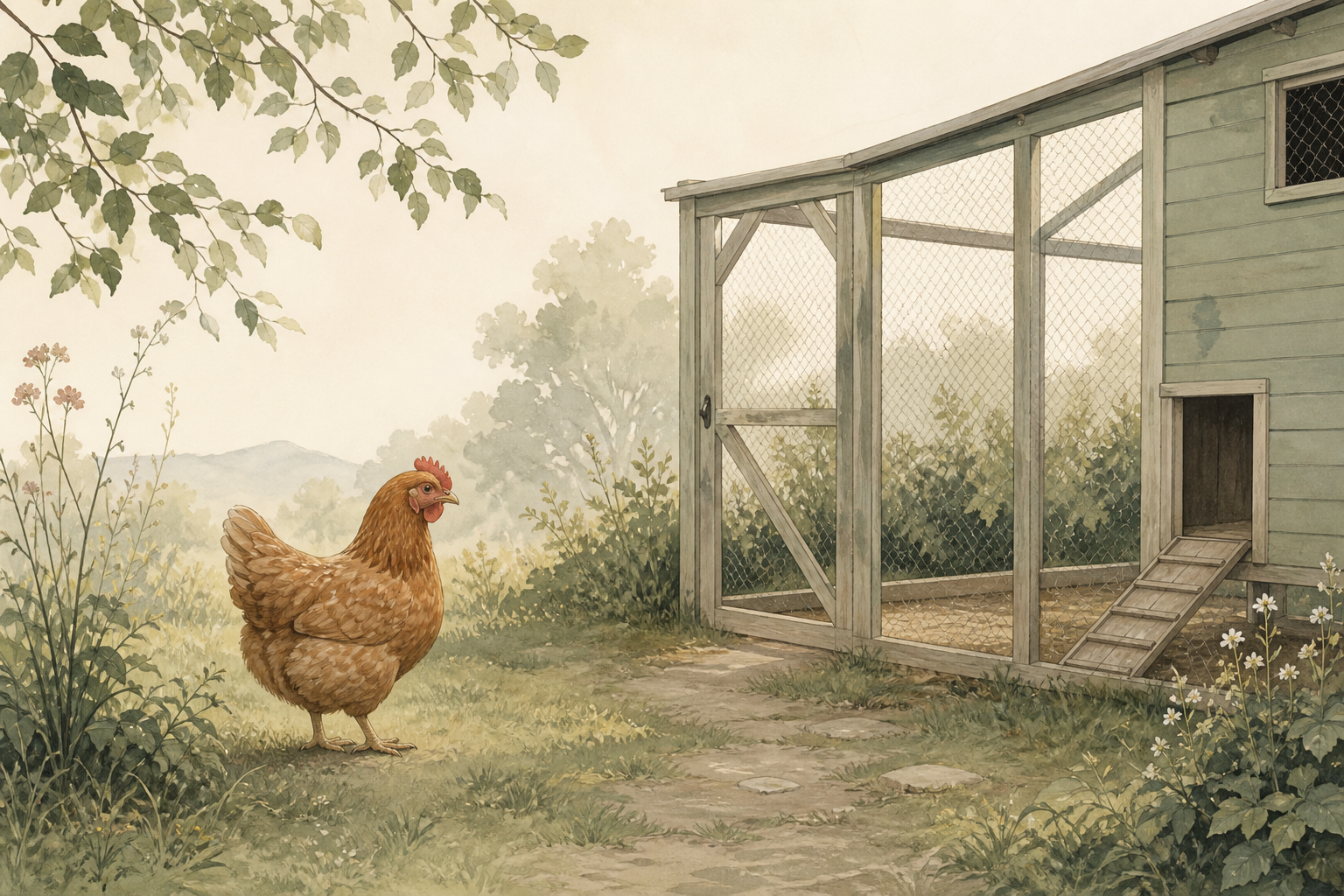
Survive is not the goal
Domestic chickens descend from social junglefowl. Keeper experience and poultry ethology agree that isolation is stressful compared with life in a small stable group. You may see pacing, excessive calling, feather picking, or a bird that follows people as a substitute flock. None of that requires inventing a clinical loneliness score. It is enough to treat companionship as a welfare need.
Temporary alone vs forever alone
Short isolation for illness, injury recovery, or quarantine protects the flock. Give the separated bird visual or auditory contact when disease rules allow, keep her warm and occupied, and reunite on a plan. Forever alone after flockmates die is a different decision. Human lap time helps and still does not replace chicken company for most birds.
Options that respect the bird
If rules and budget allow, add at least two new companions rather than one, so the newcomer is not alone during quarantine. Use a careful introduction: integrating chickens into a flock. If you cannot keep multiple birds legally or practically, rehoming to a good flock is often kinder than years of solitary housing.
While you decide, enrich the day: safe foraging toys, dust bath access (dust bath guide), predictable routines, and secure housing so fear does not stack on loneliness. Free-range alone is not a solution if predators are active: free-range tradeoffs.
Plan so you never end with one by accident
Flocks shrink. Predators, age, and illness happen. Buy and house with a continuity plan: enough space for replacements, a quarantine pen, and a short list of local keepers who might take or trade birds. After a predator event, secure survivors first (aftermath guide), then decide whether to rebuild the flock.
Behavioral signals that solitude is wearing thin
Watch for nonstop calling when you leave, pacing fence lines, self-directed feather picking, or a bird that stops dust bathing and foraging with normal curiosity. Appetite and egg laying can slide when stress stays high. None of these signs prove a medical diagnosis. They are welfare clues that the social environment is wrong.
Compare that to a hen briefly separated for healing who still hears the flock and returns on a schedule. Context matters. Permanent solitude with occasional human visits is the pattern this page argues against.
City rules and the one-hen fantasy
Some ordinances allow only a tiny flock. If the legal maximum is still greater than one, keep the maximum your housing can support well. If the law truly allows only a single hen, weigh whether chickens are the right project compared with supporting a friend’s flock or waiting until you can keep three. Buying one bird to skirt a three-bird rule by hoping nobody notices is how lonely hens and frustrated neighbors both happen.
Interim enrichment while you arrange companions
Safe hanging greens, a fresh dust bath, supervised outdoor time in a secure run, and predictable human presence reduce acute distress. Mirrors and radios are occasional keeper experiments, not proven flock replacements. Use interim enrichment while quarantine pens or rehoming plans move, not as a permanent strategy.
Common mistakes
- Buying one chick “to see how it goes.”
- Treating human attention as a full flock substitute for years.
- Adding a single much smaller bird without a proper integration plan.
- Skipping quarantine because loneliness feels urgent.
- Free-ranging a singleton as enrichment without predator security.
FAQ
Is it cruel to keep one chicken?
Long-term solitary housing is a welfare compromise for a social species. Temporary isolation for health can be necessary.
How many chickens should I keep?
Many keepers aim for at least three when local rules allow, so the flock still works if one bird is lost.
Can two chickens be enough?
Two is better than one. Three often gives more stable social options if one dies.
Should I get a rooster so a hen is not alone?
A rooster is not required for companionship, and many cities ban roosters. Other hens are the usual answer.
How do I add birds safely?
Quarantine, then see-but-do-not-touch integration. See the integrating guide.
Sources and further reading
- Poultry ethology and backyard husbandry consensus: chickens are flock animals; permanent solitude is a welfare compromise.
- Keeper-education synthesis from public poultry husbandry articles (Hobby Farms and similar). Not used as clinical evidence.
- Related Flockline Learn: integrating chickens, free range, dust bath, fox aftermath.
- No proprietary loneliness statistics are claimed.