
What to Do After a Fox Attacks a Chicken: Aftermath Checklist
Quick answer
After a fox attack, secure survivors first, triage injuries in a warm quiet place, remove carcasses, find the entry, and repair mesh and latches before the next dusk. Deep bites need a veterinarian.
Quick facts
| First job | Secure surviving birds before investigating the scene |
|---|---|
| Triage | Warm, quiet, dark hold; check every bird for hidden punctures |
| Same day | Find the entry and repair before the next dusk |
| Return risk | Predators that scored once often return |
| Vet threshold | Deep bites, shock, breathing trouble, or collapsing birds |
If you are searching what to do after a fox attacks a chicken, you are not shopping mesh theories. You are standing in a bad morning. This page is the aftermath sequence: secure birds, triage wounds educationally, clear the scene, repair the breach, harden the next nights.
Prevention habits live in how to protect chickens from foxes. Build standards live in predator-proof chicken run and hardware cloth. Do those after survivors are safe.
First minutes: people and birds
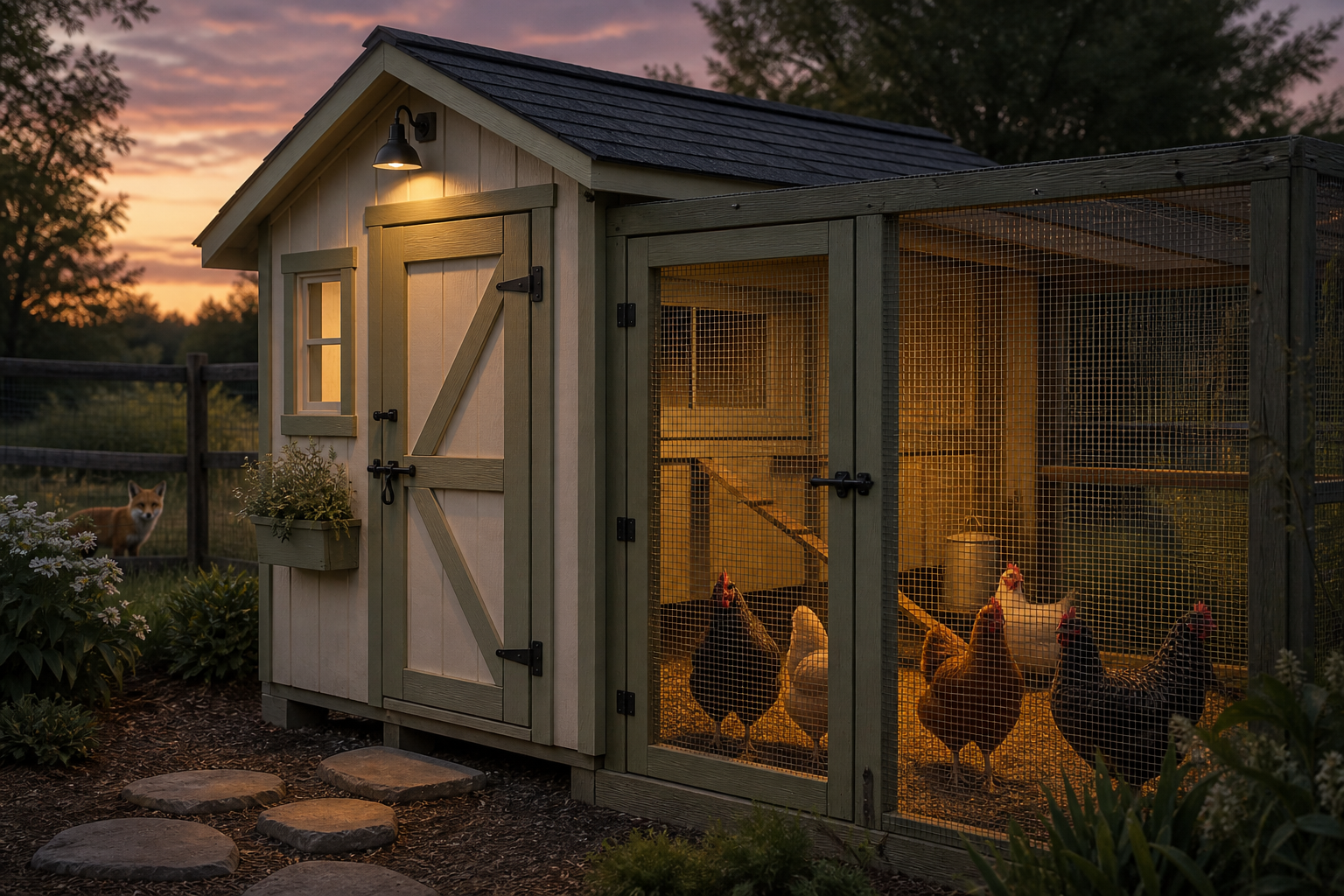
Get surviving birds into a space you trust: a garage pen, dog crate bank, or the most intact section of housing. Count heads. Do not leave the flock milling in an open run while you photograph tracks. Predators return. Your body can shake later.
Triage survivors (educational)
Shock kills birds after attacks even when wounds look small. Move obviously injured birds to a warm, quiet, dark place. Check every bird for puncture holes under feathers. Punctures can hide deeper damage.
For minor superficial wounds, clean gently with saline or a poultry-safe wound product as directed on the label. Avoid human pain-relief ointments that contain lidocaine or benzocaine; those ingredients are widely flagged as unsafe for birds. Deep bites, heavy bleeding, breathing trouble, or a collapsing bird belong with a veterinarian urgently. This page does not give drug doses or declare a diagnosis.
Scene work
Remove carcasses promptly. Predators and scavengers follow leftovers. Note entry clues: dug soil, bent wire, latch that looks fine until you pull it, pop-door gap, roof sag. Photograph for your own repair list. Clean soiled bedding so flockmates are not pecking blood cues.
Progress saves in this browser. Print this page or download the PDF for a paper copy.
Same-day repair standard
Close the actual hole before nightfall. Hardware cloth on openings, dig apron or buried barrier where diggers entered, latches that need more than one motion, roof panels that cannot be pushed in. Raccoon latch standards also matter if your attacker identity is unclear: raccoon-proof chicken coop. If you are down to one bird, read can one chicken live alone before you normalize solitude.
Identify what you can without delaying repairs
Foxes often dig and may carry birds away. Raccoons work latches and leave messier scenes. Dogs can create chaos in daylight. Species ID helps you prioritize dig aprons versus latch upgrades, but the same-day rule does not wait for perfect certainty. Close every soft opening you find.
Trail cameras are useful after the emergency repair, not instead of it. Legal predator control varies by place. Physical exclusion remains the reliable backyard tool whether or not trapping is allowed where you live.
Flock stress the week after
Survivors may refuse to free-range, stop laying, or bully a weaker bird. Keep routines calm. Delay introductions of replacement birds until housing is truly hard and quarantine space exists. If you must rehome survivors because you cannot secure the site, do that sooner rather than hoping goodwill from wildlife.
Neighbors, dogs, and daylight attacks
Not every “fox” story is a fox. Loose dogs create daylight losses with different entry patterns. Talk to neighbors if dog tracks are clear. Keep your repair list focused on physical barriers regardless of the argument at the fence line. Document losses if local ordinances or insurance questions arise later.
Common mistakes
- Searching the woods for the fox while birds stay exposed.
- Assuming small punctures are nothing.
- Leaving carcasses overnight.
- Temporary zip-tie repairs that fail the second night.
- Skipping a vet for deep bites because the bird is still standing.
- Using human pain-relief ointments with -caine ingredients.
FAQ
What should I do first after a fox attack?
Secure survivors, then triage injuries, then find and repair the entry before dusk.
Will the fox come back?
Often yes once a site paid off. Harden housing immediately.
Can I treat bite wounds at home?
Only minor superficial care is educational DIY. Deep bites need a veterinarian.
How do I know it was a fox?
Digging, carried birds, and dusk/dawn timing are common clues, but repair the breach regardless of species ID.
Where do I learn prevention?
Fox protection, predator-proof run, and hardware cloth guides on Flockline Learn.
Sources and further reading
- Educational aftermath sequencing synthesized from backyard poultry emergency husbandry materials and wildlife-predator return patterns.
- Wound cautions: avoid human topical analgesics with lidocaine/benzocaine; seek veterinary care for bites.
- Related Flockline Learn: fox protection, predator-proof run, hardware cloth, raccoon latches.
- No invented clinic statistics.
Authoritative Wildlife & Extension Sources